Best Pitbull Puppy Food: How to Choose It and How Much to Feed
The best pitbull puppy food is a complete puppy (growth) formula with animal protein as the first ingredient, enough calories to support steady growth, and DHA for brain and eye development. Feed it in measured meals, three times a day until about 6 months, and adjust portions so your puppy stays lean rather than chubby. Below is exactly what to look for on the label, how much to feed by age, and when to switch to adult food.
Pitbull puppies grow fast, play hard and build a lot of muscle in their first year. What you feed now shapes their frame, coat, energy and digestion, so it is worth getting right from day one.

What Pitbull Puppies Need From Their Food
Your pitbull puppy has different needs than an adult dog. Growing bodies need more calories per pound, more protein and fat, and the right balance of calcium and phosphorus for bones. That is why a food labeled for growth matters.
- Protein builds muscle, organs and a healthy immune system. Look for named animal protein (chicken, lamb, beef, or a named meat meal) at the top of the ingredient list.
- Fat is the most concentrated source of calories and carries omega fatty acids for skin and coat.
- DHA, usually from fish oil, supports brain and eye development in puppies.
- Calcium and phosphorus in the right ratio support healthy bone growth. More is not better: do not add calcium supplements to a complete puppy food unless your vet tells you to.
- Digestible carbohydrates, like brown rice, supply energy and fiber for firm stools.
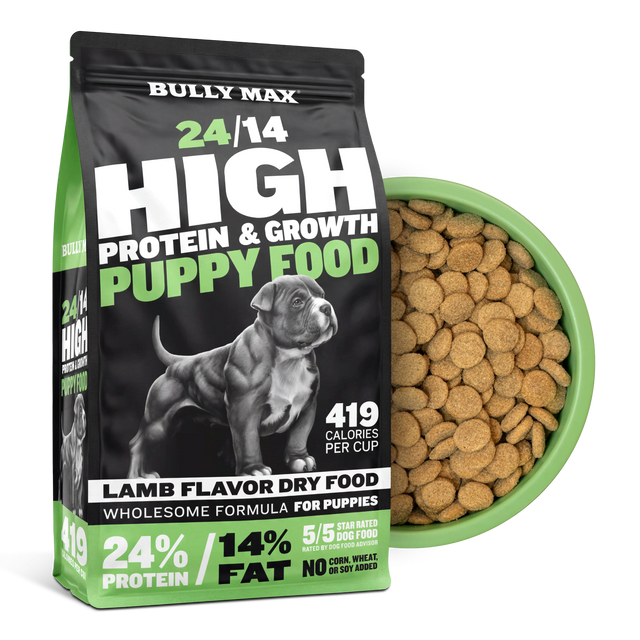
Nutrition does a lot of the work here. A food built for growth gives your pitbull puppy the protein and calories a growing body needs, with TruMune to support digestion and immune health.

START YOUR PUPPY ON BULLY MAX 24/14 PUPPY FOOD
Made for growing puppies with 24% protein, real lamb, and TruMune to support digestion and immune health.
Types of Pitbull Puppy Food
| Type | Pros | Watch out for |
|---|---|---|
| Dry kibble | Easy to measure, store and use for training; most cost-effective | Quality varies widely; read the label |
| Wet food | Very palatable, adds moisture, good for picky eaters | Higher cost per calorie; usually mixed with kibble |
| Fresh or raw | Highly palatable | Hard to balance calcium for growth; raw meat carries bacteria risks. Only with a vet or board-certified nutritionist |
| Homemade | Full control of ingredients | Very easy to get wrong for a growing puppy; needs a vet-designed recipe |
For most owners, a high-quality dry puppy food, sometimes topped with a little wet food, is the simplest way to feed a complete diet.
5 Tips for Choosing the Best Pitbull Puppy Food
1. Check the Nutritional Adequacy Statement
Every complete dog food in the U.S. carries a statement that says which life stage it is for, based on the nutrient profiles set by the Association of American Feed Control Officials (AAFCO). Look for "growth" or "all life stages." A food labeled only for "adult maintenance" is not made for puppies.
If your pitbull or bully is expected to weigh 70 pounds or more as an adult (common in XL American Bullies and some large pit mixes), make sure the statement includes "large size dogs (70 lb or more as an adult)." Large-breed puppies need tighter calcium limits and steadier growth. Every Bully Max dog food, including our 24/14 Puppy formula, is suitable for large-breed dogs, including large-breed puppies, under AAFCO guidelines, so it works for XL bully puppies too.
2. Read the Ingredient List
Ingredients are listed by weight. Pay attention to the first few. You want to see a named animal protein first, such as chicken, lamb, beef or chicken meal, which is a concentrated protein source (learn more about the benefits of chicken meal). Be cautious of foods where fillers or vague terms like "meat by-products" lead the list. Our guide to dog food ingredients to look for and avoid goes deeper.
3. Compare Protein, Fat and Calories
The guaranteed analysis shows minimum crude protein and fat. Active, muscular breeds like pitbulls do well on a puppy food with meaningful protein and fat, but calories matter just as much. Check the kcal per cup so you can measure meals accurately. A more calorie-dense food means smaller portions.
When you compare labels, look for a food made specifically for growing puppies. Our 24/14 puppy formula was built for that stage of life, with 24% protein, real lamb and TruMune to support digestion and immune health. It is suitable for large-breed dogs, including large-breed puppies, under AAFCO guidelines.
GIVE YOUR PUPPY BULLY MAX 24/14 PUPPY FOOD
Made for growing puppies with 24% protein, real lamb, and TruMune to support digestion and immune health.
4. Talk to Your Vet

Your vet knows your puppy's weight, growth curve and health history. Ask what body condition to aim for, whether your puppy needs a large-breed growth formula, and how fast they should be gaining. If your puppy has loose stools, itchy skin or a poor appetite, your vet can help you rule out parasites or other problems before you change foods.
5. Ask Other Pitbull Owners, Then Watch Your Own Puppy
Breeders and other pitbull owners can tell you what has worked for their dogs, and what made them switch. Then let your puppy be the judge. A food that suits your pup shows up as steady energy, firm and regular stools, a shiny coat, and a dog that finishes their meals.
How Much Should You Feed a Pitbull Puppy?
There is no single number, because it depends on your puppy's age, current weight, expected adult size, activity and the calories in the food. Start with the feeding chart on the bag, then adjust based on body condition. Our dog food calculator and guide to how much to feed your dog can help you find a starting point.
| Age | Meals per day | Notes |
|---|---|---|
| 8–12 weeks | 3–4 | Keep the food the breeder used for the first week, then switch gradually over 7–10 days |
| 3–6 months | 3 | Fastest growth; weigh your puppy every couple of weeks and adjust portions |
| 6–12 months | 2 | Growth slows; watch for extra weight as activity changes |
| 12+ months | 2 | Most pitbulls move to adult food; larger bullies may stay on puppy food a little longer |
Check body condition, not just the scale. You should be able to feel your puppy's ribs easily under a thin layer of fat and see a waist when you look down from above. If the ribs are hard to find, cut back a little. Our pitbull weight chart by age shows typical weights as your puppy grows. If the hips and spine are sharp, feed a bit more and check with your vet. Count training treats as part of the daily total.
How to Feed a Pitbull Puppy for Healthy Growth
Many owners want their pitbull to grow big and muscular. The healthiest way to get there is steady, lean growth, not maximum growth. Overfeeding a puppy, or adding extra calcium, can push growth faster than the skeleton can handle and raises the risk of joint problems later.
- Feed a complete growth formula in measured meals.
- Keep your puppy lean through the first year.
- Build muscle with play, short walks, tug and training, not forced exercise. See how much exercise a pitbull needs.
- Save weight-gain products for puppies your vet confirms are underweight.

When to Switch Your Pitbull Puppy to Adult Food
Most American Pit Bull Terriers can move to an adult food around 12 months of age. Larger, slower-maturing dogs, like XL American Bullies, may do better on a growth formula a little longer. Switch gradually over 7–10 days, mixing more of the new food in each day. Read more about when to switch to adult dog food, and when you get there, our guide to the best dog food for pitbulls covers adult feeding. Raising a bully? See our American Bully dog food guide.
Pitbull Puppy Food FAQ
What is the best food for a pitbull puppy?
A complete puppy or all-life-stages food with a named animal protein first, solid protein and fat levels, DHA, and a nutritional adequacy statement for growth. If your dog will be 70 pounds or more as an adult, choose one that covers large-size puppies. Bully Max 24/14 Puppy Food is suitable for large-breed dogs, including large-breed puppies, under AAFCO guidelines.
How much should a pitbull puppy eat a day?
Start with the feeding chart on the bag for your puppy's current weight and age, split into three meals until about 6 months, then two. Adjust so your puppy stays lean with an easy-to-feel rib cage.
Can pitbull puppies eat adult dog food?
Only if the food is labeled for all life stages, including growth. An adult-maintenance food does not have the right nutrient levels for a growing puppy.
Is high-protein food safe for pitbull puppies?
Yes, for healthy puppies. Growing dogs need more protein than adults. What matters more for joints is total calories and calcium, so measure meals and keep your puppy lean.
How do I feed my pitbull puppy for maximum growth?
Aim for healthy, steady growth instead. Feed a complete growth formula in measured meals, keep your puppy lean, and let genetics set the final size. Pushing extra food or calcium can harm developing joints.
Find the Best Food for Your Pitbull Puppy With Bully Max
Bringing home a new puppy is an exciting time for any family. Your pitbull puppy needs love, attention, care and training, and the right food to grow into a strong, healthy adult. Bully Max 24/14 High Protein & Growth Puppy Food is made for that job, for standard pit bulls and large-breed and XL bully puppies alike.
Along with the right food, a new puppy needs plenty of training. Soft, bite-sized treats keep those early lessons short and rewarding.

MAKE PUPPY TRAINING MORE REWARDING
Soft bite-sized treats with real beef, 22% protein, and DHA to support growth and brain development while your puppy learns.
Bully Max is a family-owned U.S. company founded in 2009. Our foods are made in the USA with high-performance, meat-based nutrition, every batch is triple tested for safety, and we have never had a recall. Browse our high-protein puppy food to get your pitbull puppy started.