Bull Terrier Breed Overview
The Bull Terrier, also known as the English Bull Terrier, was developed in 19th-century England. James Hinks of Birmingham refined the breed in the 1860s, and the classic white Bull Terrier became a popular gentleman's companion. Colored Bull Terriers (brindle, red, fawn, black-brindle and tricolor) came later.
The breed is famous for its long, egg-shaped head with no stop, small triangular eyes and a compact, very muscular body. The Miniature Bull Terrier is a separate, smaller breed; see our Miniature Bull Terrier page.
Bull Terrier Size and Weight
- Height: usually about 21 to 22 inches at the shoulder. The breed standard sets no fixed height or weight.
- Weight: about 50 to 70 pounds for most adults, with males usually heavier.
- Lifespan: about 12 to 13 years.
Bull Terrier Temperament
Bull Terriers are playful, clownish, loyal and very people-focused. They are also strong-willed and can be stubborn, so short, upbeat, consistent training works best. Early socialization helps, especially around other dogs. Many Bull Terriers do not like being left alone for long periods.
Exercise Needs
Plan on about an hour of activity a day: brisk walks, fetch, tug, flirt pole play and short training games. A bored Bull Terrier can become destructive or develop repetitive habits like tail chasing, so mental work matters as much as physical exercise.
The Best Dog Food for Bull Terriers
Bull Terriers are dense and muscular but can put on weight easily, so the best food is a complete, meat-based formula with plenty of protein, fed in measured portions.
- 30/20 High Protein Chicken (30% protein, 20% fat, 535 calories per cup, with TruMune): for active, lean adult Bull Terriers.
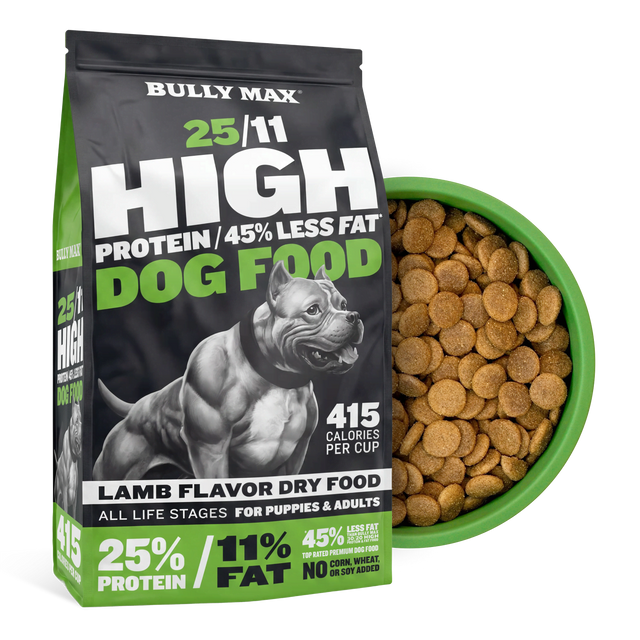
- 25/11 Lamb (25% protein, 45% less fat, 415 calories per cup, chicken-free): for easy keepers, less active dogs and Bull Terriers that need a chicken-free food.
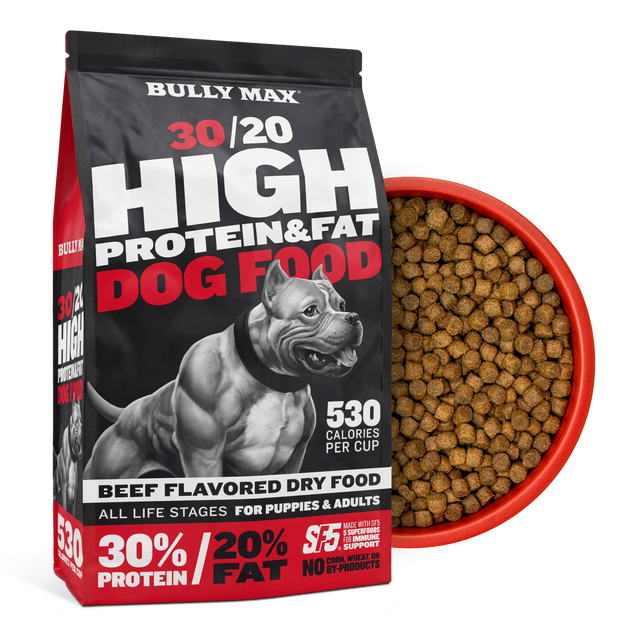
- 30/20 High Protein Beef: a chicken-free, higher-calorie option that is complete and balanced for all life stages.
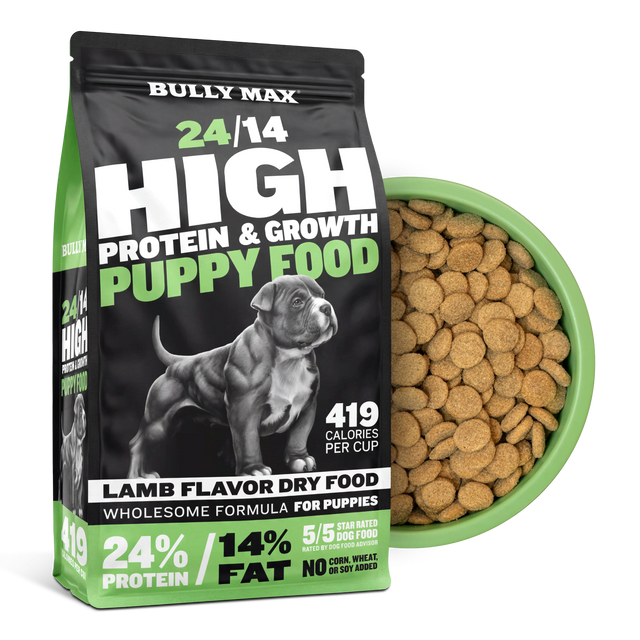
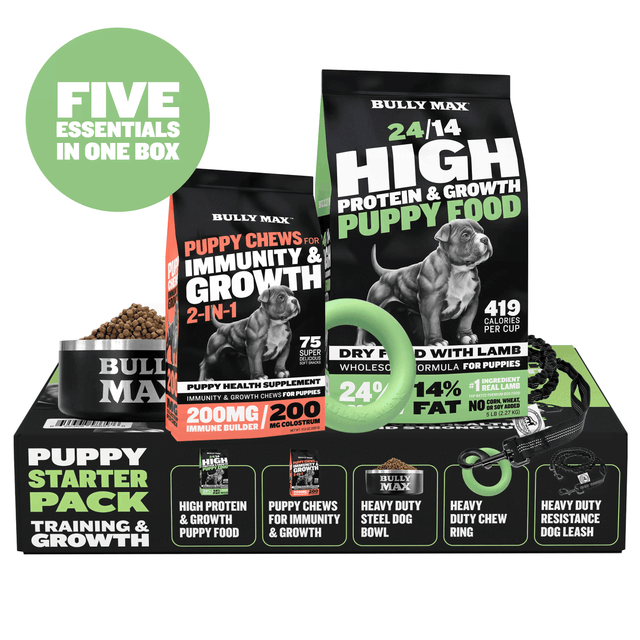
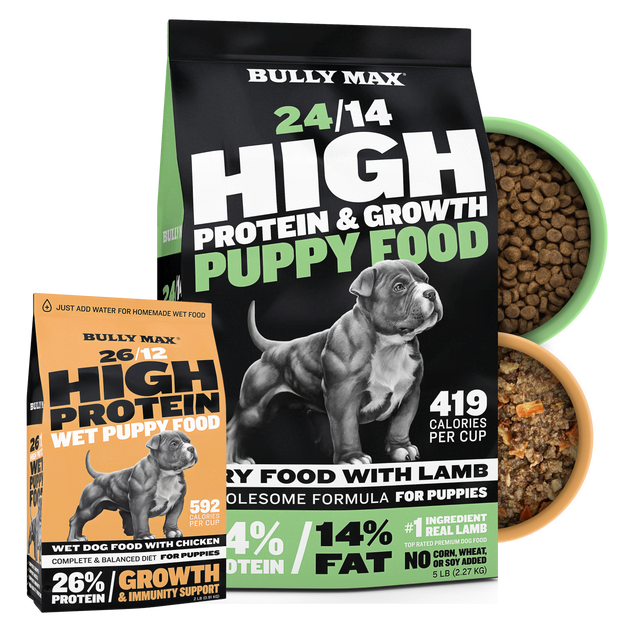
- 24/14 Puppy (24% protein, 14% fat, 419 calories per cup, with TruMune): for Bull Terrier puppies.
Measure every meal, split it into two meals a day and adjust so you can feel the ribs and see a waist. Our dog food calculator gives you a starting point. For a closely related breed, see our guide to the best dog food for Staffies.
Bull Terrier Health Basics
Bull Terriers are generally sturdy, but owners and breeders commonly watch for:
- Deafness, especially in white Bull Terriers. Ask the breeder about hearing (BAER) testing.
- Inherited kidney and heart conditions. Responsible breeders screen their dogs.
- Skin problems and itchy skin.
- Luxating kneecaps and compulsive behaviors such as tail chasing (spinning).
This is general information, not veterinary advice. If you notice symptoms such as constant scratching, drinking or urinating much more than usual, limping, or repetitive spinning, see your vet. Keeping your Bull Terrier lean and getting regular checkups are the best everyday habits.







 Verified buyer reviews


