Do Weighted Vests for Pitbulls Work for Muscle Growth?
Yes, a weighted vest can help a pitbull build muscle and endurance, but only as one part of a plan. The vest adds a little resistance to walks and training, so a healthy adult dog works harder in the same amount of time. Real muscle growth still comes from gradual, consistent exercise plus enough protein and calories. Start with a light, well-fitted vest, add weight slowly, and skip it for puppies, seniors and dogs with joint problems.
Pitbulls remain great people dogs with loyal and friendly natures. Originally bred as working animals, American pitbull terriers have been brought into the home as family pets and are loved by many pet owners. They also use their great strength and tenacity to engage in the sports of weight pulling, agility, and obedience.
These dogs require a lot of exercise to stay fit, though. Without it, their energy can show up as unwanted jumping, chewing things they shouldn’t in the house, digging in the yard, and barking. Here’s how much exercise a pitbull needs.
What Is a Weighted Vest for Pitbulls?
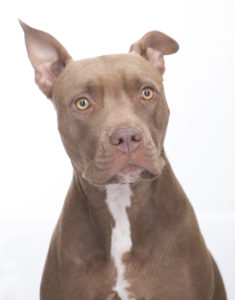
A weighted vest (also called a weight vest or conditioning vest) is an adjustable, harness-style garment with pockets that hold small weights spread evenly on both sides of the dog’s body. It fits pitbulls and other breeds such as American Bullies and Rottweilers, and lets you add or remove weight as your dog gets fitter.
If you’re looking to add muscle to your pitbull, you can use a weighted vest during walks, hill work and some strength exercises. It is not meant for sprinting, jumping or rough play.
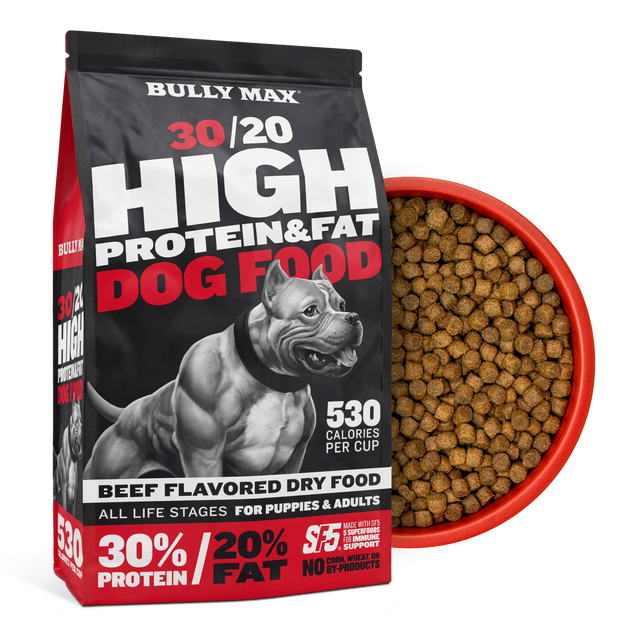
Before we go further, a quick note on fuel: if your pit bull needs more strength and energy from the bowl, a meat-based, high-protein food is the simplest place to start.

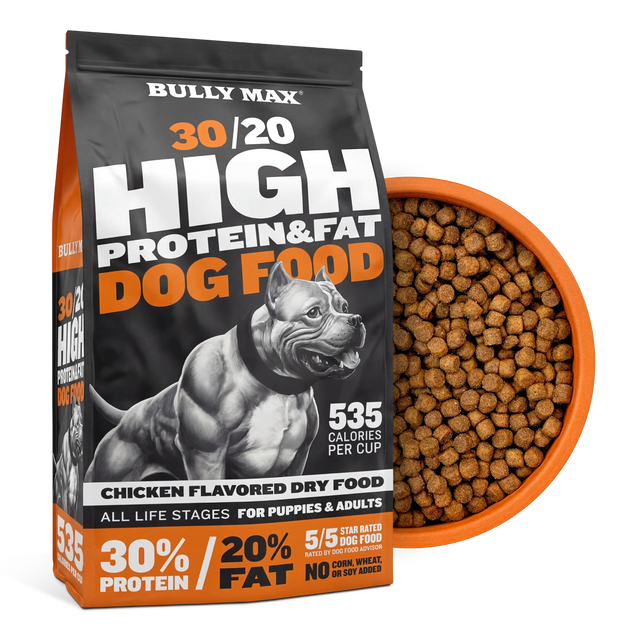
FUEL YOUR DOG WITH BULLY MAX 30/20 HIGH-PROTEIN FOOD
Fuel strength and energy with meat-based nutrition, 30% protein, 20% fat, and 535 calories per cup.
Do Weighted Vests Actually Build Muscle?
They can help, within limits. Muscle grows when it is asked to do a bit more work than it is used to, then given rest and nutrition to recover. A vest is one simple way to add that extra load to everyday walking. What it won’t do is build muscle on its own. The dogs that put on visible muscle combine three things:
- Progressive exercise: walks, hills, swimming, flirt pole and tug sessions that get gradually harder.
- Enough protein and calories to repair and build muscle. A dog that is underfed won’t bulk up no matter how hard it trains.
- Rest days so muscles can recover.
The Benefits of Weighted Vests for Pitbulls
Used correctly, a weighted vest can make a normal walk more demanding, which helps build strength and stamina and burns extra energy. Some owners also find their dog settles and focuses better in a snug vest, though that varies from dog to dog.
- More work in less time. A 30-minute vest walk asks more of your dog than the same walk without it, which helps busy owners.
- Gives them a purpose. Pitbulls were originally bred as working dogs. Even as family pets, many enjoy having a job, and carrying a vest can be one.
- Helps with focus during training. Some dogs pay closer attention on a structured vest walk than on a casual stroll.
- Adds muscle gradually and safely. If the vest is properly sized and fitted, with the right amount of weight, it is a low-impact way to intensify exercise and help dogs build lean muscle.
Who Should Not Wear a Weighted Vest
- Puppies and young dogs. Wait until your dog is fully grown, because extra load on growing joints, bones and spine can do harm. Large breeds can keep growing well past their first birthday, so ask your vet when your dog is ready.
- Senior dogs and dogs with arthritis, hip or elbow dysplasia, back problems or past injuries.
- Overweight dogs, at least at first. Get weight down with diet and plain walks before adding load.
- Hot days. Vests trap heat. Pitbulls and especially flat-faced breeds can overheat quickly.
Before using a weighted vest on your dog, check with your veterinarian to make sure your dog is healthy enough to wear one. And of course, bring your dog in to see a vet if you suspect they’ve sustained any injuries or you notice limping. Our guide on why a dog limps explains what to watch for.
How Much Weight Should a Pitbull Carry?
Start with the empty vest for the first several walks so your dog gets used to wearing it. Then add weight in small steps. A common conservative approach among trainers is to begin at around 5% of body weight or less and only build up slowly over weeks, staying well under about 10% unless a vet or experienced conditioning coach advises otherwise. For a 60 lb pitbull, 5% is 3 lb. Not sure what your dog should weigh? Check our pitbull weight chart.
Always keep the weight balanced, with the same amount on both sides of the dog’s body, and centered over the shoulders and rib cage, not the lower back.
A Simple 6-Week Starter Plan
| Weeks | Vest load | Session |
|---|---|---|
| 1-2 | Empty vest | 10-15 minute walks, 3 times a week |
| 3-4 | Light weight added | 15-20 minute walks on flat ground |
| 5-6 | Small increase if your dog is moving well | 20-30 minute walks, some gentle hills |
A general starting point, not a prescription. Slow down if your dog lags, pants heavily, or seems sore the next day.
What to Look for in a Weight Vest for Pitbulls
When looking to buy a weighted vest, dog owners obviously want one that comfortably fits their pet and won’t chafe their body with vest straps or break easily because it is constructed of flimsy materials.
Other things to look for in a weighted vest for your pitbull or other dog breeds include:
- Easily adjustable, non-slip straps
- The capacity to add and remove weight in small amounts
- Lightweight but durable material that is breathable and washable
- Padding across the chest and under the straps
- Pockets that keep both sides balanced
- Durability at a fair price
When introducing your pitbull to a weighted vest, it’s a good idea to take things slowly. Don’t add a lot of weight at first, especially as they get used to the feeling of wearing the vest. Add extra weight proportionate to their size as they become accustomed to the feeling of the vest and then progress from short walks to longer ones.
Make sure the fitness vest is also properly centered on the dog’s body, and the adjustment of the straps is enough to prevent sliding but not so tight as to be uncomfortable. The vest needs to be balanced, with the same weight on both sides of the dog’s body.
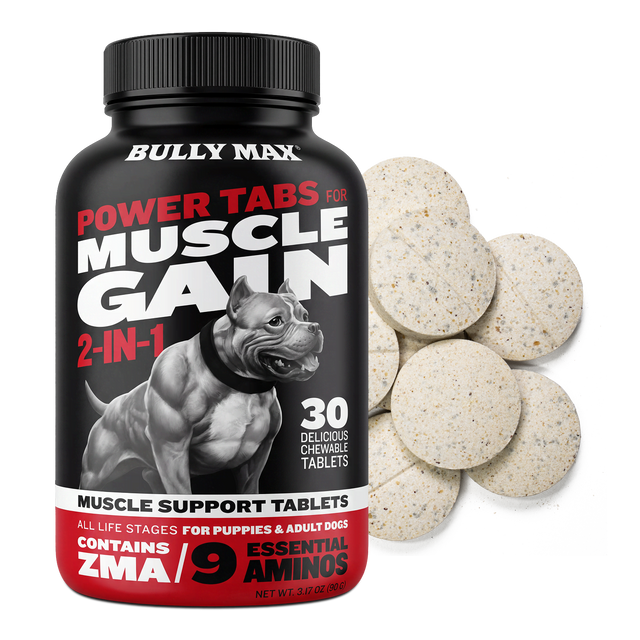
Vest work builds muscle best when nutrition keeps up with the extra effort. Daily muscle builder tablets support growth, strength, and recovery.

TRY BULLY MAX MUSCLE BUILDER TABLETS
Daily tablets that support muscle growth, strength, and recovery in dogs of all breeds and ages.
How to Choose a Weight Vest for Dogs
When choosing a weighted vest for your pitbull, you have a wide variety of designs, sizes, styles, materials, and so on to consider. You need to select the right one for the size and shape of your dog. Will a vest weigh down your dog too much and perhaps threaten them with injury, or will it be too light and not give them enough of a workout?
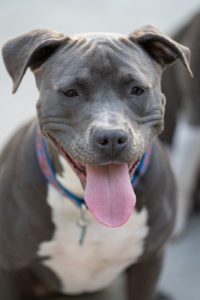
Of course, with so many different sizes of weighted vests, fit matters, so you’ll need to measure the dog’s length, girth (specifically the broadest part of your pet’s rib cage), and neck before purchasing. You want to ensure that the vest won’t harm their spinal column or ribs. Depending on your dog’s size, you may need to get a small, medium, large, or extra-large (X-large) vest.
Using adjustable straps, the weighted dog vest should fit snugly without restricting movement. Bulky, uncomfortable vests will inhibit your dog’s movement and get in the way of the job they are supposed to do. The vest should evenly distribute the weight over your dog’s body and have padding material that protects them from chafing or injury during exercise. Check for rubbing under the front legs after every session.
If you like to go for long walks or camping, you can also buy a backpack for your dog, giving them an extra workout when the backpack is loaded and providing you with supplies carried by your pooch. However, be careful how much weight you add so that you don’t injure or overburden your dog. Make sure the load also doesn’t shift to one side during the walk.
Feed the Muscle You’re Building
Extra work burns extra calories. If your dog starts looking leaner instead of bigger, it probably needs more food, not more weight. Track body condition every couple of weeks and adjust portions; our dog food calculator can help. For more ideas, see how to put muscle on your dog and our guide to the best dog food for pitbulls.
Bully Max Pro Series 31/25 High Calorie Dog Food delivers 31% protein, 25% fat and 600 calories per cup for working and sport dogs. Pro Series Power Chews for Muscle Gain add amino acids with training and performance support, and Muscle Builder tablets are an easy daily add-on.
Harder workouts burn more calories. PRO Series 31/25 packs 600 calories per cup to fuel working and sport dogs.

TRY BULLY MAX PRO SERIES 31/25 DOG FOOD
High-calorie performance nutrition with 31% protein, 25% fat, and 600 calories per cup for working and sport dogs.
Weighted Vest FAQ
Can a puppy wear a weighted vest?
No. A pitbull should only wear a weighted vest once fully grown. Ask your vet to confirm your dog’s growth plates have closed before adding any load.
How long should a dog wear a weighted vest?
Only during the exercise session, starting with 10-15 minutes and building slowly. Take it off afterward and never leave a dog unattended in one.
Can a weighted vest calm an anxious dog?
Some dogs settle in a snug vest, but it is not a treatment for anxiety. For ongoing fear or anxiety, talk to your vet or a qualified trainer.
With Bully Max, you can take the weight off your shoulders when it comes to helping your dog look and feel their best.


2 comments
How old should the dog be before I use a weighted vest?
Hi, I have two boys in the Pitbull categories one is about 95 lbs and the other guy is between 110 and 120 we think he has some mastiff or corso in him, the lighter of the two has just turned 6, the other big guy is 4 1/2 , neither is fat but thick is a good word, I know they don’t get enough exercise, cause I came close to death several x from Covid 19 in the very beginning of 2021, now as I am moving forward a bit better with my health I’d like us all to get in better shape together, damn that was a long intro to the subject., lol.
So I would like to know ways I can get them more muscular, they don’t have to be jacked, but slimming down a bit and better health would be great, so maybe you all can advice which or your products might help me in my search, food, exercise etc. thank you very much for your time and I look forward to hearing from you soon. 🦴