Best Sources of Protein for Dogs
The best protein sources for dogs are named animal proteins: chicken, turkey, beef, lamb, fish, eggs and named meat meals like chicken meal or lamb meal. They supply all 10 essential amino acids dogs need, and dogs digest them well. Plant proteins such as corn gluten, wheat gluten and soy can add to the protein number on a label, but they should not be the main source.
Want your dog to grow big, strong, and healthy? Then you need to feed them enough good-quality protein to build lean muscle while keeping their body nourished. This guide covers which proteins are best, how much protein dogs need, and how to read the protein number on a dog food label.
Why Protein Matters for Dogs

Protein is an essential nutrient if you want your dog to thrive. It builds and repairs muscle, skin, coat, nails and connective tissue, and it supports hormones, enzymes and the immune system. Dogs need 22 amino acids. Their bodies make 12 of them, and the other 10, the "essential" amino acids, must come from food.
A diet that is too low in protein, or low in quality protein, can show up as:
- Low energy or lethargy
- Unwanted weight loss or loss of muscle
- Dull coat or chronic skin problems
- Poor growth in puppies
- Slow-healing wounds
- Getting sick more often
These signs have many possible causes, so see your vet if you notice them. Our guide to signs of malnutrition in dogs explains what else to look for.
Is It Important to Choose a High-Protein Dog Food?
For most healthy, active dogs, a food with plenty of quality animal protein is a smart choice. Protein helps maintain lean muscle mass, and dogs do best on a diet built on meat.
AAFCO sets the minimums: 18% protein for adult maintenance and 22.5% for growth and reproduction, on a dry matter basis. Those are minimums, not targets. Puppies, working dogs, sport dogs and dogs trying to build muscle or gain weight often do well on more protein and more calories. High-protein diets are safe for healthy dogs. If your dog has kidney or liver disease, follow your vet's diet advice.
Many dog owners here at Bully Max are trying to help their dog gain weight or build muscle, which means you may be looking at high-calorie, high-performance dog foods. Look at where those calories come from. Some foods raise calories mainly with cheap carbohydrates and oils. A better approach pairs high calories with high meat-based protein, so your dog gets energy and the building blocks for muscle.

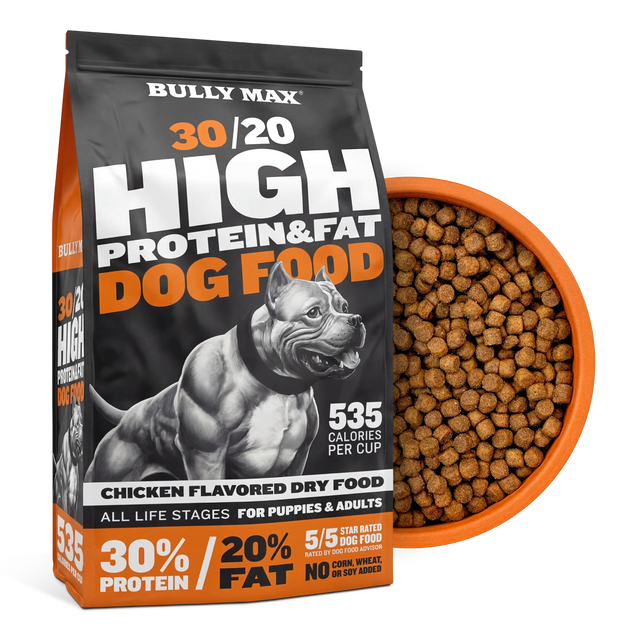
That is the idea behind our Bully Max 30/20 High Protein Dog Food: a chicken-based, meat-based formula with 30% protein, 20% fat and 535 calories per cup. It holds a 5/5 rating from Dog Food Advisor.

TRY BULLY MAX 30/20 HIGH-PROTEIN DOG FOOD
Fuel strength and energy with meat-based nutrition, 30% protein, 20% fat, and 535 calories per cup.
What Makes a Protein "High Quality"?
It's important to realize that not just any protein will do. What matters isn't only how much protein your dog eats, but how much of it they can digest and use. Three things decide protein quality.
1. Amino Acid Profile
Some protein sources contain all 10 essential amino acids in good amounts. Others are low in one or more of them. Animal proteins are generally complete. Many plant proteins are not, which is why foods that rely on them need careful formulation.
2. Biological Value
"Biological value" measures how much of an absorbed protein the body can actually use to build tissue. Eggs, whey and meats score high. Most grains and legumes score lower on their own.
3. Digestibility
The best protein in the world won't do much good if it passes through your dog's digestive system without being absorbed. Well-processed animal proteins are highly digestible. Poor-quality ingredients like hair, hide or heavily overcooked meals are not, even though they still count toward the protein percentage on the label.
The Best Protein Sources for Dogs
It should come as no surprise that the best protein sources come from real animal sources. Here is how the common ones compare.
| Protein source | Why it works | Good to know |
|---|---|---|
| Chicken and turkey | Complete amino acid profile, highly digestible, lean | The most common allergen of the group; pick beef or lamb if your dog reacts |
| Chicken meal, lamb meal, beef meal | Named meat with most water removed: a concentrated protein for dry food | Must name the species; "meat meal" alone does not |
| Beef | Rich in protein, iron, zinc and B vitamins | Good chicken-free option |
| Lamb | Complete protein, often used in limited-ingredient and puppy foods | Can be higher in fat |
| Fish (salmon, whitefish, sardines) | Complete protein plus omega-3 EPA and DHA for skin and coat | Cook fish; avoid fish with small bones |
| Eggs | One of the most complete, digestible proteins | Feed cooked |
| Organ meats (liver, heart) | Nutrient-dense extra protein | Liver is high in vitamin A, so keep amounts small |
| Whey protein | Highly digestible milk protein, common in supplements | Best as a supplement, not the base of the diet |
Chicken, Turkey and Other Poultry
Poultry is a lean, high-quality protein that dogs love, and it is one of the most common and easily digested proteins in dog food. Common sources include chicken, turkey and duck.
Fish
Fish offers complete protein plus omega-3 fatty acids, a healthy fat that supports a shiny coat and healthy skin.
Beef, Lamb and Other Red Meats
Beef, lamb, venison, bison and organ meats like liver are great sources of protein for dogs. They are a good choice if your dog does better without chicken. When you see these in a dog food, make sure the meat is named.
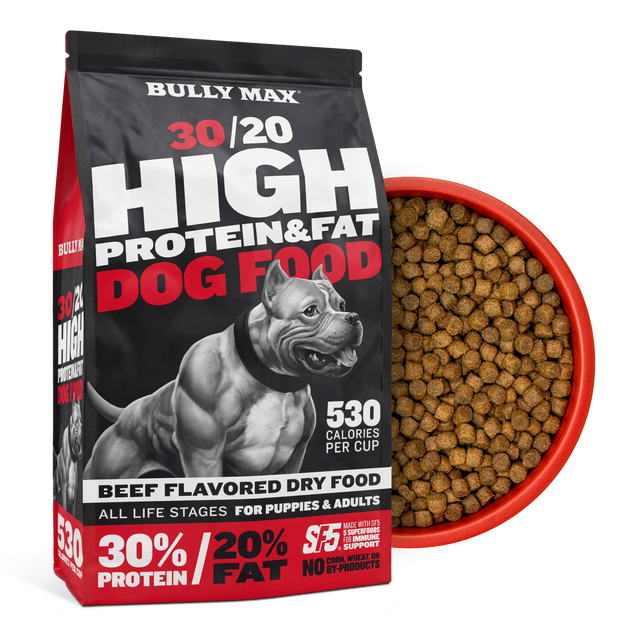
If you want a recipe built around real beef, our chicken-free 30/20 beef formula delivers meat-based protein in every cup.

TRY BULLY MAX 30/20 HIGH-PROTEIN BEEF DOG FOOD
Chicken-free, meat-based nutrition with 30% protein, 20% fat, and 530 calories per cup for strength and energy.
Named Meat Meals
Meat meal is one of the most misunderstood forms of meat in dog food. A named meal, such as chicken meal or lamb meal, is meat from one named species that has been cooked to remove most of the water and some of the fat. What is left is a concentrated, high-protein ingredient that works well in dry food. It's not the same as a by-product. Learn more in our guides to meat meal in dog food and chicken meal in dog food.
High-quality named meat meals include:
- Chicken meal
- Lamb meal
- Duck meal
- Turkey meal
- Bison or buffalo meal
- Beef meal
Be more cautious with meals that don't name the animal, such as "meat meal," "animal meal" or "meat and bone meal." They can come from mixed sources, and quality varies.
Whey Protein
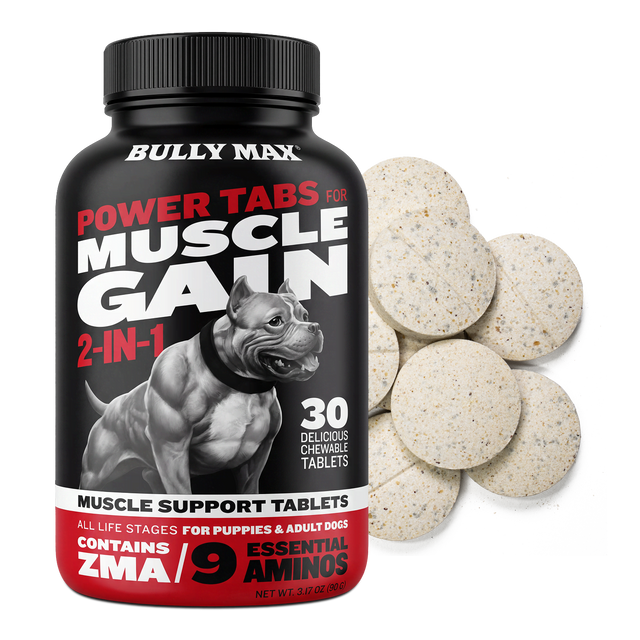
Whey is a highly digestible protein from milk with a strong amino acid profile. It is used in many supplements, like our Liquid Muscle Gain Supplement, to add protein and calories on top of a complete food.
Protein Sources to Limit
If the best protein sources come from named animals, the weaker sources are plant proteins used as the main protein and vague animal ingredients.
Plant-Based Protein
Plant ingredients like corn gluten meal, wheat gluten, soybean meal and pea protein contain protein, and they are safe for most dogs. The problem is when they are stacked near the top of the label to raise the protein number. They tend to be lower in some essential amino acids and less digestible than meat, so the protein percentage overstates the quality you're getting.
By-Products and Unnamed Meat
By-products are the clean parts of an animal other than muscle meat, such as organs like liver, kidney and spleen. Under AAFCO definitions, meat by-products do not include hair, horns, teeth or hooves, and poultry by-products do not include feathers. Some by-products, like organ meat, are nutritious. The issue is that "by-products" and "meat by-products" don't tell you which animal or which parts, so quality is hard to judge. A named meat or named meal at the top of the list is the safer bet.
How to Read the Protein Number on a Dog Food Label
Most people look at the "Guaranteed Analysis" on their dog food and trust it to show how much protein is in the food. It's useful, but it does not tell the whole story, for three reasons.
1. The Guaranteed Analysis Doesn't Show Quality
The protein figure only measures how much protein is present, not where it comes from or how well your dog can use it. Dog Food Advisor makes the point with a memorable example: if you grind up a pair of leather boots, some used motor oil, and a scoop of sawdust and send it to a lab, the results come back looking like a decent dog food: 32% protein, 18% fat and 3% fiber. Obviously, that is not something you would feed your dog. The numbers look fine, but almost none of it is digestible nutrition.
2. Moisture Changes the Numbers
If you've compared a dry food and a canned food, you probably noticed the canned food shows far less protein. That is mostly water. Canned food can be 75% to 80% moisture, while kibble is around 10%. To compare fairly, convert both to a dry matter basis: divide the protein percentage by the percentage of the food that is not water.
| Dry food example | Wet food example | |
|---|---|---|
| Protein on the label (as fed) | 30% | 10% |
| Moisture on the label | 10% | 78% |
| Dry matter | 100 - 10 = 90% | 100 - 78 = 22% |
| Protein on a dry matter basis | 30 / 90 = 33% | 10 / 22 = 45% |
Example numbers for illustration. Use the values from your own labels.
In this example, the wet food actually has more protein per bite of dry matter, even though its label number is much lower.
3. Look at the Ingredient List
Because the guaranteed analysis can't show quality, always read the ingredient list to see where the protein comes from. Look for a named meat or named meat meal first, and be wary when several plant proteins appear near the top. Our guide to dog food ingredients to look for and avoid walks through the label step by step.
Make the Right Choice for Your Dog
Now that you know the difference between strong and weak protein sources, the rule is simple: choose a complete and balanced food with a named animal protein first, then make sure it has enough calories for your dog's size and activity. If you're feeding for muscle or weight gain, pair that food with exercise; see our top dog muscle-building tips.
Want to add more real meat to the bowl you already feed? A freeze-dried raw beef topper is a simple way to boost protein at any meal.

UPGRADE ANY BOWL WITH FREEZE DRIED RAW BEEF
Add real beef, extra protein, and nutrients to any meal. Serve it as a topper, treat, or rehydrated meal.
Frequently Asked Questions
What are the best protein sources for dogs?
Named animal proteins: chicken, turkey, beef, lamb, fish, eggs, organ meats and named meat meals such as chicken meal or lamb meal. Make sure the label names the animal.
What is the best protein for dogs with chicken allergies?
Beef, lamb, fish or another protein your dog has not reacted to. Check the whole label, because chicken fat and chicken meal can appear lower on the list. Your vet can help confirm a food allergy.
Is high-protein dog food good for dogs?
For healthy dogs, yes. Active dogs, puppies and dogs gaining weight or muscle often benefit from more protein. Dogs with kidney or liver disease should follow their vet's diet plan.
How much protein does a dog need?
AAFCO minimums are 18% protein for adults and 22.5% for puppies on a dry matter basis. Many active dogs do well on foods well above those minimums.
Is meat meal a good protein source for dogs?
A named meal like chicken meal or lamb meal is a good, concentrated protein source. Unnamed "meat meal" is harder to judge.
Are by-products bad for dogs?
Not always. Organs can be nutritious, and AAFCO definitions exclude hair, hooves, horns and feathers. But "by-products" do not name the parts or animal, so named meats are the better choice.


1 comment
Excellent information.
Thank you.