How to Build Muscle on Your Rottweiler
To build muscle on your Rottweiler, combine three things: a high-protein, calorie-appropriate diet, a weekly mix of cardio and full-body strength work, and enough rest for muscles to recover. Wait until your Rottie is fully grown before adding heavy resistance, and get a vet check first. Here is how to do each part safely.
Rottweilers are big dogs. Breed standards put adult males at roughly 95 to 135 pounds and females at roughly 80 to 100 pounds. If you're the proud owner of a Rottie, you know that big size is matched by big energy: these canines love to run around and play with their owners.
You want your dog to maintain its size and bulk without carrying excess fat. The solution? Help them build and maintain lean muscle mass. This guide explains how to safely and effectively build muscle on your Rottweiler.
Before You Start: Is Your Rottweiler Ready?
- Age: Rottweilers are a large breed and keep growing well past their first birthday. Keep puppies to free play, walks and light games. Ask your vet before adding weighted vests, weight pulling or long runs, usually not before 18 to 24 months.
- Joints: Rottweilers are prone to hip and elbow dysplasia and cruciate (ACL) injuries. A vet check before a new routine is a smart first step.
- Body condition: Get an overweight Rottie lean first. Extra fat puts more load on joints. Use our dog weight chart to check.
- Heat: Black coats absorb heat. Train in the cool part of the day and keep water on hand.
Ensure Your Rottweiler Gets Their Exercise
Physical activity is important because it helps your dog burn off pent-up energy and prevents obesity. According to the American Kennel Club, obesity in dogs is linked to a slew of health problems, from an increased risk of arthritis to liver disease, diabetes, kidney disease, and more.
Rottweilers have naturally muscular physiques like many guard dogs, including boxers, bulldogs, Dobermans, and pit bulls. One of the most important things you can do to help your Rottweiler bulk up is to ensure they get sufficient physical activity.

Cardiovascular Exercises
Cardiovascular exercise boosts your dog's heart and lung health. It also helps expend energy and burn calories, preventing unhealthy weight gain. It can further promote gastrointestinal regularity and help regulate eating and sleeping patterns.
Sufficient exercise also keeps your dog entertained, preventing boredom. This helps stave off potential behavioral issues like nuisance barking or tearing up your furniture.
To get your dog moving, take them for walks, play with them outside, or have them run alongside you as you cycle once they are fully grown. If you have a body of water nearby and your Rottie likes to take a dip, swimming is another option and is easy on the joints.
Muscle-Building Exercises
Muscle training should target the entire body, from the chest and shoulders to the haunches and back legs. You've probably seen dogs that appear overly bulky at the front. This is due to uneven training. It's problematic, as it can cause balance issues and result in mobility problems, back pain, and hip issues.
Here are some activities you can do with your Rottweiler to build muscle evenly:
- Flirt pole: A flirt pole has a long handle with a toy or lure at the end. It's like a giant cat toy. You move the lure in different directions and let your pup chase it. Keep turns wide and sessions short to protect the knees.
- Fetch: Yes, even a simple game of fetch can help boost your Rottweiler's muscles. Fetching uphill adds work for the hind legs. For extra resistance in an adult dog, use a slightly heavier, dog-safe retrieve toy.
- Tug of war: A sturdy rope is great for this resistance training activity. Encourage your Rottie to stay low to the ground as they pull. When they crouch, they work a different set of muscles in their legs than when moving forward.
- Stair climbing: Going up stairs requires your dog to use leg muscles they don't normally put to use on flat ground. Walk them up at a steady pace rather than letting them bound down, which is harder on the front joints.
- Squats: Have your dog repeatedly sit and stand to perform "doggy squats." You can use treats to motivate them. For a fully grown, vet-cleared adult, you can add a weighted vest: start very light and never go above about 10% of body weight.
- Spring pole: If you don't have time or energy to invest in every workout, a spring pole is a great solution. It consists of a spring connected to a rope you can hang from a beam or branch, so your pup can play tug of war solo. Supervise every session.
- Weight pulling: If you really want to build your dog's muscles, you'll have to add more resistance. Weight pulling is ideal for adult dogs. You put your dog in a specialized weight-pulling harness and have them drag a light load behind them. Have them go 10 to 20 yards at most and then rest for two minutes before repeating. Build up weight gradually to avoid overexertion.
For tug of war and spring pole sessions, use a tug built for strong pullers so it holds up to a Rottie's full strength.

TRY THE BULLY MAX HEAVY-DUTY TUG TOY
A tough linen or jute tug with nylon handles. Built for drive building, training, and interactive play with strong dogs.
A Sample Weekly Routine
| Day | Focus | Example |
|---|---|---|
| Mon | Cardio | Brisk walk or swim, 30–45 min |
| Tue | Strength | Tug, squats, uphill fetch, 15–20 min |
| Wed | Easy day | Walk and sniff time |
| Thu | Cardio | Flirt pole intervals, 10–15 min, plus a walk |
| Fri | Strength | Spring pole or light weight pull, 15–20 min |
| Sat | Mixed | Hike or long walk with stairs or hills |
| Sun | Rest | Rest day |
A starting point for a healthy, fully grown adult. Scale it down for dogs that are new to exercise. For a full progression, see our 30-day dog muscle building guide.
Rest Days
Just like humans, dogs need rest days if they're getting a lot of exercise. Rest days give your Rottie's body time to recover from workouts and allow muscle growth. Strength training stresses the muscle fibers. When your dog rests, the muscles repair themselves and grow, adding the bulk you're hoping to achieve.
Rest days can also help prevent injuries related to excessive exercise. Rottweilers are susceptible to certain health issues, including hip dysplasia and ACL damage. Before you start your pup on any new exercise routine, consult a veterinarian. This is especially important for older or overweight dogs, which have a higher risk of joint problems.
Give Your Dog the Fuel They Need With High-Quality Food
Rottweilers are a hardworking breed, and they need plenty of energy to fuel their physical activity. Food provides them the fuel they need for maximum performance. Diet helps repair and build tissues, including muscle fibers. A balanced diet also supports a shiny coat, steady energy and normal immune function.
When planning your dog's diet, consider factors like their current fitness level, age, and existing health problems. If your dog is overweight, it may do better on a lower-fat food until they are lean.
How Many Calories Does a Rottweiler Need?
There is no single number. A 100-pound Rottweiler that lounges most of the day needs far fewer calories than one that trains daily, and puppies, seniors and neutered dogs all differ. Start with our dog food calculator, which uses your dog's weight and activity level, then weigh your dog every two weeks and adjust portions in small steps. Muscle gain should show up as a firmer, more defined body, not a disappearing waist.
What to Feed for Muscle
So, just what should you be feeding your Rottie? Prioritize a complete diet built on animal protein, since protein supplies the amino acids that muscle is made from. Look for a named meat as the first ingredient and enough fat to fuel training.

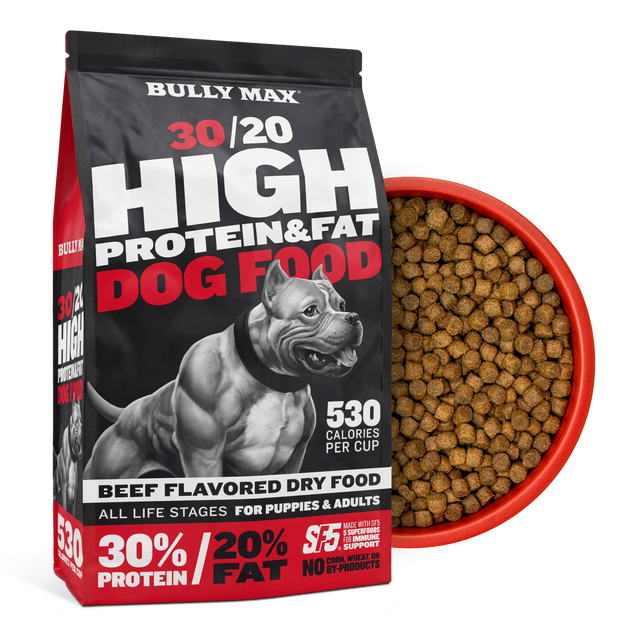
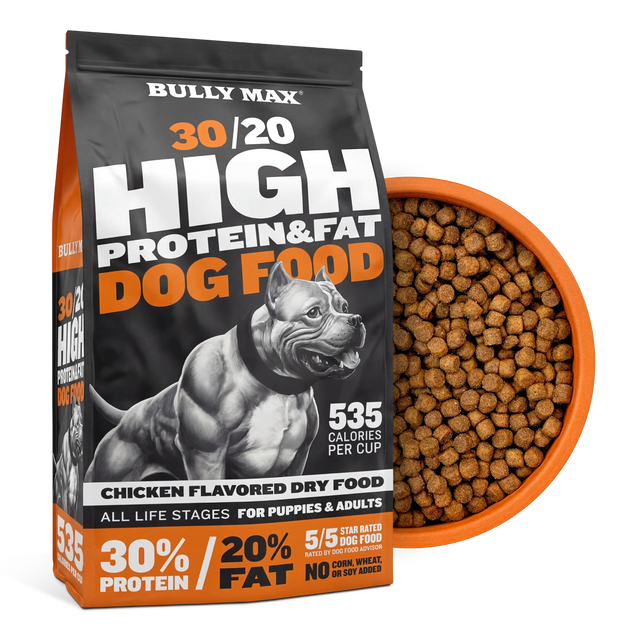
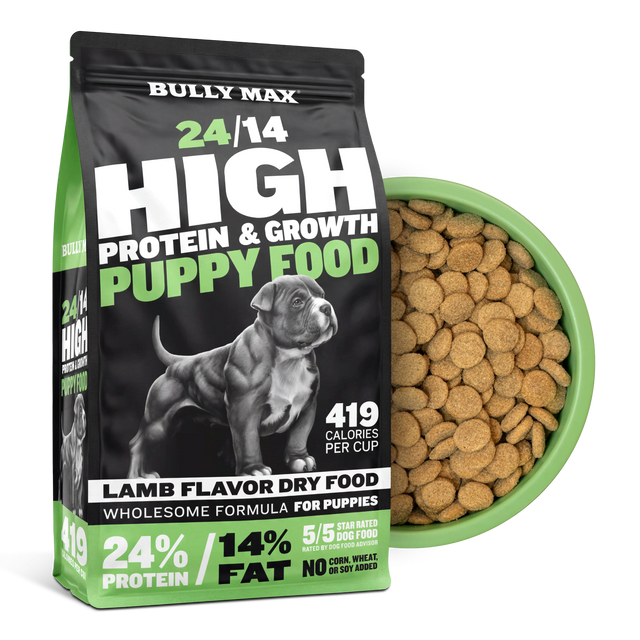
Don't skimp on your pup's food. Bully Max offers high-protein dog food with 30% protein, 20% fat and 535 calories per cup from meat-based nutrition. Because it is calorie-dense, a big dog can get the fuel it needs without huge bowls. Every batch is triple tested for safety, and it's made in the USA.
For a large, active Rottweiler, a calorie-dense, meat-based food makes it easier to fuel training without oversized meals.

TRY BULLY MAX 30/20 HIGH-PROTEIN DOG FOOD
Fuel strength and energy with meat-based nutrition, 30% protein, 20% fat, and 535 calories per cup.
Avoid giving your dog foods lacking in nutritional value, so-called "empty calories." Table scraps are generally a no-no. Plus, many human foods are actually dangerous for dogs. Cooked poultry bones can splinter and injure your dog's mouth or gut, for example. Save the people food for people.
Finally, make sure your Rottweiler always has fresh water. A common rule of thumb is about an ounce of water per pound of body weight per day, and more in hot weather or after hard exercise. Let them drink freely, but avoid big gulps right before intense exercise.
Try Supplements to Support Muscle and Recovery
A complete dog food should cover your Rottie's basic nutrient needs. For dogs in hard training, a supplement can add extra amino acids and support on top of a good diet. You feed your dog supplements alongside their regular diet, following the label.
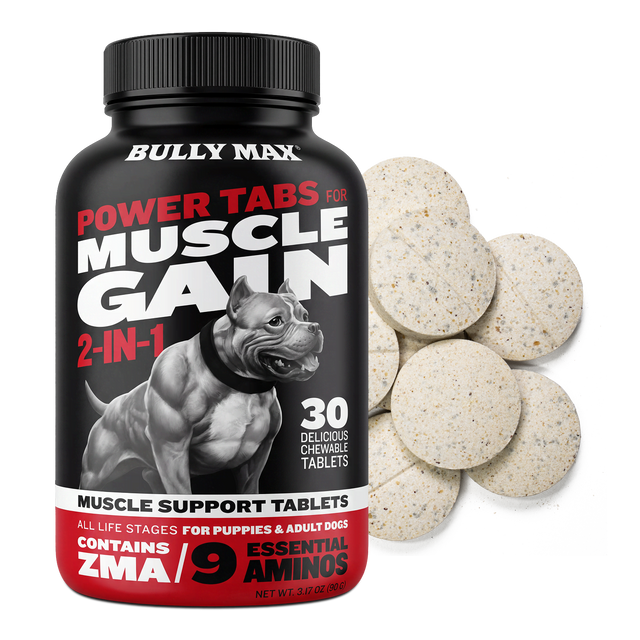
Bully Max Muscle Builder tablets add amino acids, fatty acids, vitamins, and minerals to support muscle, strength and recovery when paired with good food and consistent training.
If you want to add a daily supplement to your Rottie's routine, a muscle-building tablet is an easy place to start. For joint, coat and gut support, 9-in-1 Vitality Chews are another option.

TRY BULLY MAX MUSCLE BUILDER TABLETS
Daily tablets with amino acids, vitamins and minerals to support muscle, strength and recovery alongside a high-protein diet and regular training.
FAQ
How do I make my Rottweiler more muscular?
Feed a complete, high-protein diet at the right calories, train cardio and full-body strength a few days a week, and give rest days. Most visible change comes from consistency over months, not weeks.
At what age can a Rottweiler start strength training?
Light play and walks are fine for puppies. Heavier work such as weighted vests and weight pulling should wait until your vet confirms your dog is done growing, often around 18 to 24 months for this breed.
Do Rottweilers need muscle building supplements?
Not always. A complete diet covers the basics. Supplements can add extra support for dogs in hard training. Talk to your vet if your dog has a health condition.
Why is my Rottweiler skinny?
Young Rottweilers often look lanky while they grow. If an adult is thin, see your vet to rule out worms, dental pain or illness, then increase calories gradually. Our guide on how to help your dog gain weight explains how.
Bully Max Has the Key to Building Muscle on Your Rottweiler
As the above guide has hopefully made clear, there is no silver-bullet solution to building muscle on a Rottie. It requires a balanced approach combining diet, exercise, rest and, if you choose, supplements. It's always best to consult a veterinarian before making any major changes to your dog's care plan.
Start with the food. Bully Max 30/20 High Protein Dog Food gives your Rottweiler meat-based protein and 535 calories per cup, and you can save 10% with autoship. Add Muscle Builder once your training routine is in place.


1 comment
This my first time use bully Max I going to try on my to rottweiler puppy a male and female too ok thank for the help