Dog Feeding Schedule: How Often to Feed Your Dog (and Fix Picky Eating)
Most adult dogs do best on a feeding schedule of two meals a day, about 8 to 12 hours apart, such as 7 am and 6 pm. Puppies need 3 to 4 meals a day until about 6 months old. Serve each meal for a set time (about 15 minutes), then pick the bowl up. That simple routine keeps your dog at a healthy weight and is the easiest fix for a picky eater.
If your dog is a picky eater, doesn't finish their food in one sitting, or is having trouble putting on weight, a schedule is the solution. When dogs are used to having food available at all times, they pick and choose when they eat. When they learn that food is only available for a limited time, they learn to eat everything you give them. Watch the short video, then follow the steps below.
How Often Should You Feed Your Dog?
| Age | Meals per day | Typical times |
|---|---|---|
| 8 to 12 weeks | 4 | 7 am, 11 am, 3 pm, 7 pm |
| 3 to 6 months | 3 | 7 am, 12 pm, 6 pm |
| 6 to 12 months | 2 to 3 | 7 am, (12 pm), 6 pm |
| Adult (1 year+) | 2 | 7 am and 6 pm, 8 to 12 hours apart |
| Senior | 2 (or 3 smaller meals) | Same routine; smaller meals can be easier to digest |
Times are examples. What matters is consistency: feed at about the same times every day.
Some adult dogs can do fine on one meal a day, but two meals keep hunger and energy steadier and are easier on the stomach, especially for large, deep-chested dogs. To figure out how much goes in each meal, work out your dog's daily amount with our guide to how much to feed your dog or the dog food calculator, then divide it by the number of meals.
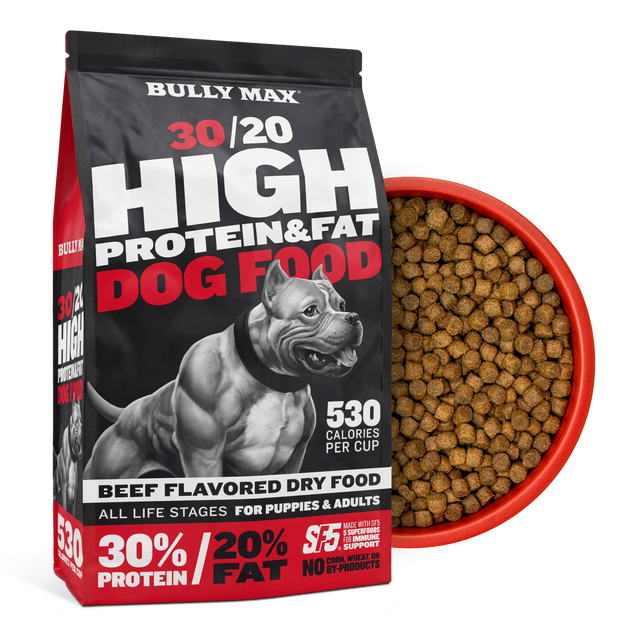
Before we go further, a quick note on fuel: if your dog needs more strength and energy from the bowl, a meat-based, high-protein food is the simplest place to start.

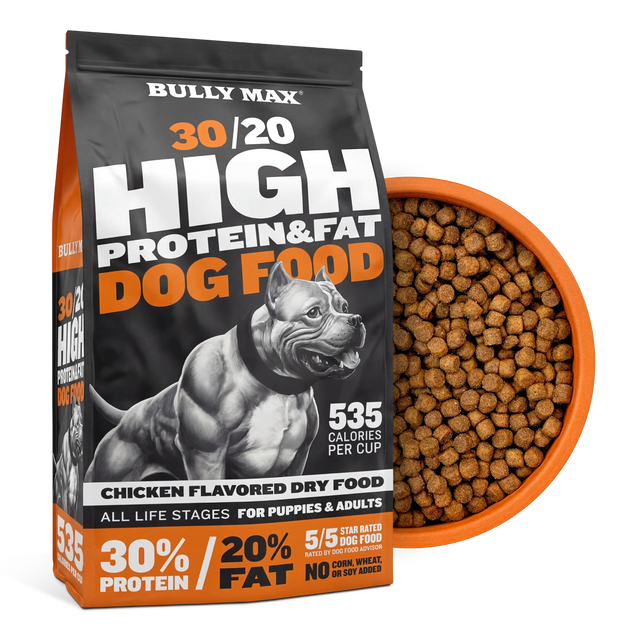
FUEL YOUR DOG WITH BULLY MAX 30/20 HIGH-PROTEIN FOOD
Fuel strength and energy with meat-based nutrition, 30% protein, 20% fat, and 535 calories per cup.
Sample Dog Feeding Schedules
Adult Dog
- 7:00 am: potty break, then breakfast (half the daily amount), 15 minutes.
- Midday: water, walk or play. Treats count toward the day's food.
- 6:00 pm: dinner (the other half), 15 minutes, then a calm evening.
Young Puppy (8 to 12 Weeks)
- 7:00 am, 11:00 am, 3:00 pm, 7:00 pm: four small meals, each followed by a potty break.
- Pick up water about two hours before bed to help with house training, unless it's hot or your vet advises otherwise.
See our puppy daily schedule for how meals fit around naps, training and potty breaks.
Active, Working or Underweight Dog
- Three meals (for example 7 am, 1 pm, 7 pm) make a larger daily amount easier to eat and digest.
- Feed hard-working dogs at least an hour before intense exercise, and give them time to cool down before eating afterward. Many vets recommend avoiding hard exercise right after a big meal for large, deep-chested breeds.
Why Scheduled Meals Beat Free-Feeding
- You know how much your dog eats. A drop in appetite is often the first sign something is wrong.
- Easier weight control. Free-fed dogs tend to overeat or graze without real hunger.
- Better appetite. Dogs on a schedule come to meals hungry and eat what you give them.
- Easier house training. What goes in on a schedule comes out on a schedule.
- Fewer fights. In multi-dog homes, timed meals prevent one dog from eating another's food.
How to Train Your Dog to Eat Everything You Give Them
- Use the dog food calculator to determine how much food your dog needs each day. You can adjust the daily amount for your goals: increase it slightly if you want your dog to gain weight, or reduce it if you want your dog to lose weight.
- For this method to work, you cannot leave food in your dog's bowl throughout the day or night. The bowl stays empty except at scheduled feeding times. Fresh water should always be available.
- For your dog's first meal of the day, set a timer for 15 minutes. Fill your dog's bowl with half of their food for the day. After 15 minutes, take the bowl away. If any food is left, put it back in the bag. Do not add the uneaten portion to the next meal.
- For your dog's second (and last) meal of the day, fill the bowl with the other half of their daily food. After 15 minutes, take the bowl away. If any food is left, put it back in the bag.
Repeat this process daily. Skip extra treats and table scraps while you're teaching the routine.
A calorie-dense food makes this easier for dogs that need to gain weight, since they get more out of each 15-minute meal.
TRY BULLY MAX 30/20 HIGH-PROTEIN DOG FOOD
Fuel strength and energy with meat-based nutrition, 30% protein, 20% fat, and 535 calories per cup.
If your dog eats little or no food during the first few feedings, don't panic, and don't break the feeding schedule. Most healthy dogs catch on within a few days and learn to eat everything that's given to them.
When to call your vet instead: if an adult dog refuses food for more than a day or two, if a puppy skips more than a meal or two, or if not eating comes with vomiting, diarrhea, lethargy or weight loss. A sudden change in appetite can be a sign of illness. See what causes loss of appetite in dogs.
More Tips for Picky Eaters
- Cut back on treats and scraps. A dog full of snacks has no reason to eat dinner.
- Check the food is fresh. Stale or rancid kibble is a common reason dogs lose interest. See how to store dry dog food.
- Add warm water. A splash of warm water releases aroma and softens kibble.
- Use a topper the right way. Mix a small amount of a high-protein topper through the food at scheduled meals, not as a reward for refusing.
- Keep mealtime calm. Feed in a quiet spot away from other pets.
- Don't switch foods constantly. Frequent changes can teach a dog to hold out for something better and can upset the stomach.
Once your dog is eating on schedule, a sprinkle of freeze-dried beef on top of the bowl adds extra protein and makes mealtime something to look forward to.

UPGRADE ANY BOWL WITH FREEZE DRIED RAW BEEF
Add real beef, extra protein, and nutrients to any meal. Serve it as a topper, treat, or rehydrated meal.
How to Switch Dog Foods
Prevent an upset stomach by switching to a new food gradually over about a week:
| Days | New food | Old food |
|---|---|---|
| 1 and 2 | 25% | 75% |
| 3 and 4 | 50% | 50% |
| 5 and 6 | 75% | 25% |
| 7 onward | 100% | 0% |

If your dog has a sensitive stomach, stretch each step to three or four days. Loose stool during a switch usually settles; if it doesn't, slow down or see your vet. Our guide on how to firm up your dog's stool can help.
Bonus Tip: Save on Dog Food With Autoship
A feeding schedule makes it easy to know exactly how much food you use each month. Join Bully Max autoship and save 10% on every order. You can change your ship date, skip a shipment or change the amount anytime.
Frequently Asked Questions
How many times a day should a dog eat?
Most adult dogs should eat twice a day. Puppies need 3 to 4 meals a day until about 6 months, then 2 to 3.
What is the best time to feed a dog?
Any consistent times about 8 to 12 hours apart work, such as 7 am and 6 pm. Consistency matters more than the exact hour.
Is it OK to feed a dog once a day?
Some healthy adult dogs do fine on one meal, but two meals are usually better for steady energy and digestion, especially for large, deep-chested breeds.
Should I leave food out for my dog all day?
We do not recommend free-feeding. Scheduled meals make it easier to control weight, spot appetite changes and fix picky eating.
How do I get my picky dog to eat?
Feed at set times, pick the bowl up after 15 minutes, cut back on treats, make sure the food is fresh, and stay consistent for a few days. See a vet if your dog stops eating for more than a day or two.


4 comments
12 pit will now only eat bagel an cream cheese refuses dog food all kinds eats barely 1/4 meal a day
This is such a good idea! Thanks so much for sharing
Glad this helped Sarah!
bully_max I agree