Top Dog Muscle Building Exercises for Bullies and Pit Bulls
The best dog muscle building exercises are the ones that add resistance or explosive effort: spring pole work, flirt pole sprints, weight pulling, sled or tire drags, hill work, swimming and core exercises. Rotate a few of them through the week, keep sessions short and safe, and feed enough protein and calories for your dog to actually build the muscle.
Want to build some serious muscle in your dog? Here's where you should get started. Think of these as the most effective muscle-building exercises out there for your bully or pit bull, with how to do each one safely.
| Exercise | Main muscles | Equipment | Level |
|---|---|---|---|
| Spring pole | Jaw, neck, shoulders, back, rear | Spring pole | Adult |
| Flirt pole | Rear legs, core, cardio | Flirt pole | Adult (gentle for puppies) |
| Weight pull | Chest, shoulders, rear drive | Pull harness, cart | Conditioned adult |
| Sled or tire drag | Chest, shoulders, rear drive | Pull harness, light drag | Adult |
| Hill walks and sprints | Rear legs, glutes | A hill | Adult |
| Swimming | Whole body, low impact | Safe water, life jacket | All ages |
| Core and balance work | Core, stabilizers | Poles, cushion | All ages |
| Tug | Jaw, neck, front end | Tug toy | All ages (gentle for puppies) |
Before we go further, a quick note on fuel: if your Bully or pit bull needs more strength and energy from the bowl, a meat-based, high-protein food is the simplest place to start.

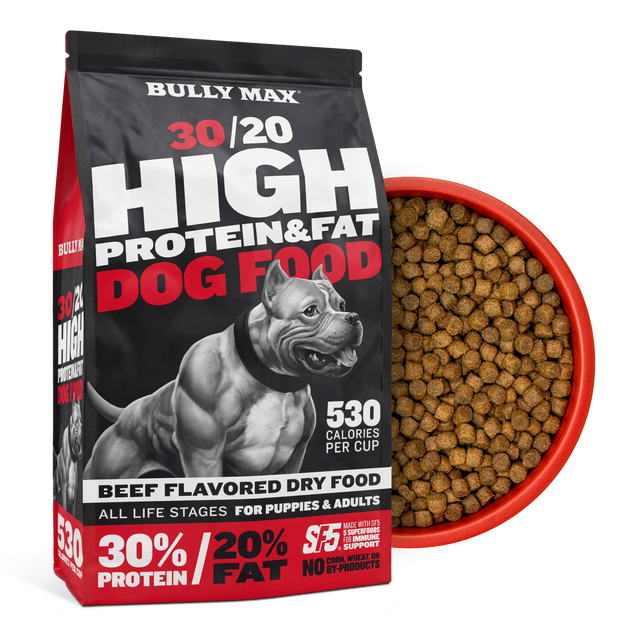
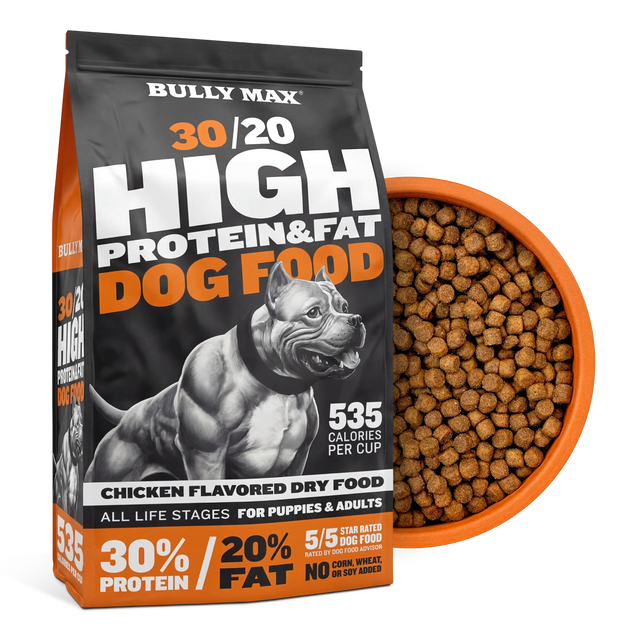
FUEL YOUR DOG WITH BULLY MAX 30/20 HIGH-PROTEIN FOOD
Fuel strength and energy with meat-based nutrition, 30% protein, 20% fat, and 535 calories per cup.
1. The Spring Pole
What is a spring pole and how does it work?
If you're looking for ways to give your dog more exercise, a great place to start is with a spring pole. A spring pole is basically a spring connected to a rope that hangs down from a tree branch or a wood beam.
The beauty of the spring pole is that it allows your dog to play tug-of-war with the spring. Your dog grabs the rope and pulls, hangs and shakes against the resistance, which works the jaw, neck, shoulders, back and rear legs.
It's a great way to provide your bully with fun while allowing them to expend excess energy (which results in a better-behaved dog). Always stay with your dog while they use it.
And, of course, a spring pole will also go a long way in helping your dog to develop bigger, stronger muscles, along with a high-quality dog food.
Here's a video that shows you how to build a spring pole in just a couple minutes at home:
How to use your spring pole
Once your spring pole is completed, the next step is to hang it from a very sturdy tree branch or wood beam overhead, over soft ground.
You should start with your spring pole about 4 feet off the ground. As your dog grows bigger and stronger, you can raise the spring pole over time to give your dog a greater challenge. Many conditioned adult dogs love to play with spring poles that are 6 feet high or more. Puppies should keep all four feet on the ground.
At first, your dog may not understand how to play with the spring pole. If that's the case, try shaking the spring pole to entice your dog to jump at it. You can also attach a cowhide to the rope to make your dog more interested.
If that doesn't work, lower the spring pole to the ground, and play tug-of-war with them. Once your dog gets the idea, you can gradually begin to raise the rope.
Starting on the ground with a game of tug works best with a toy built for strong pullers. A heavy-duty tug with handles makes those first sessions easy.

TRY THE BULLY MAX HEAVY-DUTY TUG TOY
A tough linen or jute tug with nylon handles. Built for drive building, training, and interactive play with strong dogs.
Want the full parts list and build steps? Here's how to build a spring pole. And here's a video of ACE from DarkDynastyK9s going to work on the completed spring pole:
2. The Flirt Pole
What is a flirt pole and how does it work?
Think of the flirt pole like a giant cat toy.
It consists of a long stick with a string attached to it, and a rope or other toy at the end. All you have to do is move it around and your dog will naturally chase after the end of the rope. It's a simple and cheap tool that is easy to use for the owner, while giving your dog an amazing workout.
This toy taps into your dog's natural hunting instincts, and is a great way to train your dog's ability to sprint, stop and change directions, which builds the rear legs and core.
Finally, the flirt pole is a great way to tire out your dog when he or she has too much energy, before or after a walk. Keep rounds short: it's sprint work.
Before using a flirt pole, it's important for your dog to already know a few basic commands. (Otherwise, you may have a hard time getting your dog to cooperate.) Those commands are:
- Sit
- Down
- Stay
- Leave It
- Drop It
Here's a quick video of Fred Duran from Primo Line Kennels showing you how to make a flirt pole at home:
How to use the flirt pole:
More detail: how to make a DIY flirt pole and how to get your dog interested in the flirt pole.
3. The Sport of Weight Pull
What is weight pulling and how do you get started?
Weight pulling is exactly what it sounds like: it's where your dog pulls weight (usually a wheeled cart loaded with bricks or concrete) by means of a harness.
Because it lets you add resistance a little at a time, weight pulling is one of the best exercises for building lean muscle in dogs. It's also a more rigorous and demanding form of exercise, so you should always check with your vet before getting started with weight pulling, and wait until your dog is physically mature. Also be sure to progress slowly, and make sure your dog gets the rest they need to fully recover from each weight pulling session.
Many owners find that participating in weight pulling is a great way to strengthen the owner-pet bond. Because you act like your dog's coach in this sport, it really brings the two of you together as a team. Read our full guide on how to train your dog to weight pull.
Weight pull and spring pole work burn a lot of calories. A high-calorie performance food helps hard-working dogs stay fueled for training and recovery.

TRY BULLY MAX PRO SERIES 31/25 DOG FOOD
High-calorie performance nutrition with 31% protein, 25% fat, and 600 calories per cup for working and sport dogs.
Here's a quick video from Sam Eusebio from Dungeon Kennels 5150 teaching you how to get started with weight pulling:
4. Sled or Tire Drags
A light tire or sled dragged on a walk is the at-home version of weight pull. Use a proper pulling harness, never a collar, and start so light your dog barely notices. Add weight only when your dog walks with a level back and steady pace. A few short drags, a couple of times a week, is plenty.
5. Hill Walks and Sprints
Walking or trotting uphill shifts work to the rear legs and glutes, which is where many bullies need the most development. Start with brisk hill walks. Once your dog is fit, add a few short uphill sprints after a toy, with walking recovery in between. Keep it to soft ground and cool weather.
6. Swimming
Swimming builds strength and endurance with almost no impact on joints, which makes it great for heavier dogs, dogs coming back from time off, and seniors. Many bully breeds are not strong swimmers, so use a well-fitted life jacket and stay with your dog. See our water safety tips.
7. Core and Balance Work
A strong core keeps big muscles working together and helps prevent injuries. Easy at-home moves:
- Sit-to-stand: ask for slow sit, stand, sit repetitions for a "doggy squat."
- Cavaletti poles: walk your dog over low poles spaced a step apart to build rear awareness.
- Balance pads: have your dog stand with front feet on a firm cushion and hold for a few seconds.
8. Treadmills, Slat Mills and Weighted Vests
Treadmills and slat mills let you add steady conditioning in bad weather, but they need careful introduction and constant supervision. See dog treadmill training and how to build a cat mill (jenny mill). Weighted vests add resistance to walks; read do weighted vests for pitbulls work before you buy one, and never use one on a puppy.
How Often Should You Do Muscle Building Exercises?
Two to four strength sessions a week, on top of daily walks, is a good range for most healthy adult dogs. Leave at least a day between hard sessions that work the same muscles, and always warm up with a walk first. For a week-by-week plan that puts these exercises together, follow our 30-day dog muscle building guide.
Safety first
- Vet check before starting a strength program.
- No hanging, heavy pulling or repeated jumping until your dog is physically mature.
- Soft ground, cool weather, water on hand.
- Stop if your dog limps, refuses or seems sore the next day.
Get the Most from Your Workouts with Bully Max
You've just learned how to give your dog a great muscle-building workout. Now why not get the most benefit possible from those workouts?
Real muscle is built after exercising, when the body recovers from that exercise and repairs its muscles to be bigger and stronger. Having enough protein, calories, vitamins and minerals is essential to this muscle-building process. A thin dog can't build muscle on an empty tank, so if your dog struggles to keep weight on, fix the calories first. See how to build muscle on a dog with food and use the dog food calculator.
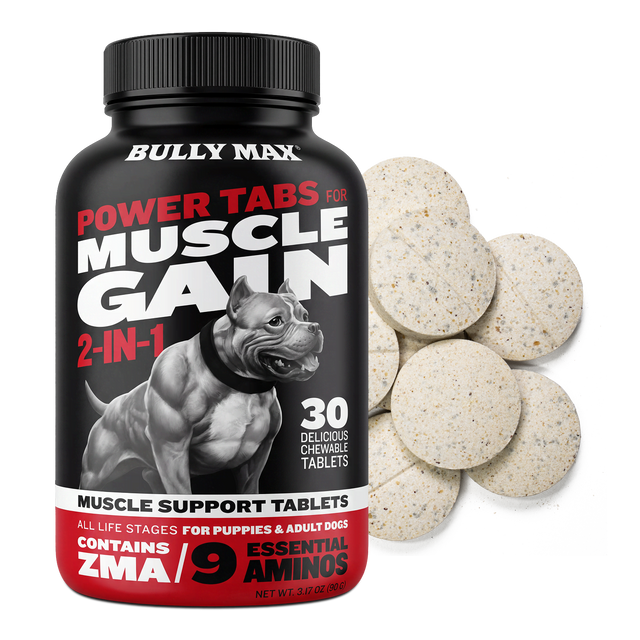
Many owners add a daily tablet alongside a meat-based diet to support muscle growth and recovery.

TRY BULLY MAX MUSCLE BUILDER TABLETS
Daily tablets that support muscle growth, strength, and recovery in dogs of all breeds and ages.
Dog Muscle Building FAQ
How do I make my American Bully more muscular?
Combine regular strength work (spring pole, pulls, hills) with a high-protein, calorie-dense diet and enough rest. Genetics set your dog's frame, but conditioning and food decide how much muscle it carries.
How long does it take to build muscle on a dog?
Most owners see visible changes over several weeks to a few months of consistent training and feeding. Take monthly photos and weigh your dog to track progress.
Can puppies do muscle building exercises?
Puppies can do gentle tug on the ground, short sniff walks, swimming and balance games. Save hanging, pulling and repeated jumping until your vet says growth plates have closed.
Use the exercises above to give your dog a great workout, then feed for the result: Bully Max 30/20 High Protein for everyday muscle, or PRO Series 31/25 for dogs in hard training.