Benefits of TruMune in Dog Food: What the Research Shows
TruMune is a postbiotic: a non-living ingredient made by fermenting a yeast, Saccharomyces cerevisiae. It is one of the few dog food ingredients with its own body of controlled, university-led research, including peer-reviewed papers in the Journal of Animal Science. In those trials, dogs fed TruMune ran faster and were more active in exercise challenges, held or gained lean mass, showed stronger antioxidant capacity, and carried more beneficial gut bacteria under stress. Bully Max adds TruMune to two foods, 30/20 High Protein Chicken and 24/14 High Protein & Growth Puppy Food. It is a food ingredient, not a medicine.
Below we explain what TruMune is, how postbiotics differ from probiotics and prebiotics, what each study found, and which Bully Max foods include it.
What Is TruMune?
TruMune® is made by Diamond V. In research papers it is called a Saccharomyces cerevisiae fermentation product, or SCFP. The dry ingredient contains the fermentation metabolites along with the yeast cells and cell-wall pieces left over from fermentation.
Postbiotic vs probiotic vs prebiotic
These three words show up on a lot of dog food labels. Here is the difference:
| Term | What it is | Example |
|---|---|---|
| Probiotic | Live microorganisms | Lactobacillus or Bacillus strains |
| Prebiotic | Fibers that feed the helpful bacteria already in the gut | Inulin, chicory root |
| Postbiotic | Non-living microbial products and their metabolites | TruMune (SCFP) |
General definitions. Check each product's label for what it actually contains.
Because nothing in a postbiotic needs to stay alive, it holds up through cooking and storage in a dry kibble. That is one reason it suits a dry food.
If your dog needs more strength and energy from the bowl, a meat-based, high-protein food that already includes TruMune is the simplest place to start.

FUEL YOUR DOG WITH BULLY MAX 30/20 HIGH-PROTEIN FOOD
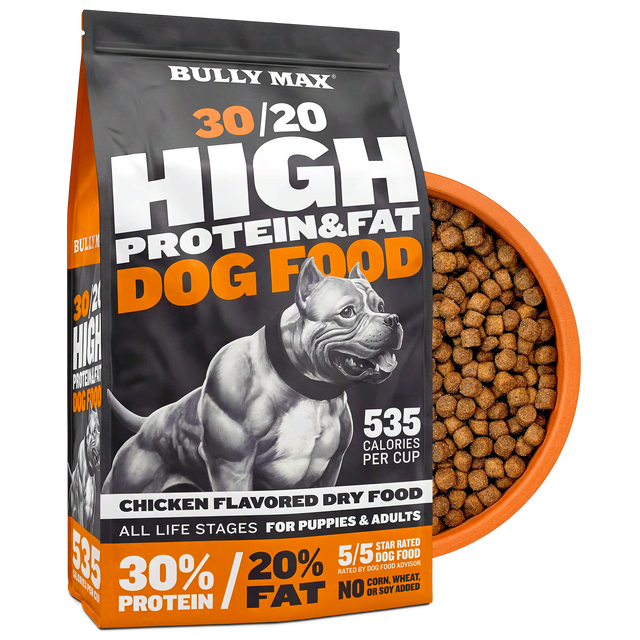
Fuel strength and energy with meat-based nutrition, 30% protein, 20% fat, and 535 calories per cup.
What the Research Found
TruMune (called a Saccharomyces cerevisiae fermentation product, or SCFP, in the papers) has been tested in controlled feeding trials run by the University of Illinois and by Four Rivers Kennel, a working-dog research kennel in Missouri. The studies added the ingredient to a complete diet and compared the dogs with the same diet without it. Here is what each one measured and found, with the numbers as the researchers reported them.
| Study | Dogs | What changed with TruMune |
|---|---|---|
| Four Rivers Kennel exercise trials (two studies, 2021) | 36 + 36 working Labrador Retrievers | Study 1: 15% greater activity across the challenge distances and 3.2% faster on the 2-, 3- and 5-mile runs; female dogs gained 12.9% lean body mass; lower muscle-damage marker (creatine kinase, P < 0.03); higher antioxidant capacity (P < 0.0001); lower IgG and IgE (P < 0.0001). Study 2: control dogs lost lean mass while TruMune dogs held it; males kept weight on less food (P < 0.0001). |
| Gut microbiome under exercise and transport stress (Oba et al., University of Illinois, 2020 abstracts; 2023 paper) | 36 working Labradors | More Lactobacillus during exercise (P = 0.02); more butyrate-producing Butyricicoccus after transport (P = 0.07); gut bacteria shifted back toward normal after a 40-mile trailer ride. |
| Lin et al., Journal of Animal Science, 2019 (University of Illinois) | 12 adult Beagles, plus 20 in a taste test | More Bifidobacterium and fewer Fusobacterium in the stool (P ≤ 0.01); lower fecal phenol (P < 0.01); stronger Th1 immune response and lower inflammatory TNF-α after immune challenge; dogs chose the TruMune diet 1.93 to 1 (P < 0.05). |
| Wilson et al., Journal of Animal Science, 2022 (University of Illinois) | 16 adult Pointers | Higher superoxide dismutase, a key antioxidant enzyme (P = 0.03); a trend toward less water loss through the skin at the ear (P = 0.054) and toward more sebum; authors concluded SCFP "may beneficially impact skin and coat health, immunity, and antioxidant status." |
| Transport stress study (Wilson et al., University of Illinois) | 16 adult Pointers, 45-minute van ride | Lower malondialdehyde, a marker of oxidative damage (P = 0.034); inflammation genes (COX-2 and myeloperoxidase) rose in control dogs but stayed flat or fell in TruMune dogs (P < 0.05); stool dry matter stayed stable while control dogs' stool got looser (trend, P = 0.065). |
Numbers are from the published papers and the official study reports. P values below 0.05 are statistically significant; values between 0.05 and 0.10 are trends. All dogs in these studies were healthy adults.
Speed, activity and lean muscle in working dogs
The performance data come from two Four Rivers Kennel studies in working Labrador Retrievers, 36 dogs in each, run over distance courses of 2 to 10 miles behind an ATV while wearing accelerometers and GPS trackers. In Study 1, dogs on the lower TruMune dose (about 31 mg per kg of body weight a day) were on average 15% more active across all challenge distances than the control group and ran the 2-, 3- and 5-mile courses 3.2% faster. Female dogs in that group gained 12.9% lean body mass over the study. In Study 2, which used older dogs, the control group lost lean tissue while the TruMune group maintained or gained it, and the TruMune males held their body weight while eating less. Combined across both studies, TruMune dogs ran 1.7% faster and were 4.5% more active. The researchers' own conclusion: TruMune "may support improved vitality as assessed by activity and speed."
Study 1 also found lower serum creatine kinase, a marker of muscle damage after hard work, in the TruMune dogs (P < 0.03), along with higher total antioxidant capacity (P < 0.0001) and a dose-related drop in TBARS, a marker of oxidative stress (P < 0.01).
Gut health under stress
Hard exercise and travel both shake up a dog's gut bacteria. In the Labrador microbiome study, TruMune increased Lactobacillus during the exercise challenge (P = 0.02) and raised Butyricicoccus, a bacterium that makes butyrate, the main fuel for the cells lining the colon, after a 40-mile trailer ride (P = 0.07). The authors reported that TruMune "supported the gut microbiome in shifting to a more normal state in dogs undergoing transport stress." In the Beagle study, TruMune raised Bifidobacterium, lowered Fusobacterium and cut fecal phenol, a compound tied to stool odor, with stool scores staying in the ideal range. In the Pointer transport study, stool dry matter stayed stable in TruMune dogs while control dogs' stool got looser.
Immune balance
The immune results point to balance rather than a blunt "boost." In the Beagle study, dogs fed TruMune had more MHC-II-positive B cells and monocytes, the cells that present antigens to the rest of the immune system (P = 0.05), a stronger Th1 response (P = 0.02) and lower TNF-α when their white blood cells were challenged (P < 0.01). In the Labrador trials, IgG and IgE both fell (P < 0.0001). The Pointer transport study found that two inflammation genes, COX-2 and myeloperoxidase, rose after the van ride in control dogs but stayed flat or fell in TruMune dogs. The researchers' reading was that TruMune's benefit under transport stress works through calmer innate immune activation.
Skin, coat and antioxidant defenses
In the 2022 Pointer study, dogs on TruMune had higher superoxide dismutase, one of the body's main antioxidant enzymes (P = 0.03), and a trend toward more sebum, the natural oil that conditions skin and coat. Subjective coat scores did not change in that study, so this is support for the skin's own defenses rather than a visible before-and-after. The authors concluded that SCFP "may be most beneficial to geriatric and/or working dogs and dogs with skin sensitivities."
Dogs like the taste
In a two-bowl test with 20 Beagles, dogs ate the TruMune diet over the control diet at a ratio of 1.93 to 1 and went to it first on 27 of 40 occasions (P < 0.05). That matters for picky eaters, and it matches what our own customers tell us about 30/20 Chicken.
What the research does not show
These were healthy adult dogs, and the studies measured markers of performance, digestion and immune function. None of them tested TruMune as a treatment for any disease, and no food ingredient should be used as one. If your dog is sick, see your vet.
What This Means for Your Dog
TruMune is one extra piece on top of the basics. The biggest drivers of your dog's health are still a complete and balanced diet with enough protein and calories, regular exercise and routine vet care. For more on reading a label, see dog food ingredients to look for and avoid and our dog food comparison chart.
If your dog has ongoing diarrhea, vomiting, weight loss or low energy, see your vet. Our guides to firming up your dog's stool and helping an upset stomach cover common causes.
TruMune in Bully Max Dog Food
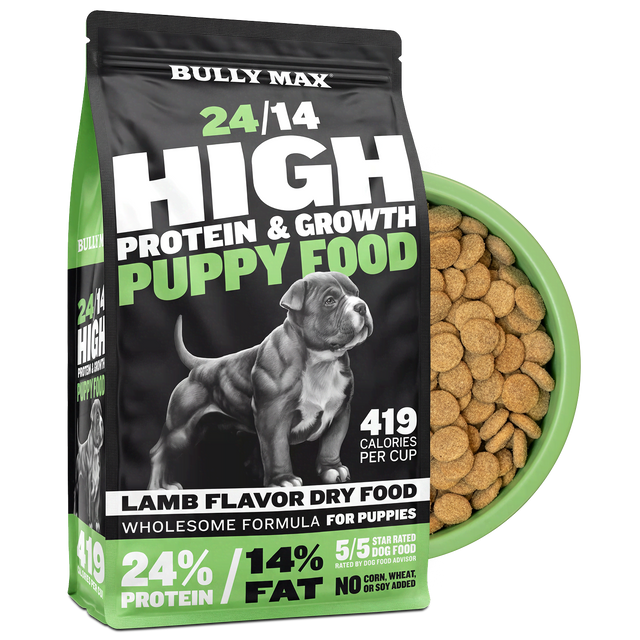
We add TruMune to two Bully Max foods: our 30/20 High Protein Chicken and our 24/14 High Protein & Growth Puppy Food, alongside high-performance, meat-based nutrition. TruMune is not in our 30/20 Beef, 25/11 Lamb, PRO Series 31/25, wet foods, treats or supplements.
| Food | Protein / fat | Calories per cup | TruMune? |
|---|---|---|---|
| 30/20 High Protein Chicken | 30% / 20% | 535 | Yes |
| 24/14 High Protein & Growth Puppy | 24% / 14% | 419 | Yes |
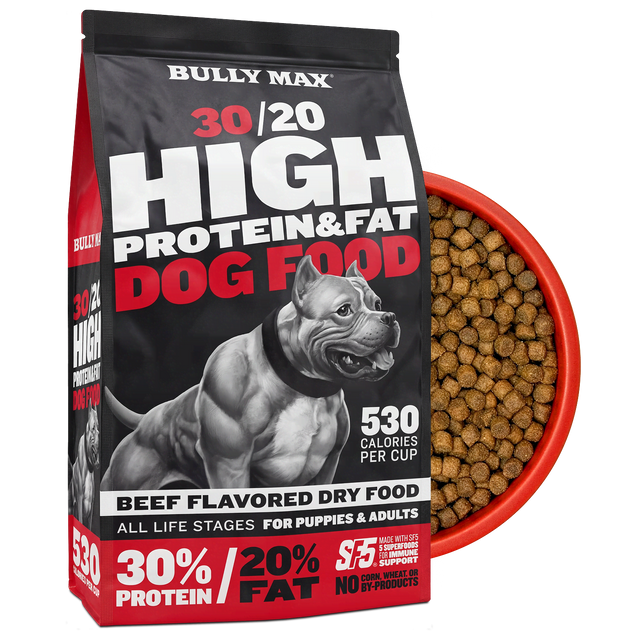
| 30/20 High Protein Beef (chicken-free) | 30% / 20% | 530 | No |
| 25/11 Lamb (chicken-free, 45% less fat) | 25% / 11% | 415 | No |
| PRO Series 31/25 High Calorie | 31% / 25% | 600 | No |
From each product page.
Bully Max is a family-owned U.S. company founded in 2009. Our food is made in the USA, every batch is triple tested for safety, and we have zero recalls.
A 30-second look at the food that carries TruMune:
TruMune for Active and Working Dogs
Training, sport, long runs and travel all put physical stress on a dog, which is why most TruMune research has looked at dogs under exercise or transport stress. For active pit bulls, American Bullies and working dogs, the goal is steady digestion and support for the body's defenses during hard work. Those dogs also need more calories, so pair the right food with the right amount. Our dog food calculator can help, and our guide to the best dog food for working dogs goes deeper.

TruMune for Puppies
Puppies go through a lot at once: a new home, new food, vaccines and fast growth. A food with TruMune helps support their digestion and immune health through that stage. Feed a food made for growth, switch slowly, and track your puppy's weight with our puppy growth chart. Our 24/14 puppy food is suitable for large-breed dogs, including large-breed puppies, under AAFCO guidelines. Read more in our guide to the best pitbull puppy food.

GIVE YOUR PUPPY BULLY MAX 24/14 PUPPY FOOD
Made for growing puppies with 24% protein, real lamb, and TruMune to support digestion and immune health.
Adding TruMune to Your Dog's Diet
The easiest way is to switch to a food that already contains it. Change foods gradually over about 7 days: start with 25% new food, then 50%, then 75%, then 100%. This helps prevent stomach upset and lets your dog get used to the new taste and texture. Our guide on how to switch your dog to Bully Max walks through it day by day.
TruMune FAQ
What is TruMune?
TruMune is a postbiotic made by Diamond V from the fermentation of Saccharomyces cerevisiae yeast. It is added to dog food to help support digestive health, immune health and antioxidant defenses.
Is TruMune a probiotic?
No. Probiotics are live bacteria or yeast. TruMune is a postbiotic, a non-living fermentation product, so it does not need to survive cooking or storage.
Is TruMune safe for dogs?
TruMune is fed as part of a regular diet. As with any food change, switch gradually and talk to your vet if your dog has a medical condition or is on a special diet.
Which Bully Max foods contain TruMune?
Two of them: 30/20 High Protein Chicken and 24/14 High Protein & Growth Puppy Food. It is not in 30/20 Beef, 25/11 Lamb, PRO Series 31/25, our wet foods, treats or supplements.
Does TruMune boost the immune system?
The research shows TruMune helps balance immune function rather than simply boosting it. In university trials, dogs fed TruMune had more antigen-presenting immune cells, a stronger Th1 response, lower IgE and IgG, and calmer inflammatory signaling under exercise and transport stress. It does not prevent or treat illness. If your dog seems unwell, see your vet.
Is TruMune peer reviewed?
Yes. TruMune research in dogs has been published in the Journal of Animal Science, including Lin et al. (2019), Wilson et al. (2022) and Oba et al. (2023), all from the University of Illinois. The Four Rivers Kennel performance studies were presented as Journal of Animal Science abstracts (Varney, Coon and Norton, 2021).
Want a Food With TruMune?
Start with Bully Max 30/20 High Protein Chicken for adults or 24/14 Puppy Food for puppies, and save 10% with Autoship. Bully Max has over 50,000 5/5 reviews and a 5/5 rating from Dog Food Advisor.
Sources: Lin C-Y et al. Journal of Animal Science 2019;97:1586-1599 (doi 10.1093/jas/skz064). Wilson SM et al. Journal of Animal Science 2022;100(9):skac245 (doi 10.1093/jas/skac245). Oba PM et al. Journal of Animal Science 2023;101:skac424 (doi 10.1093/jas/skac424). Varney JL, Coon CN, Norton SA. Journal of Animal Science 2021;99(Suppl 3):332-333 (abstract, doi 10.1093/jas/skab235.611). Wilson SM et al., University of Illinois, transport-stress study, Journal of Animal Science 2022/2023. Official study reports PF105p, PF105bp, PF106, PF108a and PF108b (Cargill/Diamond V).



2 comments
Great product even better that it’s a hometown company! My cane corso puppy is growing so fast with the bully maxx lineup.
Awesome product. My 2 1/2 year old Male Rottweiler Sonny loves the 30/20. He’s an extremely active animal at 126 lbs . All lean muscle. Thanks for your product. Matt Corcoran