The Importance of Colostrum in Dogs [Veterinarian Explains]
Colostrum is the thick, yellowish "first milk" a mother dog makes in the first day or two after giving birth. It carries antibodies and nutrients that newborn puppies need in their first 24 hours, before their own immune system is ready. For older puppies and adult dogs, bovine (cow) colostrum is sold as a supplement that may help support immune and digestive health. It is generally well tolerated, it is not a treatment for any disease, and dogs with dairy or milk allergies should skip it.
Colostrum for dogs at a glance
- Newborn puppies: colostrum in the first day of life is essential. If a puppy can't nurse, call your vet right away.
- Older puppies and adults: bovine colostrum is an optional supplement that may help support immune and gut health.
- How much: follow the product label. Antibody content varies a lot between products.
- Side effects: usually mild stomach upset or loose stool, mostly in dogs sensitive to dairy.
- Skip it if your dog has a dairy or milk allergy, and ask your vet first if your dog has a health condition.
What Is Colostrum?
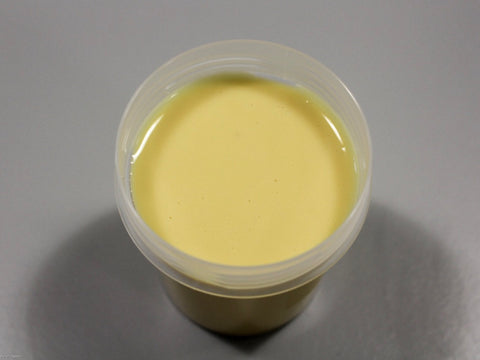
Colostrum is the first milk a mother produces after giving birth. It is richer than regular milk in antibodies (immunoglobulins), protective proteins and growth factors, which newborn puppies need while they grow and while their own immune system matures. It is usually yellow and thicker than normal milk, which is why it is sometimes called "liquid gold".
What's in colostrum
Colostrum contains protein, carbohydrates, fat, vitamins and minerals like normal milk. What sets it apart are the immune-related components:
- Antibodies (immunoglobulins): ready-made antibodies that give newborns short-term protection while their own immune system develops.
- Growth factors: compounds involved in normal growth and development.
- Lactoferrin: an iron-binding protein that is part of the body's natural defenses.
- Proline-rich polypeptides: small proteins involved in immune signaling.
Colostrum vs Milk
Colostrum and regular milk are not the same. Colostrum has more protein and antibodies, while regular milk has more lactose and fat. The antibody level in colostrum drops quickly over the first days after birth as it changes into regular milk.
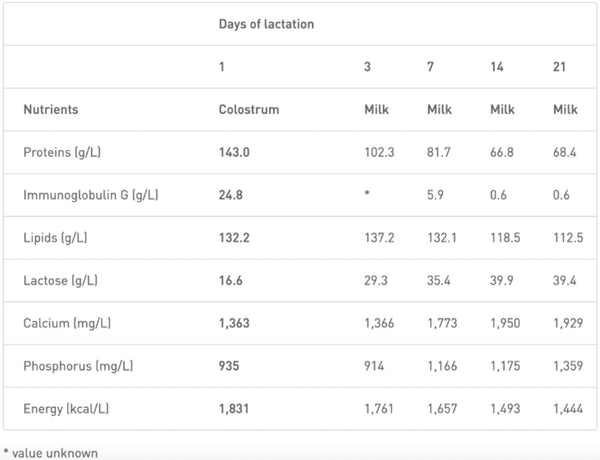
The lower lactose content is one reason bovine colostrum is used as a supplement for adult dogs, since many adult dogs don't digest lactose well. That said, it is still a dairy product, so dogs with a dairy or milk allergy should avoid it.
Colostrum's Role in Newborn Puppies
The first two weeks of a puppy's life are the riskiest. Newborns can easily become dehydrated, cold, low on blood sugar or sick. During this time they rely on their mother's colostrum and milk for almost everything. Colostrum helps newborn puppies in several ways:
- Passive immunity. Puppies are born with very little immune protection. Antibodies from colostrum give them short-term protection until their own immune system and vaccinations take over.
- Energy. Newborns have small energy reserves, and colostrum is their first source of fuel.
- Warmth. Newborns can't control their body temperature well, and the energy in colostrum helps.
- Growth. Colostrum supplies protein and growth factors for early development.
- First bowel movement. Colostrum has a mild laxative effect that helps the puppy pass its first stool (meconium).

Why timing matters
Timing is everything with colostrum. The mother's colostrum is richest in antibodies right after birth, and its antibody level falls over the first day or two. At the same time, a newborn puppy's gut can absorb whole antibodies only for a short window, roughly the first 24 hours. After that, the gut "closes" and antibodies from colostrum are no longer absorbed into the blood. That is why it matters that every puppy nurses early and often on day one.
Newborn Puppies Who Miss Colostrum
If a newborn puppy can't nurse in its first day of life, for example because of a large litter, a weak puppy or a mother who isn't producing milk, call your veterinarian right away. Your vet can advise on colostrum replacement and other support. Don't wait to see if the puppy catches up, because the window is short.
For more on the early weeks, see our beginner's guide to puppy health.
Colostrum for Older Puppies and Adult Dogs
Once a puppy is weaned, colostrum is no longer an essential part of the diet. A complete and balanced food covers the nutrients your dog needs. Bovine colostrum is sold as an optional supplement for older puppies and adult dogs, and owners use it for a few reasons:
Immune support
Colostrum's antibodies and proteins are the main reason people add it. As a supplement, it may help support normal immune function as part of a healthy routine. Keep expectations realistic: it is not a vaccine, it doesn't replace vaccinations, and it doesn't protect a dog from illness.
Digestive support
Colostrum is also used to help support gut health, especially during changes like weaning or a new home. Many colostrum chews pair it with probiotics for the same reason. If your dog has ongoing diarrhea, vomiting or weight loss, see your vet rather than reaching for a supplement. Our guides on how to firm up your dog's stool and what to do about an upset stomach cover the common causes.
What colostrum can't do
You'll see colostrum marketed for allergies, infections, joint problems and even cancer. Here is the honest answer: colostrum is a supplement, not a medicine, and it should never replace veterinary care. If your dog is itchy, limping, sick or losing weight, the first step is your vet, who can find the cause and recommend treatment. Talk to your vet before adding any supplement for a dog with a health condition.
How to Give Colostrum to Your Dog
Bovine colostrum comes as a powder, capsule or soft chew, or as an ingredient in some supplements. It can be given with or without food.
- Follow the label. The amount of antibodies varies a lot from product to product, so the right amount depends on the product and your dog's weight.
- Start small. Begin with a smaller amount and watch for loose stool.
- Check with your vet if your dog takes medication, has a health condition, or is pregnant or nursing.
- Skip it for dogs with a known dairy or milk allergy.
The easiest option for most owners is a soft chew that a puppy takes like a treat. Bully Max Puppy Chews for Immunity & Growth include colostrum along with a probiotic blend in a bacon-flavored chew. Give them by weight as shown on the label.

SUPPORT YOUR PUPPY WITH BULLY MAX PUPPY CHEWS
Bacon-flavored soft chews with colostrum and probiotics to help support healthy growth, immune health and digestion.
Food First: Colostrum Works on Top of a Complete Diet
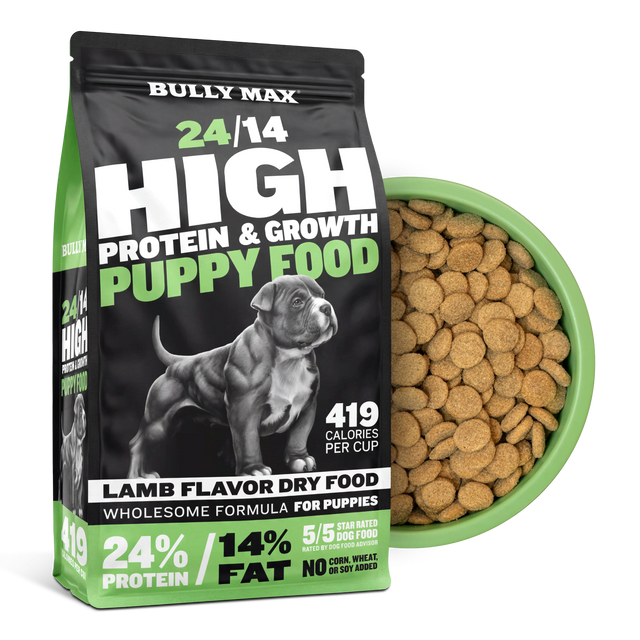
No supplement replaces the bowl. For a growing puppy, the foundation is a complete food made for growth, the right portion for its age and size, and regular vet care. Bully Max 24/14 High Protein & Growth Puppy Food has 24% protein, real lamb and 419 calories per cup, and it includes TruMune, a postbiotic that helps support digestion and immune health. It is suitable for large-breed dogs, including large-breed puppies, under AAFCO guidelines. Learn more about TruMune in dog food, see our picks for the best puppy food, and use the puppy growth chart to track progress.

GIVE YOUR PUPPY BULLY MAX 24/14 PUPPY FOOD
Made for growing puppies with 24% protein, real lamb, and TruMune to support digestion and immune health.
For adult dogs that need one simple daily supplement, our guide to the best multivitamin for dogs explains what to look for.
Colostrum for Dogs: FAQ
Is colostrum safe for dogs?
For most dogs, yes. Colostrum is generally well tolerated. Avoid it in dogs with a known dairy or milk allergy, and check with your vet if your dog has a health condition or takes medication.
Does colostrum help with allergies in dogs?
Some owners use it as part of an allergy-support routine, but it is not an allergy treatment. Itchy dogs should see a vet to find the cause. If your vet suspects food, see our guide to the best dog food for allergies.
How much colostrum should I give my dog?
It depends on the product, because antibody content varies. Follow the directions on the label for your dog's weight and ask your vet if you're unsure.
Can I give colostrum to a newborn puppy?
Newborns should get colostrum from their mother in the first hours of life. If a puppy can't nurse, call your vet right away rather than giving a store-bought supplement on your own.
What does dog colostrum look like?
It is cloudy yellow and thicker than regular milk.
What are the side effects of colostrum in dogs?
The most common is mild stomach upset or loose stool, mostly in dogs sensitive to dairy. Reduce the amount or stop, and call your vet if it continues.
The Bottom Line
Colostrum is essential for newborn puppies in their first day of life. For older puppies and adult dogs, it is an optional supplement that may help support immune and digestive health. It is not a cure or a replacement for veterinary care, and it isn't for dogs with dairy allergies. Start with a complete, high-protein diet, and add a quality colostrum chew on top if you want the extra support.
Raising a puppy? Start with a food built for growth, add Puppy Chews if you want daily support, and save 10% on both with Autoship. Bully Max is a family-owned U.S. company founded in 2009, made in the USA, with every batch triple tested for safety and zero recalls.
Background reading: Chastant-Maillard and Mila, "Canine Colostrum", Royal Canin Vet Focus (2021); Tizard, "Passive Immunity in Animals", MSD Veterinary Manual (2023); Gollakner, "Colostrum", VCA Animal Hospitals (2023); Rossi et al., "Nutritional and Functional Properties of Colostrum in Puppies and Kittens", Animals (2021).