Malnutrition in Dogs: How to Tell if Your Dog is Malnourished
The most common signs of malnutrition in dogs are visible ribs, spine and hip bones, muscle loss, low energy, a dull or patchy coat with dry, flaky skin, and loose or unusual stools. A malnourished dog may also get sick more often. If you notice these signs, see your vet first, because parasites and illness can cause the same symptoms as underfeeding.
We hate to see malnutrition in a dog, and unfortunately it happens all too often, especially with rescues. Malnutrition can take many forms, so it can be hard to tell if your dog is really malnourished or if the symptoms come from some other cause. Below we cover the main symptoms, the common causes, and how to help a malnourished dog recover safely.

WEIGHT GAIN GUIDE
See the healthy weight-gain plan
PRO Series 31/25 at 600 calories per cup, how much to feed an underweight dog, and real owners’ results.
50,000+ five-star reviews
Signs your dog may be malnourished
- Ribs, spine or hip bones easy to see
- Loss of muscle, especially over the back, hips and head
- Low energy or lethargy
- Dull, dry or thinning coat, flaky skin, hair loss
- Loose, bulky or unusual stools
- Frequent illness or slow healing
- In puppies: slow growth or a pot belly with a thin frame
Dog Malnutrition Symptoms
Your Dog Is Underweight
This is the most obvious sign of malnutrition. Is your dog skinny and underweight? Can you see all their ribs? Do they look bony over the spine and hips?
A dog at a healthy weight has ribs you can feel easily but can't clearly see, and a visible waist when you look from above. In a malnourished dog, the ribs, backbone and hip bones stick out, and there is little fat or muscle covering them. This is very common in rescues, and in many cases the main fix is more of the right food. Just be careful, because feeding a starved dog too much, too fast can cause serious problems. More on that below.
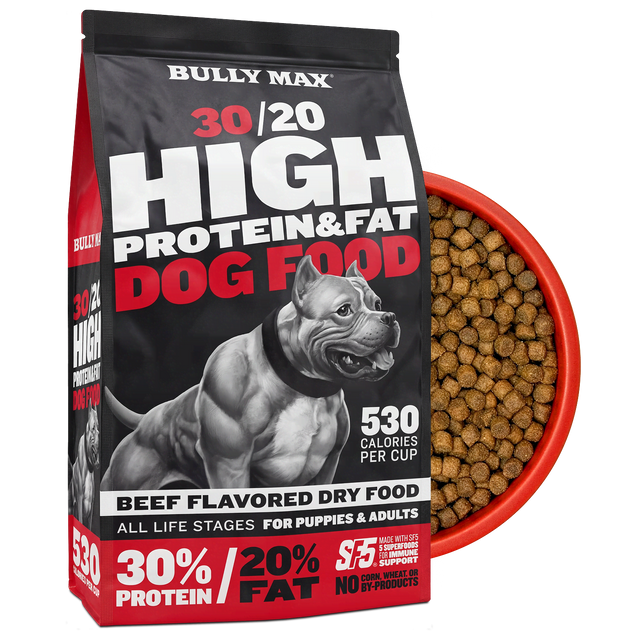
Before we go further, a quick note on fuel: if an underweight dog needs more strength and energy from the bowl, a meat-based, high-protein food is the simplest place to start.

FUEL YOUR DOG WITH BULLY MAX 30/20 HIGH-PROTEIN FOOD
Fuel strength and energy with meat-based nutrition, 30% protein, 20% fat, and 535 calories per cup.
Your Dog Is Losing Muscle
Dogs that don't get enough calories or protein start to break down their own muscle. Look for thinning over the shoulders, thighs and back, and a bony look across the top of the head. Muscle loss can also come from age, inactivity or illness, so it is worth a vet check.
Your Dog Has Low Energy
If your dog isn't getting the nutrients they need, they are unlikely to feel energetic. A dog that has been lying around and sleeping more instead of playing may be underfed. Lethargy is also a symptom of many illnesses, so don't assume it's diet alone.
Your Dog Has Dry, Flaky Skin and a Dull Coat
Malnutrition can wreak havoc on skin and coat. Look for patches of dry, red skin, more itching or scratching, little white flakes of dandruff, and hair loss. The coat itself may look dull and rough instead of shiny. Protein and fatty acids, including omega-3s, play a big role in skin and coat health. See our guide to dog skin and coat health.
Your Dog's Stool Isn't Normal
Runny stools, or stools that are much bigger than usual, can mean your dog isn't digesting and absorbing their food well. Sometimes that's a sign of a low-quality or poorly digestible diet. It can also be a sign of parasites or a digestive disorder, so get your dog checked by a vet. Our guide on causes of dog diarrhea explains what to watch for.
Your Dog Gets Sick Often
The immune system needs a wide range of nutrients to work well, so malnourished dogs often get sick more than usual and heal more slowly. Frequent infections or slow-healing wounds can be another sign your dog isn't getting the vitamins and nutrients they need.
Malnourished Puppy Signs
Puppies need more calories, protein and minerals per pound than adult dogs, so they show malnutrition quickly. Watch for slow growth compared with littermates, a thin body with a swollen belly (often a sign of worms), weakness, and a poor coat. A malnourished puppy should see a vet promptly. Once your vet gives the all-clear, feed a complete puppy food made for growth.
Causes of Malnutrition in Dogs
Malnutrition can have several causes:
- Underfeeding, including neglect and rescue situations, or simply not feeding enough for an active dog
- A low-quality or unbalanced diet, including homemade diets that aren't complete and balanced
- Parasites such as intestinal worms
- Medical conditions that affect appetite, digestion or absorption, such as dental disease, digestive disorders, or kidney, liver or thyroid problems
- Picky eating or low appetite, where a dog doesn't eat enough of a good food. See what causes loss of appetite in dogs.
It's not always a case of underfeeding. That is why it's always a good idea to take a malnourished dog to the vet first, so any medical issues can be treated.
How to Help a Malnourished Dog Recover
Once your vet has examined your dog, they can give you a feeding plan. Some general rules most vets follow:
- Go slow. A severely underweight dog should not get a big bowl of food right away. Rapid refeeding can cause vomiting, diarrhea and, in starved dogs, a dangerous condition called refeeding syndrome. Start with small amounts and build up over days, as your vet directs.
- Feed small, frequent meals. Three or four small meals a day are easier to digest than one or two large ones.
- Choose a complete, calorie-dense food. Calorie density lets your dog get more nutrition from smaller meals.
- Keep fresh water available at all times.
- Weigh your dog weekly and keep notes on appetite, stool and energy.
For a step-by-step plan, read how to put weight on a malnourished dog and how to help your dog gain weight the healthy way.
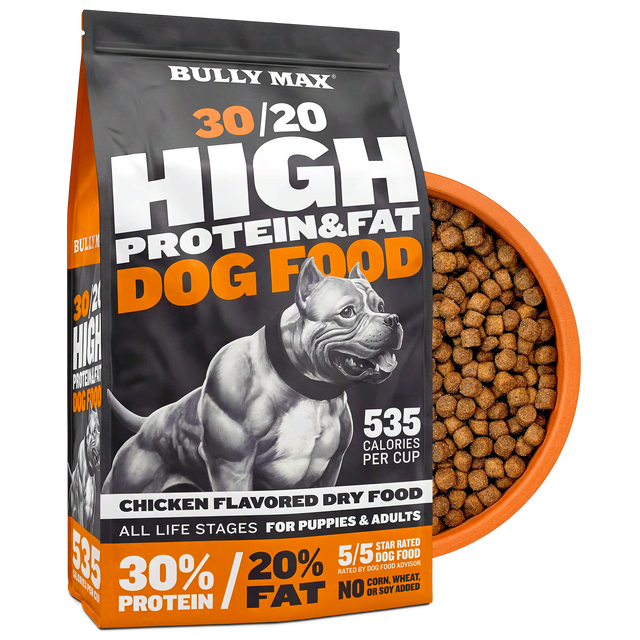
A calorie-dense food makes it easier for a thin dog to gain without huge meals.
TRY BULLY MAX 30/20 HIGH-PROTEIN DOG FOOD
Fuel strength and energy with meat-based nutrition, 30% protein, 20% fat, and 535 calories per cup.
Recommended Food and Supplements for Malnourished Dogs
If your dog isn't getting enough calories, or their food isn't giving them what they need, it may be time to switch to a higher-quality food. Switch gradually over 7-10 days to avoid stomach upset.
Bully Max 30/20 High Performance dog food is a meat-based recipe with 30% protein, 20% fat and 535 calories per cup, so thin dogs can take in more calories without eating huge portions. It's made in the USA, every batch is triple tested for safety, and we've had zero recalls.
If calories are the main problem, two supplements make it easier to add more:
- Bully Max Liquid Weight Gainer 2-in-1: an easy liquid with 150 calories per ounce from healthy fats and whey protein that you pour over your dog's food.
- Bully Max Power Chews for Weight Gain: tasty chews with 1,800 calories per bag and probiotics, easy to give between meals or on walks.
Add supplements only once your dog is eating well and your vet agrees, and follow the serving size on the label.
These chews are an easy way to add calories between meals while your dog gets back to a healthy weight.

HELP YOUR DOG GAIN HEALTHY WEIGHT
1,800 calories per bag from real chicken, plus 1 billion CFUs of probiotics to support digestion. Dogs love the chicken and bacon flavor.
Dog Malnutrition: FAQ
What does a malnourished dog look like?
A malnourished dog usually looks thin, with visible ribs, spine and hip bones, little muscle, and a dull or patchy coat. Many are also tired and less playful than normal.
How long does it take a malnourished dog to gain weight?
It depends on how underweight the dog is and why. Recovery is usually gradual, over weeks to months. Your vet can set a target weight and check progress.
What should I feed a malnourished dog?
Feed a complete, highly digestible, calorie-dense dog food in small, frequent meals, following your vet's plan. Avoid fatty table scraps and large meals at first.
Can malnutrition in dogs be reversed?
In many cases, yes. Once the cause is found and treated, most dogs recover with steady, careful feeding. Severe or long-term cases need close veterinary care.
Helping a malnourished dog get back to health takes patience. Start with a vet visit, then build up slowly with a quality, calorie-dense food like Bully Max 30/20 High Protein and Power Chews for Weight Gain.