Best Dog Training Treats: How to Choose and Use Them
The best dog training treats are tiny, soft, smelly and quick to eat, with only a few calories each, so you can reward often without overfeeding. Look for real meat near the top of the ingredient list and keep a higher-value treat for harder moments, like recall at the park. Bully Max Puppy Training Treats fit that brief: soft bites with real beef first, 22% protein and about 3 calories per treat.
Dog training treats at a glance
- Go small. Pea-sized for most dogs. Your dog should finish it in a second or two and be ready for the next rep.
- Go soft. Soft treats are eaten fast and don’t leave crumbs. Save crunchy biscuits for slower rewards.
- Know the calories. A common guideline is to keep treats to about 10% of daily calories. Check kcal per treat on the label.
- Match value to difficulty. Kibble for easy reps at home, a soft meaty treat for new skills, your best treat for big distractions.
- Timing beats everything. Reward within a second or two of the behavior you want.

What Makes a Good Dog Training Treat?
A training treat is a tool, not a snack. The goal is to pay your dog quickly and often while keeping their focus on you. Here is what to look for:
- Size. Pea-sized or smaller for most dogs, a little bigger for giant breeds. Dogs care about getting a treat far more than its size, so small pieces work as well as big ones.
- Texture. Soft and chewy beats hard and crunchy for fast reps. Your dog eats it in one bite and looks back at you.
- Smell and taste. Meaty, strong-smelling treats hold attention best, especially outdoors.
- Calories per treat. Three calories a treat adds up slowly. Twenty-plus calories a treat adds up fast in a 10-minute session.
- Ingredients. Real meat near the top of the list, and nothing your dog reacts to.
- Easy to carry. Treats that don’t crumble or get greasy fit in a pocket or treat pouch.
Low-, Medium- and High-Value Treats
Trainers often sort rewards by how much a dog wants them. Use the lowest value that keeps your dog working, and save the best stuff for the hardest jobs.
| Value | Examples | When to use it |
|---|---|---|
| Low | Pieces of your dog’s regular kibble | Easy, familiar cues at home with no distractions |
| Medium | Soft training treats, like Bully Max Puppy Training Treats | Teaching new skills, short sessions, leash walking |
| High | Meaty treats such as liver-based treats, or small pieces of plain cooked meat | Recall, busy places, nail trims, vet visits, big breakthroughs |
Every dog ranks rewards a little differently. Some dogs will work harder for a tug toy than any treat.

The Best Dog Training Treats From Bully Max
We make treats for the same reason we make food: dogs that work hard deserve real meat. Bully Max is a family-owned U.S. company founded in 2009. Our products are made in the USA, every batch is triple tested for safety, and Bully Max has over 50,000 5/5 reviews and has served millions of dogs. Here is how our treats compare, using the numbers on each product’s label:
| Puppy Training Treats | Classic Premium Beef Treats | High Protein Power Chew | |
|---|---|---|---|
| First ingredient | Beef | Beef liver | Yak milk (with lime juice) |
| Texture | Soft, bite-size | Crunchy | Hard, long-lasting chew |
| Calories | 3 kcal per treat | 23 kcal per treat | 300 kcal per chew |
| Protein (min) | 22% | 32% | 75% |
| Extras | DHA, glucosamine, chondroitin, omega fatty acids | Lysine, methionine, taurine | Two ingredients |
| Best use | Fast, frequent training rewards | High-value rewards and everyday treats | Settling down after training, not for reps |
From the guaranteed analysis and ingredient lists on our product pages. Calories are ME, calculated.
Puppy Training Treats: our pick for training
These are built for repetition. Each soft, chewy bite has about 3 calories, so a 10-minute session with 30 rewards adds up to roughly 90 calories (an estimate). Real beef is the first ingredient, with 22% protein, DHA to help support brain development, glucosamine and chondroitin to support joint health, and omega fatty acids to support skin and coat. They have no artificial flavors, colors or preservatives and no by-products. Despite the name, they are fine for dogs of any age or size. For toy breeds or very young puppies, tear a treat in half.

TRY BULLY MAX PUPPY TRAINING TREATS
Soft, bite-size training treats with real beef as the first ingredient, 22% protein and about 3 calories each. With DHA, plus glucosamine and chondroitin. Made for puppies, good for dogs of any age.
Classic Premium Beef Treats: high-protein dog treats for big wins
If you want high protein dog treats with a serious meat smell, these are it. Beef liver is the first ingredient, with 32% protein, 16% fat and added lysine, methionine and taurine. At 23 calories each, they are too big to hand out by the dozen, so use them as a jackpot for a great recall, or break them into smaller pieces for a high-value session. They have no corn, wheat or soy, and the crunchy texture makes them a good everyday treat too.

TRY BULLY MAX HIGH-PROTEIN BEEF DOG TREATS
Crunchy treats with beef liver as the first ingredient, 32% protein and 23 calories per treat. No corn, wheat or soy. A high-value reward for big wins.
High Protein Power Chew: for after the session
The High Protein Power Chew is not a training treat. It is a long-lasting chew made from yak milk and lime juice, with 75% protein. It is great for helping a dog settle in a crate or on a mat after training. At about 300 calories per chew, count it in your dog’s daily total, and always supervise chewing. See every option in our dog treats collection.
How Many Training Treats a Day?
A widely used guideline is to keep treats to about 10% of your dog’s daily calories, with the other 90% coming from a complete and balanced food. It is a general rule of thumb. Your vet can give you a number for your dog, especially if your dog is overweight, a growing puppy, or has a health condition.
| If your dog eats about… | 10% for treats | Puppy Training Treats (3 kcal) | Classic Beef Treats (23 kcal) |
|---|---|---|---|
| 600 kcal a day | 60 kcal | About 20 treats | About 2 to 3 treats |
| 1,200 kcal a day | 120 kcal | About 40 treats | About 5 treats |
| 1,800 kcal a day | 180 kcal | About 60 treats | About 7 to 8 treats |
Estimates for illustration only. Your dog’s real calorie needs depend on weight, age, activity and body condition. Use our dog food calculator as a starting point.
Three ways to stay inside the budget on heavy training days:
- Use some of the meal. Measure out part of the day’s kibble and use it for easy reps.
- Trim the bowl. On a big training day, feed a little less at mealtime. Our dog food calculator helps you find the daily amount to start from.
- Go smaller. Break treats in half. Your dog will not mind.
Watch your dog’s waist and ribs, not just the numbers. If your dog is gaining weight it doesn’t need, cut back on treats first.
How to Use Treats in Training
The treat itself is only half of it. How and when you give it matters just as much.
- Reward fast. Give the treat within a second or two of the behavior, so your dog connects the two. A marker word like “yes” or a clicker bridges the gap while your hand gets to the pouch.
- Keep sessions short. Five to 10 minutes, a few times a day, works better than one long session, especially for puppies.
- Reward a lot at first. When teaching something new, reward every correct rep. Once it is solid, reward some reps and add praise, play and life rewards like going outside.
- Lure, then fade. A treat in your hand can guide your dog into a sit or down. Stop luring after a few sessions so the cue, not the visible treat, gets the behavior.
- Raise the value with distractions. The busier the place, the better the treat needs to be.
- Train hungry, not starving. Sessions before a meal usually get more focus than right after one.
- Keep treats out of sight. Use a treat pouch or pocket so your dog learns to work for you, not for the bag.

Training treats for puppies
Puppies can start learning simple cues like their name, sit and come soon after they come home. Use the smallest pieces you can, keep sessions very short, and count treats toward your puppy’s daily food. A growing puppy needs most of its calories from a complete puppy food, so treats should stay small. Our guides on when to start training your puppy, a puppy training schedule from day one and how to potty train a puppy show where treats fit at each stage.
What to Know About High Protein Dog Treats
“High protein” on a treat bag can mean very different things. A few tips for comparing them:
- Look at the first ingredients. Real meat or organ meat first is a good sign. Starches and fillers first are not.
- Compare like with like. Protein percentages are “as fed”, which includes water. A soft treat with more moisture shows a lower number than a dry treat with the same protein per bite of dry matter.
- Check calories too. A high-protein treat can still be calorie dense. That matters more than protein when you are handing out dozens a day.
- Remember the bowl. Treats are a small share of the diet. For muscle and condition, the daily food matters far more than the treat.
Treats for Dogs With Allergies or Sensitive Stomachs
Treats are easy to forget when a dog has food sensitivities. If your dog has to avoid an ingredient, every treat needs to leave it out too. Read the full ingredient list. For example, our Puppy Training Treats contain beef, dried cultured skim milk (dairy) and salmon oil, and our Classic Beef Treats contain beef liver and dried eggs. If your vet is running an elimination diet trial, use only the treats your vet approves. Our guides to pit bull skin allergies and dog food for allergies explain how to read a label for hidden proteins.
Common Training Treat Mistakes
- Treats that are too big. Your dog spends the session chewing instead of learning.
- Bribing instead of rewarding. Showing the treat before the cue teaches your dog to wait for the treat. Ask first, then reward.
- Forgetting the calories. Training treats, chews and table scraps all count.
- Using the same treat everywhere. A treat that works in the kitchen may not compete with squirrels at the park.
- Never fading the food. Once a behavior is solid, mix in praise, play and life rewards so your dog keeps working when your pockets are empty.
Put It Into Practice
Ready to train? Start with these step-by-step guides:
- How to train a pitbull puppy
- How to train an American Bully
- Recall training: teaching your dog to come when called
- How to leash train your puppy
Go behind the scenes of pit bull training at Bully Max:
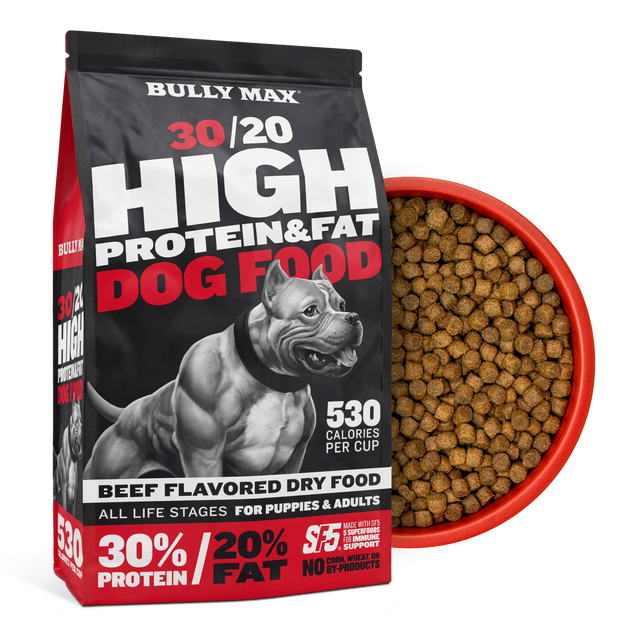
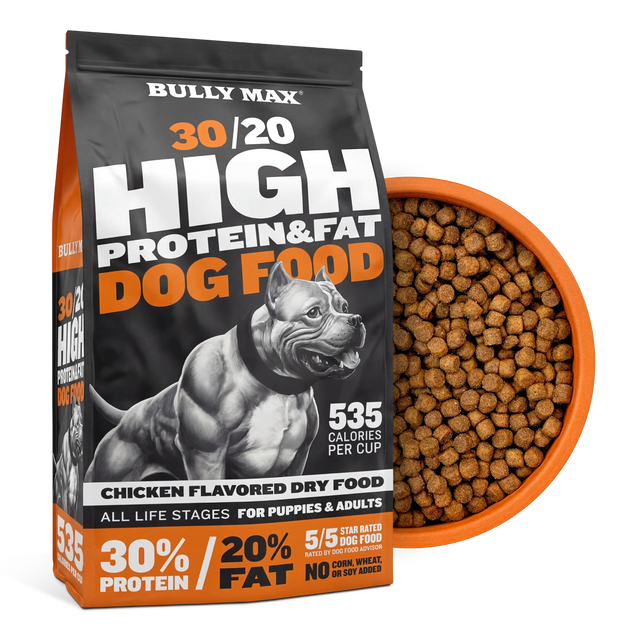
Training burns energy, and treats are only a small slice of what fuels it. A meat-based, high-protein food does the rest.

FUEL TRAINING WITH BULLY MAX 30/20 HIGH-PROTEIN FOOD
Treats are the reward. The bowl does the heavy lifting: meat-based nutrition with 30% protein, 20% fat and 535 calories per cup.
Our Pick
For everyday training, pick a tiny, soft treat you can hand out often, and keep a high-value treat in your pocket for the hard stuff. Our picks:
- For training reps: Puppy Training Treats, about 3 calories each.
- For high-value rewards: Classic Premium Beef Treats, beef liver first, 32% protein.
- For settling after a session: the High Protein Power Chew.
Shop them all in our dog treats collection. If you feed Bully Max food too, Autoship saves 10% on every order.
FAQ
What are the best treats for dog training?
Small, soft, meaty treats with only a few calories each, so you can reward often. Keep a higher-value treat, like a liver-based treat, for harder situations. Bully Max Puppy Training Treats have real beef first, 22% protein and about 3 calories per treat.
How many training treats a day for a puppy?
There is no fixed number. A common guideline is to keep all treats to about 10% of your puppy’s daily calories. With a 3-calorie treat, a puppy eating about 600 calories a day could have roughly 20 (an estimate). Ask your vet for your puppy’s calorie needs.
What size should training treats be?
About the size of a pea for most dogs, slightly larger for giant breeds and smaller for toy breeds. Your dog should be able to eat it in a second or two.
Can I use kibble as training treats?
Yes, for easy cues at home. Using part of your dog’s daily kibble keeps calories in check. Most dogs need something more exciting for new skills or busy places.
How do I train my dog without treats?
Start with treats, then fade them. Once a behavior is reliable, reward only some reps and mix in praise, toys, play and life rewards like going outside or greeting a friend.
Are high protein dog treats good for dogs?
They can be a good choice, especially when real meat is the first ingredient. Check the calories per treat too, and remember treats are a small part of the diet. The daily food provides most of your dog’s protein.
What is your dog’s favorite training reward? Tell us in the comments below.