Best Dog Food for Pitbulls with Skin Allergies: Causes, Labels and Chicken-Free Options
The best dog food for pitbulls with skin allergies is a complete, balanced food that leaves out whatever your dog actually reacts to and still gives a muscular, active breed the protein and calories it needs. The catch is that many itchy pit bulls are not reacting to food at all. Fleas and environmental allergies are common causes, so the first step is a vet visit to find the real cause. If your vet points to chicken, a chicken-free food like Bully Max 30/20 Beef or 25/11 Lamb is a simple everyday option.
Pit bull skin allergies at a glance
- Three usual suspects: flea allergy, environmental allergies (pollen, dust mites, grass) and food allergy. Mites and skin infections can look the same.
- Get a diagnosis first. Only your vet can sort out the cause. A food allergy is confirmed with an elimination diet trial, usually 8 weeks or more.
- Read the whole label. Chicken can hide in fats, meals, broths and flavors. The front of the bag is not enough.
- Chicken-free Bully Max options: 30/20 Beef for active, hard-to-keep-weight-on pit bulls, and 25/11 Lamb for lighter eaters and easy keepers.
- Skin and coat support: omega-3s from fish oil are a common add-on. Ask your vet first if a food trial is underway.

Why Pit Bulls Seem to Have So Many Skin Problems
Ask any group of pit bull owners about itching and you will hear plenty of stories: red bellies, chewed paws, bumps after a walk through tall grass. There are a few reasons skin trouble shows up so often in the breed.
- Short coats hide nothing. A pit bull’s short, single coat gives little cover, so redness, bumps and thin patches are easy to see, especially on white and light-colored dogs.
- Breed tendency. Pit bull-type breeds, including the American Staffordshire Terrier, are often listed among the breeds more prone to environmental skin allergies (atopic dermatitis).
- Active, outdoor lives. Pit bulls spend a lot of time running, rolling and training outside, which means more contact with grass, pollen and fleas.
Pit bulls matter a lot to us. About 31% of the Bully Max customers we surveyed own a pit bull, APBT, AmStaff or Staffy, and roughly 1 in 10 named coat, skin or digestion as a reason they buy. If you are new to the breed, our American Pit Bull Terrier breed guide covers the basics, and our common pitbull health issues post puts skin problems in context.
What Causes Skin Allergies in Pit Bulls?
Most itchy pit bulls fall into one of three groups. They can overlap, and one dog can have more than one. The patterns below are general, not a diagnosis.
| Cause | What triggers it | Common pattern | What usually comes next |
|---|---|---|---|
| Flea allergy | Saliva from flea bites. A few bites can be enough. | Itching and hair loss over the lower back, tail base and back legs | Strict flea control for every pet in the home, as your vet advises |
| Environmental allergies (atopic dermatitis) | Pollen, grass, mold, dust mites | Paws, face, ears, armpits and belly. Often seasonal at first. | Vet exam and a long-term management plan |
| Food allergy | An immune reaction to a protein in the diet, most often an animal protein | Year-round itching, often paws, ears and rear end. Some dogs also have loose stool. | An elimination diet trial guided by your vet |
General patterns only. Signs overlap a lot, which is why a vet exam comes first.
Flea allergy
Flea allergy dermatitis is one of the most common skin problems in dogs. An allergic dog can react strongly to just a few bites, and you may never see a flea on a dog that grooms a lot. If your pit bull chews the base of the tail or the back legs, ask your vet about flea control before changing foods.
Environmental allergies
Environmental allergies, also called atopic dermatitis or atopy, come from things your dog breathes in or touches: pollen, grasses, mold and dust mites. Signs often start in a certain season and may become year-round over time. Paw licking, face rubbing, red armpits and belly, and repeat ear problems are classic signs. Food changes do not fix an environmental allergy, though overall nutrition still matters for skin and coat.
Food allergy
A true food allergy is an immune reaction to an ingredient, usually a protein. Dogs typically react to something they have eaten for a while, not something brand new. In a 2016 review of published cases, the food allergens most often reported in dogs were beef (34%), dairy (17%), chicken (15%) and wheat (13%). That list is for dogs in general, not pit bulls specifically, and it shows why there is no single “allergy-proof” protein. Our main dog food for allergies guide goes deeper on food allergy versus intolerance.
Other skin problems that look like allergies
Not every itchy or patchy pit bull has an allergy. Mites (mange), bacterial and yeast skin infections, ringworm, contact irritation and some hormone problems can look very similar. Young pit bulls with patchy hair loss, in particular, should be checked by a vet. These conditions need a diagnosis and a vet’s plan, not a food change.

When to See Your Vet
Book a vet visit if your pit bull has any of these:
- Itching, licking or chewing that lasts more than a few days or keeps coming back
- Red, moist, crusty or smelly skin, or bumps that spread
- Hair loss, thickened or darkened skin
- Head shaking, ear scratching, or ears that smell or have discharge
- Skin signs together with vomiting, diarrhea, weight loss or low energy
Your vet may check for fleas and mites, look at skin or ear samples under a microscope, and ask about the season, your dog’s diet and every treat and chew your dog gets. Write those down before the visit. If food allergy is on the list, your vet will usually suggest an elimination diet trial. Do not give human allergy medicines or creams without your vet’s okay.
How a Food Elimination Trial Works
An elimination diet trial is the standard way to confirm a food allergy. Blood, saliva and hair tests sold online are not reliable for diagnosing food allergy in dogs.
- Your vet picks the diet. Usually a prescription hydrolyzed-protein food, or a diet built on a protein your dog has never eaten.
- Feed only that diet. No other treats, chews, table scraps, flavored toothpaste or flavored medicines unless your vet approves them. One slip can reset the clock.
- Give it time. Trials usually run 8 weeks or longer, because skin takes weeks to settle.
- Re-challenge. If the itching improves, your vet may have you add back the old food or single ingredients to see what triggers a flare.
Everyday over-the-counter foods, including ours, are not designed for elimination trials. They are for after you know what to avoid. Once your vet has identified a trigger, you can choose a complete everyday food that leaves it out.
What to Look for on a Dog Food Label
Once you know what your pit bull needs to avoid, the label becomes your best tool. Here is how to read it.
Find every animal ingredient
Ingredients are listed by weight, but a trigger can hide anywhere on the list. A “lamb” or “salmon” food can still contain chicken further down.
| On the label | What to know |
|---|---|
| Chicken fat, chicken broth, chicken meal | All chicken. Avoid them if chicken is the trigger. |
| Poultry fat, poultry meal, poultry by-products | May include chicken. The label does not say which bird. |
| Natural flavor | The source is often not listed. Ask the brand if your dog must avoid a specific protein. |
| Egg, dried egg product | A separate animal protein that shows up in many foods and treats |
| Fish meal, fish oil, salmon oil | Fish protein or fat. Fine for most dogs, but check with your vet during a trial. |
| “Recipe”, “dinner”, “with” | Naming words on the front of the bag. Only the ingredient list tells you what is inside. |
Bring the full ingredient list of anything you feed to your vet visit.
Then check the rest of the label
- Complete and balanced statement. Look for the AAFCO nutritional adequacy statement for your dog’s life stage. An everyday food has to cover all of your dog’s needs, not just avoid a trigger.
- Protein and calories that fit a pit bull. Many limited-ingredient foods are lower in protein and calories. An active pit bull can lose weight and muscle on them. Check kcal per cup, not just the protein percentage.
- Fatty acids. Omega-3 and omega-6 sources such as fish oil, salmon oil and flaxseed support normal skin and coat.
- Treats and chews too. Treats, dental chews and toppers count. They need to leave out the same trigger as the food.
If your pit bull also gets gassy or has loose stools, our guide to the best dog food for a sensitive stomach explains how digestion and diet fit together.
Bully Max Chicken-Free Options for Pit Bulls
If your vet has pointed to chicken as the problem, or your pit bull simply does better without it, Bully Max makes two dry foods that are completely chicken-free: 30/20 High Protein Beef and 25/11 Lamb. There is no chicken anywhere in either recipe, including the natural flavor.
Proof first. Bully Max has over 50,000 5/5 reviews and a 5/5 rating from Dog Food Advisor, and we have fed millions of dogs. We are a family-owned U.S. company founded in 2009. Our food is made in the USA, every batch is triple tested for safety, and we have zero recalls.
“I began to notice the positive change in their coats, build, and digestion” — Bully Max customer, post-purchase survey
| 30/20 High Protein Beef | 25/11 Lamb (45% less fat) | |
|---|---|---|
| First ingredient | Beef meal | Lamb meal |
| Chicken-free | Yes | Yes |
| Other animal ingredients | Beef tallow | Pork, menhaden fish meal, salmon oil |
| Protein / fat (min) | 30% / 20% | 25% / 11% |
| Calories | 530 kcal/cup | 415 kcal/cup |
| Skin and coat nutrients | Omega-3 and omega-6 fatty acids, flaxseed | Salmon oil, menhaden fish meal, flaxseed meal |
| Probiotics | Yes | Yes |
| Life stage | Complete and balanced for all life stages, including large-breed growth | Suitable for large-breed dogs, including large-breed puppies, under AAFCO guidelines |
| Best for | Active, working and hard-to-keep-weight-on pit bulls | Easy keepers, less active pit bulls and smaller bully breeds |
From the ingredient lists and descriptions on our product pages. Beef is itself a commonly reported allergen, and 25/11 Lamb combines lamb, pork and fish, so match the formula to what your vet says your dog must avoid. Neither food is an allergy treatment.
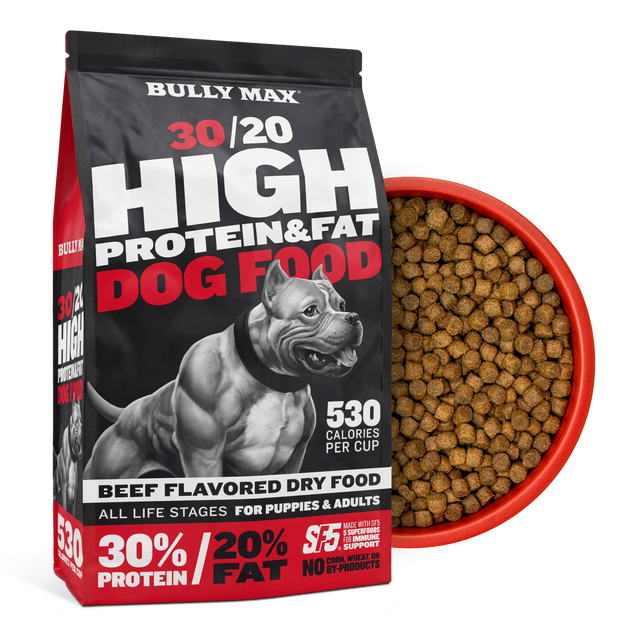
30/20 High Protein Beef: chicken-free with calories to spare
Beef meal is the first ingredient. Meal is meat with the water cooked off, so it carries far more protein by weight than fresh meat. With 30% protein, 20% fat and 530 calories per cup, 30/20 Beef suits the classic pit bull: muscular, busy and sometimes hard to keep weight on. It also has omega-3 and omega-6 fatty acids from flaxseed and probiotics to support digestion. It is the pick for chicken-sensitive dogs, not beef-sensitive ones.

NEED CHICKEN-FREE? TRY BULLY MAX 30/20 BEEF
Chicken-free, with beef meal as the first ingredient. 30% protein, 20% fat and 530 calories per cup to keep an active pit bull fueled.
25/11 Lamb: chicken-free and lighter
Lamb meal comes first, followed by pork, with menhaden fish meal and salmon oil adding omega-3s. At 415 calories per cup and 45% less fat than our 30/20 formulas, 25/11 Lamb is the better fit for a pit bull that gains weight easily, a less active adult, or a smaller bully breed. Because it combines three animal proteins, it is not the right choice for a dog that reacts to pork or fish.

TRY BULLY MAX 25/11 LAMB DOG FOOD
Chicken-free, with lamb meal as the first ingredient. 25% protein, 45% less fat than our 30/20 formulas and 415 calories per cup.
Want the full breakdown of chicken-free feeding? Read our chicken-free dog food guide, or see every option on our pit bull dog food page.

How to Switch Your Pit Bull’s Food
Switch gradually. A sudden change can upset the stomach, and that upset can be mistaken for a reaction to the new food.
| Days | Old food | New food |
|---|---|---|
| 1–2 | 75% | 25% |
| 3–5 | 50% | 50% |
| 6–8 | 25% | 75% |
| 9–10 | 0% | 100% |
A common 7–10 day schedule. Slow down if stools get soft. If your vet gave you a different plan, follow it.
- Change one thing at a time. Do not start a new food, new treats and a new supplement in the same week. If something changes, you will not know why.
- Keep a skin log. Every few days, note itching, paw licking, ears, skin color and stool. Photos help. It makes your next vet visit far more useful.
- Feed the right amount. Calories per cup vary a lot between foods. Use our dog food calculator as a starting estimate, then adjust to your pit bull’s body condition.
- Give it time. Skin and coat changes take weeks, not days.
Our step-by-step guide on how to switch your dog to Bully Max walks through the full transition, including picky eaters.
Skin and Coat Support: Where Salmon Oil Fits
Whatever is behind the itching, skin and coat do best on good nutrition. Omega-3 fatty acids, especially EPA and DHA from fish, are among the nutrients most often discussed for skin and coat. They do not replace your vet’s plan, but many owners add them to support healthy skin and a shiny coat, one of the results our customers mention most.
Bully Max Omega-3 Salmon Oil is a blend of wild-caught Alaskan salmon oil and pollock oil with omega-3 EPA and DHA. The label directions are ½ teaspoon per 10 lbs of body weight over food, so about 2½ teaspoons for a 50 lb pit bull. It contains no chicken or beef. Because it is a fish product, ask your vet before adding it during an elimination trial, and check with your vet if your dog has a health condition or takes medication. Learn more in our guides to salmon oil for dogs and coarse, brittle coats.


ADD BULLY MAX OMEGA-3 SALMON OIL
Wild-caught Alaskan salmon oil and pollock oil with omega-3 EPA and DHA. An easy daily pour to help support skin and coat.
Everyday Care for Skin-Prone Pit Bulls
Food is one piece. These habits help keep a sensitive pit bull’s skin in good shape, whatever the cause:
- Stay on flea prevention for every pet in the house, using the product and schedule your vet recommends.
- Wipe paws and belly after walks in pollen season or after rolling in grass.
- Bathe with a gentle dog shampoo, or the one your vet prescribes. Bathing too often can dry the skin out.
- Wash bedding weekly in hot water to cut down on dust mites and pollen.
- Protect light-coated dogs from strong sun. White and pink-skinned pit bulls can sunburn. Ask your vet about dog-safe sun protection.
- Keep your dog lean and fit. Regular exercise and a healthy body condition support overall health.
Our Pick for Pit Bulls With Skin Allergies
Start with your vet: rule out fleas, mites and infections, and run a proper food trial if food is a suspect. Once you know what your pit bull needs to avoid, pick an everyday food that leaves it out and fits your dog’s life:
- Avoiding chicken, active or hard to keep weight on? 30/20 High Protein Beef.
- Avoiding chicken, easy keeper or less active? 25/11 Lamb.
- Want to support skin and coat? Add Omega-3 Salmon Oil.
Feeding an American Bully instead? Our best dog food for American Bullies guide covers sizes from pocket to XL, and our best dog food for pitbulls guide covers feeding the breed in general. Once you find the food that works, keep it consistent. Set it up on Autoship and save 10% so you never run out mid-bag and end up grabbing whatever is on the shelf.
FAQ
What is the best dog food for pitbulls with skin allergies?
The best food is one that leaves out your pit bull’s specific trigger and still gives complete nutrition with enough protein and calories for the breed. Confirm the trigger with your vet first. If chicken is the problem, chicken-free foods like Bully Max 30/20 Beef or 25/11 Lamb are everyday options.
Are pit bulls prone to skin allergies?
Pit bull-type breeds are often listed among breeds more prone to environmental skin allergies, and their short coats make skin problems easy to see. Flea allergy and food allergy also occur. A vet exam is the only way to know which one your dog has.
What are pitbulls most often allergic to in food?
There is no pit bull-specific list. In dogs overall, a 2016 review found beef, dairy, chicken and wheat were the most often reported food allergens. Animal proteins are the usual culprits, and dogs typically react to something they have eaten before.
What can I give my pitbull for skin allergies?
Start with a vet visit. Your vet can recommend flea control, medicated baths or prescription options based on the cause. Do not give human allergy medicines without your vet’s approval. Many owners also add omega-3s, such as salmon oil, to support skin and coat.
Is chicken-free dog food good for pitbulls with skin allergies?
Only if chicken is what your pit bull reacts to. A chicken-free food is a good everyday choice for a chicken-allergic dog, but it will not help a dog allergic to beef, fleas or pollen. Confirm the trigger with your vet first.
Is grain-free food better for pitbulls with skin allergies?
Not necessarily. Animal proteins are reported as food allergens far more often than grains, and wheat was the only grain near the top of the 2016 review. Bully Max foods contain grains such as brown rice and oats. Choose based on your dog’s confirmed trigger, not a label trend.
Sources: Mueller RS, Olivry T, Prélaud P. Critically appraised topic on adverse food reactions of companion animals (2): common food allergen sources in dogs and cats. BMC Veterinary Research, 2016; Merck Veterinary Manual, Cutaneous Food Allergy in Animals; American Kennel Club, Dog Food Allergies.
Have a question about which formula fits your pit bull? Tell us about your dog in the comments below.