Best Dog Food for Weight Gain: What to Look For and What to Feed
The best dog food for weight gain is a complete, meat-based food with more calories in every cup, plenty of fat and enough protein to build muscle as well as cover. Look for roughly 500 to 600 calories per cup, a fat level near 20% or higher and a named meat first, then feed it for your dog’s target weight in two or three meals. For hard keepers and working dogs, Bully Max PRO Series 31/25 has 600 calories per cup; for most active adult dogs, 30/20 High Protein has 535.
See your vet first
Food can only fix a calorie gap. If your dog is losing weight without a clear reason, is eating well but still getting thinner, or has vomiting, diarrhea, extra thirst, coughing or low energy, book a vet visit before you change foods. Very thin or newly rescued dogs should gain weight on a vet-guided plan, because feeding too much too fast can be dangerous.
Family-owned since 2009 · 50,000+ five-star reviews · Dog Food Advisor 5/5 · Zero recalls
Best dog food for weight gain at a glance
- Calories first: check kcal per cup on the bag. More calories per cup means your dog gains without needing a bigger bowl.
- Fat is the fuel: fat carries more than twice the calories per gram of protein or carbohydrate.
- Protein builds the frame: it helps the weight go on as muscle, not just fat.
- Your dog has to eat it: taste and texture matter as much as the label for a thin or picky dog.
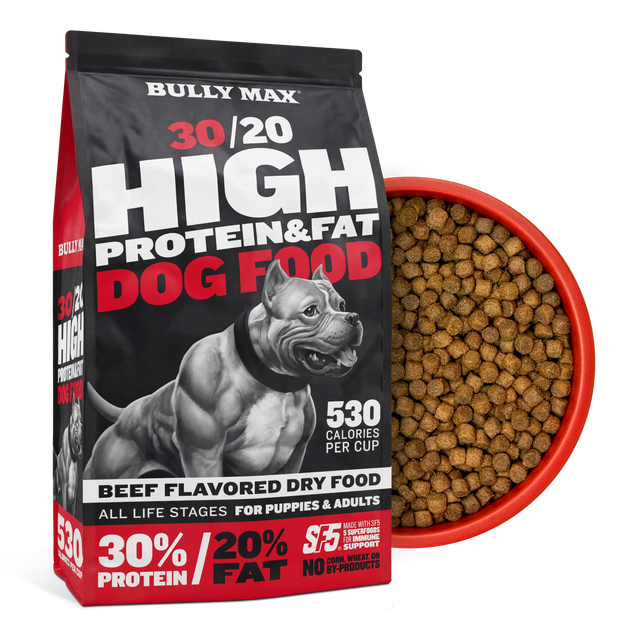
- Our picks: PRO Series 31/25 (600 kcal/cup) for hard keepers and working dogs, 30/20 High Protein (535 kcal/cup) for most active adults, 30/20 Beef (530 kcal/cup) for chicken-sensitive dogs.
- Feed for the target weight: split into 2 to 3 meals, weigh weekly, adjust about 10% at a time.
What Makes a Dog Food Good for Weight Gain?
Most healthy dogs that are a little thin need one thing: more calories than they burn, every day, for several weeks. You can get there by feeding more of the same food, but a lot of thin dogs won’t finish a bigger bowl. That is why the right food matters. A weight-gain food packs the calories into less volume, tastes good enough that your dog cleans the bowl, and digests well enough that the calories actually get used.
When you compare bags, check these five things.
1. Calories per cup
This is the single most useful number on the label. It is printed as kcal per cup or kcal per kg in the calorie statement. Performance and high-calorie foods carry noticeably more calories per cup than many everyday adult kibbles, so every scoop does more work. Compare foods by calories per cup, not by price per bag or by the protein percentage alone.
2. Fat
Fat is the most calorie-dense nutrient a dog eats. That is why high-calorie and performance foods raise fat first. A fat minimum around 20% or more on the guaranteed analysis usually goes with a calorie-dense food. Fat also makes food smell and taste better, which helps dogs that walk away from the bowl. Our guide to high fat dog food covers which dogs do well with it and which should avoid it.
3. Protein from meat
Calories put weight on; protein and exercise decide how much of it is muscle. A food that lists a named meat or meat meal first and has 30% protein or more gives a thin dog what it needs to rebuild muscle over the back, hips and thighs. That matters for bully breeds, where owners want a dog that looks strong, not soft.
4. Digestibility
A food can look great on paper and still pass through a dog that can’t use it. Labels don’t list digestibility, so judge it by results: firm, regular stools and a dog that keeps its energy are good signs. Very high-fiber foods fill a dog up with fewer calories, so they are usually the wrong pick for weight gain.
5. Taste
A food only works if your dog eats it. Thin dogs are often picky dogs. Warm water, a spoonful of wet food or a topper can turn a half-eaten bowl into an empty one. About 14% of customers in our post-purchase survey told us their picky dog finally ate, which is why taste sits on this list.
| Check on the bag | What to look for for weight gain | Why it matters |
|---|---|---|
| Calories (kcal per cup) | Roughly 500 to 600 | More calories in the same scoop |
| Crude fat (min) | About 20% or higher | Fat is the densest source of calories |
| Crude protein (min) | About 30% or higher | Supports muscle as the weight goes on |
| First ingredient | A named meat or meat meal | Meat-based protein and taste |
| Fiber | Not unusually high | High fiber fills the stomach with fewer calories |
| Stools after the switch | Firm and regular | A practical sign the food is being digested well |
General guidance for healthy adult dogs, not a medical diet. Your vet can set targets for your dog.

Best Dog Food for Weight Gain: Our Picks by Dog
There is no single best food for every thin dog. A rescue that came in underweight, a weight-pull dog in a hard training block and a picky Frenchie need different things. Here is how we match our formulas to the dog in front of you.
| Your dog | Best fit | Why |
|---|---|---|
| Hard keeper, working or sport dog, or a dog that can’t finish big meals | PRO Series 31/25 High Calorie | Our most calorie-dense dry food: 600 kcal per cup, 31% protein, 25% fat |
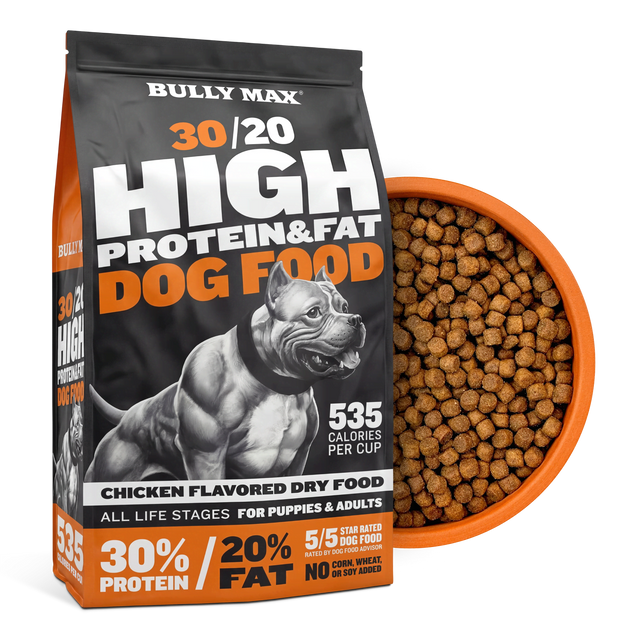
| Active adult bully breed that needs to fill out | 30/20 High Protein Chicken | 535 kcal per cup, 30% protein, 20% fat, meat-based |
| Thin dog that does better without chicken | 30/20 High Protein Beef | Chicken-free, 530 kcal per cup, 30% protein, 20% fat |
| Picky eater that skips kibble | 26/12 Wet Dog Food mixed in or as a topper | Just add water; real chicken first; 592 kcal per cup |
| Raw or home feeders | High Calorie Raw Base Mix | Add meat, water and oil; one 5 lb bag makes up to 15 lb of food at 512 kcal per cup |
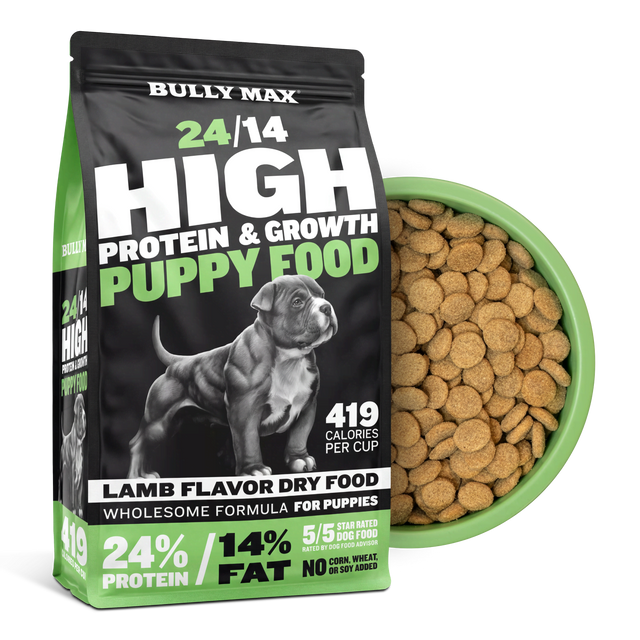
| Puppy that seems thin | 24/14 High Protein & Growth Puppy, after a vet check | Made for growth at 419 kcal per cup; puppies should stay on a puppy food |
Calories and nutrient levels from each product page. All Bully Max foods are suitable for large-breed dogs, including large-breed puppies, under AAFCO guidelines.
For most thin adult dogs that need the most calories per scoop, start here:

PUT WEIGHT ON WITH PRO SERIES 31/25
31% protein, 25% fat and 600 calories per cup, so a thin dog gets more calories without a bigger bowl. Built for working, sport and hard-to-keep-weight-on dogs.
Weight gain means more food every month. Subscribe & save 10% with Autoship.
Calories per Cup: How Bully Max Formulas Compare
The table below puts every Bully Max food side by side. The last column shows roughly how many cups it would take to reach 2,000 calories, a number in the range a large, active dog might need while gaining. It is only there to show how much calorie density changes the size of the meal.
| Bully Max formula | Protein / fat (min) | kcal per cup | Cups for 2,000 kcal (estimate) |
|---|---|---|---|
| PRO Series 31/25 High Calorie | 31% / 25% | 600 | 3.3 |
| 26/12 Wet Dog Food (prepared) | 26% / 12% | 592 | 3.4 |
| 30/20 High Protein Chicken | 30% / 20% | 535 | 3.7 |
| 30/20 High Protein Beef | 30% / 20% | 530 | 3.8 |
| High Calorie Raw Base Mix | Depends on the meat you add | 512 | 3.9 |
| 24/14 High Protein & Growth Puppy | 24% / 14% | 419 | 4.8 |
| 25/11 Lamb (45% less fat) | 25% / 11% | 415 | 4.8 |
kcal per cup from each product page. Cups for 2,000 kcal = 2,000 ÷ kcal per cup, rounded; an estimate to compare formulas, not a feeding amount. Your dog’s daily need depends on its target weight, age and activity.
Going from a 415 kcal food to a 600 kcal food means about 45% more calories in every scoop. For a dog that already eats as much as it wants, that difference is often the whole weight-gain plan. 25/11 Lamb is a great lean food, which is exactly why it is not the pick when the goal is to add weight.
Watch: How a 30/20 Food Helps a Thin Dog Gain
For most active adult bully breeds, 30/20 High Protein is the everyday food that keeps weight on. This short video explains how a 30% protein, 20% fat food helps an underweight dog gain healthy weight.

TRY BULLY MAX 30/20 HIGH-PROTEIN DOG FOOD
Fuel strength and energy with meat-based nutrition, 30% protein, 20% fat, and 535 calories per cup.
How Much to Feed for Weight Gain
The most common mistake is feeding a thin dog the amount for the weight it is today. A dog fed for its current weight stays at its current weight. Ask your vet what your dog should weigh, then feed the amount the bag lists for that target weight.
- Set the target. Get a target weight from your vet and write down today’s weight.
- Switch slowly. Move to the new food over 7 to 10 days. Our guide on how to switch your dog to Bully Max has a day-by-day mixing schedule.
- Feed for the target weight. Use the feeding chart on the bag for the target, not the current weight. For a personal estimate, try our dog food calculator.
- Split it up. Two to three smaller meals are easier to finish and easier on the stomach than one big one. Avoid hard exercise right before and after meals.
- Weigh weekly. Same scale, same time of day. No change after two weeks? Add about 10% more food. Loose stools? Pull back a little.
As an example, the PRO Series 31/25 feeding chart lists about 2⅓ to 2⅔ cups a day for a dog with a 50 lb target weight. Treat any chart as a starting point and adjust from the scale. Our body condition chart and 30-day weight-gain plan walks through the full month week by week.

Dog Food for Weight Gain vs Weight Gain Supplements
Food comes first. A complete, calorie-dense food covers your dog’s full nutrition, so it should supply most of the extra calories. Supplements are for the gap that is left: the dog that won’t eat more at mealtime, the working dog in a heavy training block, or the dog whose weight stalls even on a high-calorie food.
- Liquid Weight Gainer 2-in-1 adds about 150 calories per ounce from healthy fats and whey protein. Pour it over the food you already feed.
- Power Chews for Weight Gain add 1,800 calories per bag from real chicken, plus 1 billion CFUs of probiotics. Easy to give between meals.
Count supplement calories in the daily total, and keep extras well below the food itself so the diet stays balanced.

ADD CALORIES WITH LIQUID WEIGHT GAINER
About 150 calories per ounce from fish oil and whey protein. Pour it over food to add calories without adding volume.
Want food and supplements together? See our dog food and supplements for weight gain.
What Can I Add to Dog Food for Weight Gain?
If your dog is healthy and just needs a little more, a few plain extras can make a meal richer and more tempting. Keep them to about 10% of daily calories so you don’t unbalance a complete food.
- Plain cooked meat: chicken, turkey or lean beef with no seasoning and no cooked bones.
- Cooked eggs: scrambled or hard-boiled, plain.
- Healthy fats in small amounts: a fish or salmon oil made for dogs, dosed by the label. Our guide to salmon oil for dogs covers how much to use.
- Plain canned pumpkin or cooked sweet potato: a spoonful, not a bowlful.
- Wet food or a topper: a scoop of wet food or a freeze-dried raw topper mixed into kibble.
Skip fatty table scraps, which can upset the stomach and in some dogs trigger pancreatitis, and never feed grapes, raisins, onions, garlic, chocolate or anything with xylitol. Add one new thing at a time so you can tell what agrees with your dog. Prefer to make it yourself? Our satin balls recipe includes the safety notes.
Wet or Dry Food for Weight Gain?
Both can work, and many owners use both. Dry food is more calorie-dense by volume, so it does the heavy lifting. Wet food smells stronger and is easier for some dogs to eat, which helps picky eaters and dogs with a poor appetite. A simple approach: feed a calorie-dense dry food as the base and mix in a little wet food to get the bowl finished. Our guide to the best wet dog food and our best dog food for picky eaters go deeper.
Mistakes That Stall Weight Gain
- Switching overnight. A sudden change to a richer food can cause loose stools, which undoes the gain. Switch over 7 to 10 days.
- Feeding for today’s weight. Feed for the target weight instead.
- Too many treats and scraps. They fill the dog up with less balanced calories.
- Too much hard exercise. Long runs burn the calories you are adding. Keep activity moderate while your dog gains.
- Free-feeding. Set meals let you see exactly how much your dog eats, which helps you and your vet spot problems.
- Skipping the vet. If food alone doesn’t work after a few weeks, a health problem may be the reason. See our guide to the causes of sudden weight loss in dogs.

Why Owners Choose Bully Max for Weight Gain
Proof first. Bully Max has over 50,000 5/5 reviews and a 5/5 rating from Dog Food Advisor, and has served millions of dogs. We are a family-owned U.S. company founded in 2009. Our high-performance, meat-based nutrition is made in the USA, every batch is triple tested for safety, and we have zero recalls.
About 9% of the customers in our post-purchase survey bought Bully Max specifically to help a thin dog gain weight, and protein, calories and ingredients were a reason for another 14%. In their own words:
“Better results for her and keeping weight on her” — Bully Max customer, post-purchase survey
“Well I just adopted an American bully from a family that couldn’t take care of him anymore. When I got him he was skinny but I used your food and he’s getting muscles” — Bully Max customer, post-purchase survey
Every dog is different, and results depend on the dog, its health and how closely the plan is followed. For rescues, read how to help a rescue pitbull gain weight and muscle safely and how to put weight on a malnourished dog.
FAQ
What is the best dog food for weight gain?
A complete, meat-based food with high calories per cup, plenty of fat and around 30% protein or more. For hard keepers and working dogs, Bully Max PRO Series 31/25 has 600 calories per cup. For most active adult dogs, 30/20 High Protein has 535 calories per cup. Ask your vet to rule out a medical cause first.
What can I add to my dog’s food to help it gain weight?
Small amounts of plain cooked meat, cooked eggs, a dog fish oil dosed by the label, plain pumpkin, a scoop of wet food, or a calorie topper like Liquid Weight Gainer. Keep extras to about 10% of daily calories and avoid fatty scraps.
Does high protein dog food make dogs gain weight?
Weight gain comes from total calories, not protein alone. Protein helps the weight go on as muscle, while fat adds the most calories per gram. A food that is high in both, like a 30/20 or 31/25 formula, does both jobs.
Is wet or dry dog food better for weight gain?
Dry food packs more calories into each cup, so it usually makes the better base. Wet food is more tempting, so mixing a little in can help a picky or thin dog finish its meal.
Can I feed my adult dog puppy food to gain weight?
Puppy foods are made for growth, and they are not always the most calorie-dense option. Our 24/14 Puppy has 419 calories per cup, while PRO Series 31/25 has 600. For an adult dog, a calorie-dense adult or performance food is usually the better fit. Ask your vet if you are unsure.
How long does it take a dog to gain weight on a new food?
Most dogs gain steadily over several weeks to a few months, depending on how thin they are and why. Weigh weekly and adjust about 10% at a time. If nothing changes after a few weeks, check in with your vet.
Start Your Dog’s Weight Gain Plan
Vet check, target weight, then a calorie-dense food fed for that target in two or three meals, with weekly weigh-ins. For the most calories per scoop, start with PRO Series 31/25 High Calorie Dog Food. For an everyday high-protein food that keeps weight on, choose 30/20 High Protein. Need more? Add Liquid Weight Gainer or Power Chews for Weight Gain. For more on choosing a calorie-dense food, read our high calorie dog food guide and how to fatten up a dog.
Never run out mid-plan
Weight gain works best with steady feeding. Put your dog’s food on Autoship and save 10% on every order.
Start Autoship and save 10%Sources
- Bully Max product pages: PRO Series 31/25, 30/20 High Protein Chicken, 30/20 Beef, 26/12 Wet, High Calorie Raw Base Mix, 24/14 Puppy, 25/11 Lamb (calories per cup, guaranteed analysis, feeding charts).
- Bully Max Liquid Weight Gainer 2-in-1 and Power Chews for Weight Gain product pages.
- Bully Max post-purchase survey, Dec 2024 to Jun 2025 (reasons for buying).