Best Dog Food for Allergies: A Buyer's Guide to Proteins and Labels
The best dog food for allergies is the one your dog doesn’t react to. For a true food allergy, that means a diet without the specific protein your dog is allergic to, found through an elimination trial run with your vet. For everyday feeding after that, look for a complete food whose full ingredient list leaves out your dog’s trigger, with a named meat first and the calories your dog needs.
Dog food for allergies at a glance
- Three different problems: food allergy (immune reaction to a food), environmental allergy (pollen, dust mites, fleas) and food intolerance (a digestive upset, not an immune reaction). They need different fixes.
- Usual food triggers: proteins. In one review of published cases, beef, dairy, chicken and wheat were the most often reported food allergens in dogs.
- How to know for sure: an elimination diet trial with your vet, usually 8 weeks or more. Blood, saliva and hair tests are not reliable for food allergy.
- How to shop: read every animal ingredient on the label, including fats, meals, broths and fish meal. The front of the bag is not enough.
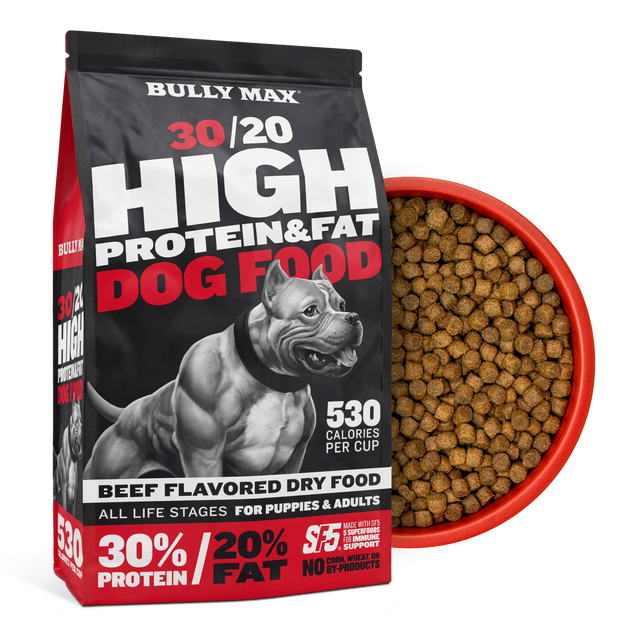
- Bully Max options without chicken: 30/20 High Protein Beef and 25/11 Lamb. Neither lists chicken, egg or dairy ingredients.
Food Allergy, Environmental Allergy or Intolerance?
“My dog has allergies” can mean three very different things. Getting this right first saves you from switching foods over and over for a problem food can’t fix.
| Food allergy | Environmental allergy | Food intolerance | |
|---|---|---|---|
| What it is | The immune system overreacts to a food, almost always a protein | The immune system overreacts to things in the air or on the skin: pollen, dust mites, mold, flea saliva | The gut doesn’t handle a food well. No immune reaction. |
| Common signs | Itching, licking paws, ear trouble, skin infections, sometimes loose stool or vomiting | Itching, licking paws, ear trouble, red skin | Gas, loose stool, vomiting, bloating |
| Pattern | Usually year-round, as long as the dog eats the trigger | Often seasonal at first, can become year-round | Shows up after a certain food, a rich meal or a fast switch |
| Does a food change help? | Yes, once the trigger is found and removed | Food doesn’t remove the cause. Your vet has other options. | Often, with a steady diet and a slow switch |
Plain-terms summary for owners. Only your vet can tell which one your dog has, and some dogs have more than one.
The key takeaway: itching on its own does not mean a food allergy. Fleas and environmental allergies are common causes of an itchy dog. That’s why the first stop for any itchy, red-eared or scratching dog is the vet, not the dog food aisle.
If your dog’s issue is mostly in the gut, like gas or soft stool after meals, that leans toward intolerance or a food that simply doesn’t suit your dog. Our guides on firming up your dog’s stool and helping an upset stomach cover that side, and our guide to the best dog food for a sensitive stomach covers choosing a food.
How to Tell if Your Dog Has a Food Allergy
Food allergies in dogs show up most often in the skin and ears, not the stomach. According to the American Kennel Club, typical signs include very itchy feet, belly, face and rear end, and about half of affected dogs get ear infections. Roughly 30% may also have digestive upset.
Signs owners usually notice first:
- Licking or chewing the paws, especially between the toes
- Rubbing the face on the carpet or furniture
- Ear infections that keep coming back, or red, smelly ears
- Red skin, hair loss or scabs from scratching
- More frequent bowel movements, soft stool or vomiting in some dogs
Two clues point more toward food than environment. The signs happen all year instead of in one season, and they started while the dog was on its usual diet. An allergy develops to something the immune system has met before, so the culprit is usually a food your dog has eaten for a while, not one it just started.
Every sign on this list has other possible causes, including fleas, mites, infections and hormone problems. If your dog is itchy, has ear or skin problems, or has ongoing digestive trouble, see your vet. Don’t try to diagnose it from a list.
The Most Common Food Allergens in Dogs
When food is the problem, protein is almost always the trigger. The best summary we know of is a 2016 review in BMC Veterinary Research by Mueller, Olivry and Prélaud, which pooled published cases of food-allergic dogs.
| Food | Share of food-allergic dogs that reacted |
|---|---|
| Beef | 34% |
| Dairy products | 17% |
| Chicken | 15% |
| Wheat | 13% |
| Soy | 6% |
| Lamb | 5% |
Source: Mueller, Olivry & Prélaud, BMC Veterinary Research, 2016, 297 dogs. Some dogs reacted to more than one food.
A few things this tells you:
- Beef and chicken are near the top because dogs eat them most. Allergies develop to foods a dog is exposed to. The most common proteins in dog food show up most often on allergy lists.
- No protein is “hypoallergenic” by nature. Lamb was once the go-to “allergy” protein because few dogs had eaten it. As lamb foods became common, lamb showed up on allergen lists too.
- Grains are a smaller part of the picture. Wheat and soy appear, but well behind the animal proteins and dairy.
- The right food depends on your dog’s trigger. A chicken-free food helps a chicken-allergic dog. It does nothing for a dog that reacts to beef.

Why an Elimination Diet Has to Be Run With Your Vet
There’s only one reliable way to confirm a food allergy and find the trigger: an elimination diet trial. The idea is simple. The execution is where most home attempts fall apart.
How an elimination trial works
- Your vet picks the trial diet. Usually a prescription hydrolyzed diet, where the protein is broken into pieces too small to trigger the immune system, or a diet built on a protein your dog has never eaten.
- Your dog eats only that diet. No treats, chews, table scraps, flavored medications or toothpaste unless your vet okays them.
- You wait long enough. The AKC notes that trials should last at least 8 weeks to identify food allergies in more than 90% of dogs.
- Your vet runs a food challenge. If the signs improve, the old food or single ingredients go back in one at a time. If signs return, you’ve found a trigger.
Why doing it alone usually fails
- Hidden ingredients. One chicken jerky treat or a bite of a sandwich can undo weeks of work.
- Too short. Owners often switch after two or three weeks, before skin has had time to settle.
- Other causes at the same time. If your dog also has fleas, an ear infection or a seasonal allergy, the food change can look like it failed. Your vet treats those alongside the trial.
- Wrong protein. Picking a “new” protein your dog has already eaten in treats or another food defeats the purpose.
What about at-home allergy test kits? The Merck Veterinary Manual says that blood, saliva and hair tests for food allergy don’t reliably give consistently accurate results. Skip them and ask your vet about a proper trial.
A note on what food can and can’t do
- No dog food treats allergies. A food can only leave out an ingredient your dog reacts to.
- During a trial, feed only the diet your vet chose. Everyday foods, including ours, are not designed for elimination trials.
- Once your vet has helped you identify the trigger, an everyday food that leaves it out can be a good long-term fit.
How to Read a Dog Food Label for Protein Sources
Once you know what to avoid, the label is your best tool. Ingredients are listed in order by weight before cooking, so the first few tell you the main protein. But allergy shopping means reading every line.
Find every animal ingredient
Go through the full list and pull out anything that comes from an animal. Proteins hide in more places than the headline meat:
| Where protein hides | Examples on a label |
|---|---|
| Meats and meals | beef, beef meal, lamb meal, pork, chicken meal, turkey |
| Fats and oils | chicken fat, beef tallow, salmon oil, “animal fat” |
| Fish | menhaden fish meal, whitefish, salmon meal |
| Eggs and dairy | dried egg product, whey, cheese, yogurt |
| Broths and flavors | chicken broth, liver, “natural flavor”, “animal digest” |
| Vague terms | “poultry”, “meat meal”, “animal by-products” |
General label guidance. If your vet gave you a list of ingredients to avoid, that list comes first.
Watch for the four common traps
- The name on the front is just the headline. A “lamb recipe” can also contain pork, fish or chicken fat further down.
- Unnamed sources. “Poultry” or “meat meal” don’t tell you the animal. “Natural flavor” doesn’t name its source either. If it matters for your dog, ask the manufacturer.
- Treats and extras. Dental chews, pill pockets, toppers and training treats are often chicken- or beef-based even when the food isn’t.
- Recipe changes. Brands reformulate. Re-check the ingredient list when you buy a new bag of a different size or flavor.
If chicken is the ingredient you’re avoiding, our chicken-free dog food guide has a full table of the places chicken hides on a label. For general label reading, see dog food ingredients to look for and avoid and our guide to the best protein sources for dogs.
Choosing the Best Dog Food for Your Dog’s Allergies
There isn’t one best food for every allergic dog. There’s a best next step for your situation.
| Your situation | What to feed |
|---|---|
| Your vet is running an elimination trial | Only the diet your vet chose, for as long as your vet says |
| Your vet confirmed a trigger, like chicken | A complete everyday food whose full ingredient list leaves that trigger out |
| You suspect a food but haven’t seen a vet | Book the vet visit first. Switching foods on a guess can hide the real cause. |
| Your vet says it’s environmental or flea allergy | A complete, balanced food your dog does well on. Ask your vet whether added omega-3s make sense. |
| Gas or loose stool after meals (intolerance) | One consistent food, introduced slowly, with fewer treats and table scraps |
Whatever the situation, the everyday food still has to do its main job: complete nutrition your dog will actually eat. For active bully breeds that means enough protein and calories to hold weight and muscle. A food that removes the trigger but leaves your dog thin or uninterested isn’t a win.
Pit bulls and American Bullies with skin allergies
“Best dog food for pitbulls with skin allergies” is one of the most common ways bully owners search this topic, and it makes sense. About two thirds of the Bully Max customers we surveyed own pit bulls, Staffies or American Bullies, and their short coats make red, irritated skin easy to see.
The rules don’t change for bully breeds. Rule out fleas and environmental allergies with your vet, confirm any food trigger with a proper trial, then feed an everyday food that leaves the trigger out and fits your dog’s activity level. For a working or very active pit bull, that usually means a higher-calorie formula. For a lower-key dog or an easy keeper, a leaner one. Our best dog food for pitbulls guide goes deeper on feeding the breed.

Bully Max Chicken-Free Options
If your vet has pointed to chicken as the problem, or your dog simply does better without it, Bully Max makes two dry foods with no chicken in the ingredient list: 30/20 High Protein Beef and 25/11 Lamb.
Proof first. Bully Max has over 50,000 5/5 reviews, a 5/5 rating from Dog Food Advisor and has fed millions of dogs. We’re a family-owned U.S. company founded in 2009. Our food is made in the USA, every batch is triple tested for safety, and we have zero recalls. In our post-purchase survey of about 2,400 customers, around 10% named coat, skin or digestion as a reason they buy, and about 14% said their picky dog finally ate.
Here’s exactly what’s in each formula, taken from the ingredient lists on our product pages:
| 30/20 High Protein Beef | 25/11 Lamb, 45% less fat | |
|---|---|---|
| First ingredient | Beef meal | Lamb meal |
| Animal ingredients listed | Beef meal, beef tallow | Lamb meal, pork, menhaden fish meal, salmon oil |
| Chicken, egg or dairy listed? | No | No |
| Protein / fat (min) | 30% / 20% | 25% / 11% |
| Calories | 530 kcal/cup | 415 kcal/cup |
| Probiotics | Yes, 4 strains | Yes, 4 strains |
| Worth knowing | Beef is the most often reported food allergen in dogs. Also lists soybean meal. | Not a single-protein food: it combines lamb, pork and fish. |
| Best for | Active, working and underweight dogs that need calories | Small breeds, Frenchies, less active dogs and easy keepers |
Both formulas also list “natural flavor”, which the label does not break down by source. Neither food is designed for an elimination trial, and neither treats allergies. Always check the full ingredient list on the product page against your vet’s advice.
30/20 High Protein Beef: chicken-free with calories to spare
Beef meal comes first. Meal is meat with the water cooked off, so it packs far more protein by weight than fresh meat. That makes 30/20 Beef a strong fit for active pit bulls, bullies and working dogs that need to avoid chicken but still need to hold healthy weight and muscle. It’s suitable for large-breed dogs, including large-breed puppies, under AAFCO guidelines. Just remember beef itself is a common trigger, so it’s a fit for chicken-sensitive dogs, not beef-sensitive ones.

TRY BULLY MAX 30/20 HIGH-PROTEIN BEEF DOG FOOD
No chicken in the ingredient list. Beef meal is the first ingredient, with 30% protein, 20% fat and 530 calories per cup.
25/11 Lamb: chicken-free and lighter
Lamb meal comes first, with pork and menhaden fish meal as the other animal proteins. At 415 calories per cup and 45% less fat, 25/11 Lamb suits dogs that do better on a lighter bowl: small breeds, Frenchies, seniors, less active dogs and dogs that put on weight easily. Because it mixes three animal proteins, it isn’t the right pick for a dog that reacts to pork or fish.

If your dog needs to skip chicken and doesn’t need the extra calories, this is the one.

TRY BULLY MAX 25/11 LAMB DOG FOOD
No chicken in the ingredient list. Lamb meal is the first ingredient, with 25% protein, 45% less fat and 415 calories per cup.
How to Switch Your Dog’s Food Slowly
Once you and your vet have picked a food, switch gradually. A sudden change can upset the stomach, and that upset can be mistaken for a reaction to the new food.
| Days | Old food | New food |
|---|---|---|
| 1–2 | 75% | 25% |
| 3–5 | 50% | 50% |
| 6–8 | 25% | 75% |
| 9–10 | 0% | 100% |
A common 7–10 day schedule. Slow down if stools get soft. If your vet gave you a different plan, follow it.
- Change one thing at a time. Don’t start a new food, new treats and a new supplement in the same week. If something changes, you won’t know why.
- Switch the treats too. Make sure treats and chews leave out the same trigger as the food.
- Keep a simple log. Note itching, paw licking, ears and stool every few days. It makes your next vet visit far more useful.
- Feed the right amount. Calories per cup vary a lot between foods. Use our dog food calculator as a starting estimate.
Our step-by-step guide on how to switch your dog to Bully Max walks through the full transition, including picky eaters.

Skin and Coat Support: Where Salmon Oil Fits
Whatever the cause of your dog’s itching, skin and coat do best on good nutrition. Omega-3 fatty acids, especially EPA and DHA from fish, are among the nutrients most often discussed for skin and coat. They don’t replace your vet’s treatment plan, but many owners add them to support a healthy coat. Ask your vet before adding anything during an elimination trial, since fish oil is an animal product.
Bully Max Omega-3 Salmon Oil has three ingredients: salmon oil, pollock oil and mixed tocopherols as a preservative. No chicken, no beef. It brings EPA and DHA in an easy pour over any food. Learn more in our guides to salmon oil for dogs and coarse, brittle coats.


ADD BULLY MAX OMEGA-3 SALMON OIL
Three ingredients: salmon oil, pollock oil and mixed tocopherols. Omega-3 EPA and DHA to support skin and coat.
Our Pick for Allergy-Conscious Owners
Start with your vet. Confirm what your dog is reacting to, run a proper trial if it’s food, and treat fleas or environmental allergies alongside it. Once you know the trigger, pick an everyday food that leaves it out and fits your dog’s life:
- Avoiding chicken, active or hard-to-keep-weight-on dog? 30/20 High Protein Beef.
- Avoiding chicken, small breed, Frenchie or easy keeper? 25/11 Lamb.
- Want to support skin and coat? Add Omega-3 Salmon Oil.
Once you find the food that works, consistency matters. Set it up on Autoship and save 10% so you never run out mid-bag and end up grabbing whatever’s on the shelf.
FAQ
What is the best dog food for dogs with allergies?
The one that leaves out your dog’s specific trigger and still gives complete nutrition. For a suspected food allergy, your vet will usually start with a prescription hydrolyzed or novel-protein diet during an elimination trial. After the trigger is found, a complete everyday food without that ingredient is the long-term answer.
How can I tell if my dog has food allergies?
Year-round itching, paw licking, face rubbing and repeat ear infections are the classic signs, sometimes with loose stool or vomiting. Fleas and environmental allergies cause the same signs, so see your vet. The only reliable way to confirm a food allergy is an elimination diet trial of 8 weeks or more.
What is the most common food allergy in dogs?
Beef. In the 2016 review by Mueller, Olivry and Prélaud, beef was reported in 34% of food-allergic dogs, followed by dairy (17%), chicken (15%) and wheat (13%).
Is chicken-free dog food good for dogs with allergies?
Only if chicken is what your dog reacts to. Chicken-free food helps a chicken-allergic dog, but it won’t help a dog allergic to beef, dairy or pollen. Confirm the trigger with your vet first.
Can dogs develop food allergies later in life?
Yes. Dogs usually become allergic to a food they have eaten before, sometimes for years without problems. A dog that did fine on a food for a long time can still develop an allergy to one of its ingredients.
Is Bully Max hypoallergenic?
No. We don’t call any of our foods hypoallergenic, and no food treats allergies. Two Bully Max dry foods have no chicken in their ingredient lists: 30/20 High Protein Beef and 25/11 Lamb. They are everyday foods for dogs that need or prefer to avoid chicken, not elimination-trial diets.
Sources: Mueller RS, Olivry T, Prélaud P. Critically appraised topic on adverse food reactions of companion animals (2): common food allergen sources in dogs and cats. BMC Veterinary Research, 2016; American Kennel Club, Dog Food Allergies; Merck Veterinary Manual, Cutaneous Food Allergy in Animals.
Have a question about which formula fits your dog? Tell us about your dog in the comments below.