How Much Protein Does a Dog Need? What the Percentage on the Bag Really Means
An adult dog needs a minimum of 18% protein on a dry-matter basis (about 45 grams per 1,000 calories) and a growing puppy at least 22.5% (56 grams per 1,000 calories), according to the AAFCO nutrient profiles cited by the Merck Veterinary Manual. Those are floors, not targets. Active, muscular and working dogs do best well above them, which is why performance foods run 30% protein or more. What matters as much as the percentage is where the protein comes from: a named meat meal first delivers far more usable protein than the same number from plants. Here is how to read the number on your bag.
Family-owned since 2009 · Made in USA · Every batch triple tested · Zero recalls · 50,000+ 5-star reviews · Dog Food Advisor 5/5
The Minimums: What AAFCO Requires
AAFCO sets the nutrient profiles that a "complete and balanced" dog food must meet. For protein:
| Life stage | Minimum crude protein (dry matter) | Minimum per 1,000 kcal |
|---|---|---|
| Adult maintenance | 18% | 45 g |
| Growth and reproduction (puppies, pregnant and nursing dogs) | 22.5% | 56.3 g |
AAFCO Dog Food Nutrient Profiles as cited in the Merck Veterinary Manual. Dry-matter basis means with the water removed; for a dry kibble at 10% moisture, the as-fed number on the bag is about 10% lower than the dry-matter number.
Two things follow. First, almost any complete food clears the minimum; the floor tells you nothing about whether the food is good for your dog. Second, the minimum is set for a moderately active pet. Merck notes that protein must be balanced against energy, because a dog eats to meet its calorie need, and a food that is high in calories but low in protein per calorie can leave an active dog short.
How Much Protein Is in Dog Food
The number on the bag is "crude protein (min)" in the guaranteed analysis, as fed. Typical ranges for dry food:
| Crude protein (as fed) | Category | Typical use |
|---|---|---|
| 18 - 22% | Standard maintenance | Low-activity adults; the bottom of the range for most foods |
| 23 - 27% | Moderate | Most adult and puppy foods |
| 28 - 32% | High protein | Active adults, muscle and weight gain, bully and working breeds |
| 33% and up | Very high protein | Performance foods, some raw and freeze-dried foods |
General ranges for dry foods. Bully Max: 24/14 Puppy 24%; 25/11 Lamb 25%; 30/20 Chicken and Beef 30%; PRO Series 31/25 31%.
The percentage can mislead on its own, because a food with more calories per cup also delivers more protein per cup. The fairer comparison is grams of protein per 1,000 calories. As an estimate, Bully Max 30/20 Chicken at 30% protein and 535 calories per cup delivers roughly 60 grams of protein per 1,000 calories, against the AAFCO adult minimum of 45. A 22% food at 350 calories per cup actually scores higher on that measure, about 70 grams, because its calories are lower; your dog eats about a third more cups of it to get the same energy, and the extra bulk is mostly carbohydrate and fiber. Grams per 1,000 calories tells you about balance. The percentage, together with a named meat meal first, tells you about quality and how much the dog has to eat. For a line-by-line comparison of foods, see our dog food comparison chart.

Which Dogs Need More Than the Minimum
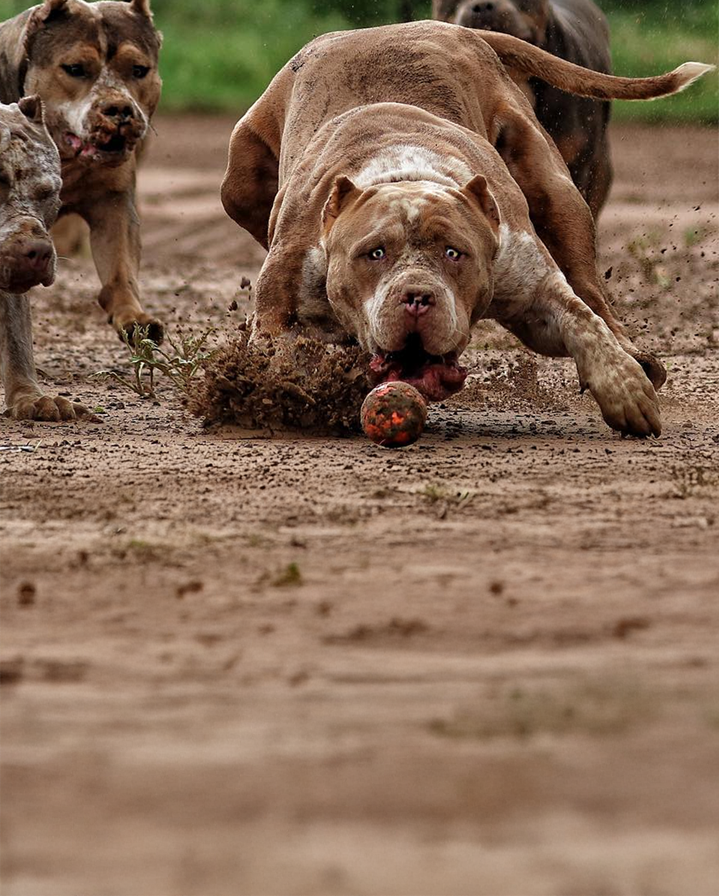
- Muscular and working breeds. Pit bulls, American Bullies, Cane Corsos, Rottweilers, Mastiffs, German Shepherds and Malinois carry more muscle per pound than most dogs, and muscle is built and repaired from dietary protein. In our post-purchase survey, 14% of Bully Max buyers chose the food for its protein, calories and ingredients, and another 7% for muscle.
- Dogs in training or sport. Exercise breaks muscle down; protein rebuilds it. A dog on a conditioning program needs the amino acids to recover between sessions. See how to build muscle on a dog with food.
- Puppies. Growth needs more protein per calorie than maintenance, which is why the growth minimum is 22.5%. Large-breed puppies need that protein with controlled calcium and moderate fat, not a performance food.
- Underweight dogs and rescues. A thin dog has lost muscle as well as fat. Calories put the fat back; protein puts the muscle back. Our is my dog underweight guide has the plan.
- Older dogs. Senior dogs lose muscle with age, and healthy seniors generally benefit from maintaining protein intake rather than cutting it. Your vet decides for a dog with kidney or liver disease.

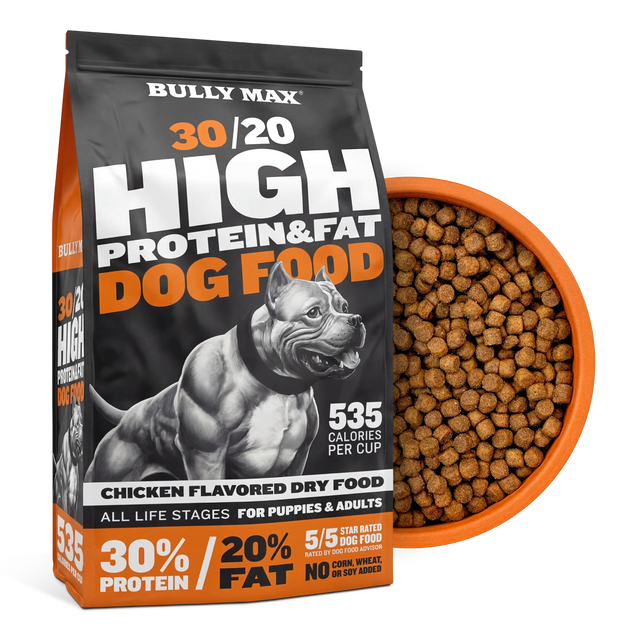
30% PROTEIN FROM CHICKEN MEAL FIRST
Meat-based nutrition with 30% protein, 20% fat and 535 calories per cup, plus TruMune to support digestion and immune health. The food behind most Bully Max muscle results.
Save 10% with autoship and get each bag delivered on a schedule.
Protein Quality: Meat Meal vs Plant Protein
Thirty percent protein from chicken meal and thirty percent protein from a mix of fresh chicken, pea protein and corn gluten are not the same thing. Animal proteins supply the ten essential amino acids in the proportions a dog needs; plant proteins are lower in some of them (lysine and methionine in particular) and less digestible. Fresh meat is about 70% water, so a bag that lists "chicken" first can get most of its protein from the plant ingredients lower on the list once the water is cooked off. A named meat meal (chicken meal, beef meal, lamb meal) is that meat with the water already removed, three to four times as concentrated. Look for a named meal in the first ingredient and animal sources through the top five. Our guides to meat meal in dog food and meat-based dog food go deeper.
Every Bully Max food starts with a named meat meal: chicken meal in 30/20 Chicken and PRO Series, beef meal in 30/20 Beef, lamb meal in 25/11 Lamb and 24/14 Puppy. Fish meal and egg product add more animal protein further down the list.

Can a Dog Have Too Much Protein?
For a healthy dog, high-protein food is not harmful. Dogs are built to eat meat, and a healthy dog uses what it needs and burns or excretes the rest. The old idea that high protein damages healthy kidneys has not held up; it comes from dogs that already have kidney disease, for whom a vet-prescribed diet with controlled protein and phosphorus is the right call. So the real cautions are:
- Diagnosed kidney or liver disease: feed the diet your vet prescribes.
- Calories: a high-protein food is often a high-calorie food. Feed by calories per cup and body condition, not by the old scoop.
- Sudden switches: any big change in protein and fat can loosen stool for a few days. Mix the new food in over 7 to 10 days.
What protein alone will not do is build muscle on a dog that does not move. Protein is the material; exercise is the signal. The 30-day dog muscle building guide pairs the two.
Protein and Fat Work Together
A working dog needs protein for repair and fat for fuel. A food that raises protein but leaves fat low makes the dog burn protein for energy, which is wasteful; a food that raises fat without protein fuels the work but not the recovery. That is why performance foods pair the two: Bully Max 30/20 is 30% protein and 20% fat, PRO Series is 31% and 25%. For a dog that gains too easily, 25/11 Lamb keeps the protein at 25% while cutting fat to 11%. Read high fat dog food for the fat side of the equation and how many calories does a dog need for the totals.
Protein in every Bully Max formula
All five start with a named meat meal.
| Bully Max formula | Protein | Fat | kcal/cup | Best for |
|---|---|---|---|---|
| 30/20 High Protein Chicken | 30% | 20% | 535 | Active adults that need muscle and energy |
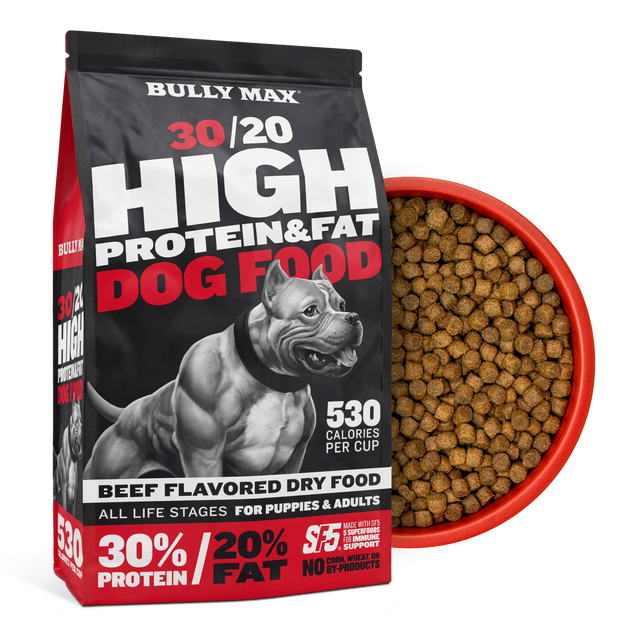
| 30/20 High Protein Beef | 30% | 20% | 530 | Dogs that need a chicken-free food; all life stages |
| PRO Series 31/25 High Calorie | 31% | 25% | 600 | Hard keepers, underweight, working and sport dogs |
| 25/11 Lamb, 45% less fat | 25% | 11% | 415 | Less active dogs, weight control, Frenchies and small breeds; chicken-free |
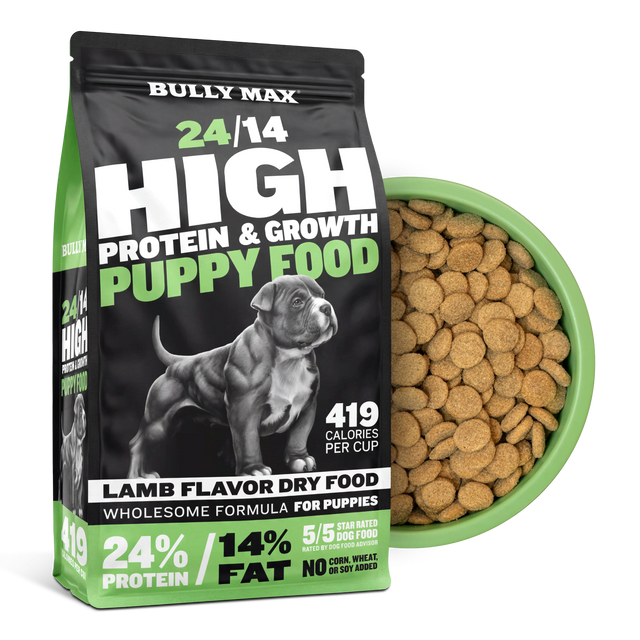
| 24/14 High Protein & Growth Puppy | 24% | 14% | 419 | Puppies, including large-breed puppies |
Protein and fat are guaranteed-analysis minimums; calories per 8 oz cup. Figures from each product's label data on shop.bullymax.com.
In our customers' words
“The ability to provide a protein rich diet to my pup, who is naturally muscular and athletic”
— Bully Max customer, post-purchase survey
“My dog has been eating this since he was 6 weeks old. He is now 4 years old and is solid, muscle definition in his legs.”
— Bully Max customer, post-purchase survey
“Well I just adopted an American bully from a family that couldn’t take care of him anymore. When I got him he was skinny but I used your food and he’s getting muscles”
— Bully Max customer, post-purchase survey
Topping Up Protein Without Changing Foods
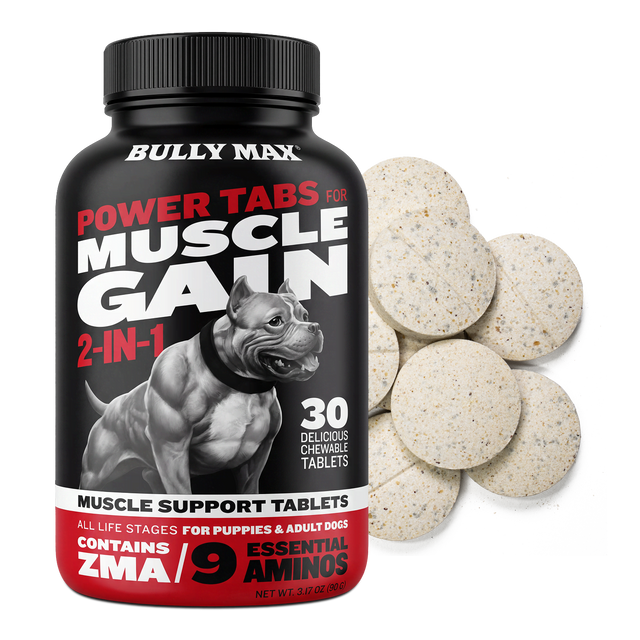
If your dog is on a good food and you want more protein for a training block, add it on top. Bully Max Pro Series Power Chews supply amino acids for muscle and recovery, and the freeze-dried raw beef and salmon toppers add animal protein to any bowl. Keep treats and toppers under about 10% of daily calories.

ADD AMINO ACIDS FOR TRAINING AND RECOVERY
Amino acids for strong muscles and healthy joints, plus training and performance support for working and sport dogs.
FAQ
How much protein does a dog need per day?
At least 18% of the diet on a dry-matter basis for adults (45 g per 1,000 kcal) and 22.5% for puppies (56.3 g per 1,000 kcal), per AAFCO. Active and muscular dogs do better well above those floors; 28 to 32% as fed is a high-protein food.
What percentage of protein should be in dog food?
Most adult foods run 22 to 27%. For bully, working and sport breeds, or any dog you want to add muscle to, look for 28 to 32% from a named meat meal first. Bully Max adult foods are 30 to 31%.
Is 30% protein too much for a dog?
Not for a healthy dog. Dogs are built to use animal protein; 30% from meat meal is a performance level, not an excessive one. Dogs with diagnosed kidney or liver disease should eat the diet their vet prescribes.
Is high protein dog food good for muscle?
It supplies the amino acids muscle is built from. Combined with regular exercise, a meat-based 30% protein food is how most Bully Max owners get the results they share. Without exercise, extra protein will not build muscle on its own.
How much protein does a puppy need?
At least 22.5% on a dry-matter basis. Bully Max 24/14 Puppy Food has 24% protein with lamb meal first, 14% fat and controlled calcium, and is suitable for large-breed puppies under AAFCO guidelines.
Does the type of protein matter?
Yes. Animal proteins (chicken meal, beef meal, lamb meal, fish meal, egg) supply all the essential amino acids in the right proportions. Plant proteins are lower in some of them and less digestible, so two foods with the same percentage can feed a dog very differently.
Feed Protein Your Dog Can Use
Clear the AAFCO minimum easily, then look at the source. A named meat meal first, 30% protein for an active or muscular dog, fat matched to the work, and exercise to turn it into muscle. That is the Bully Max formula. See how it is built for muscle at Built for Gains, or compare every ingredient at dog food without fillers.
30% protein, chicken meal first
Meat-based nutrition with 30% protein and 535 calories per cup. Family-owned, made in the USA, every batch triple tested, zero recalls.
30% PROTEIN FROM CHICKEN MEAL FIRST
Meat-based nutrition with 30% protein, 20% fat and 535 calories per cup, plus TruMune to support digestion and immune health. The food behind most Bully Max muscle results.
Save 10% with autoship and get each bag delivered on a schedule.
Family-owned since 2009 · Made in USA · Every batch triple tested · Zero recalls · 50,000+ 5-star reviews · Dog Food Advisor 5/5
Sources
- Merck Veterinary Manual, Nutritional Requirements of Small Animals: AAFCO minimum crude protein of 18% dry matter or 45 g per 1,000 kcal ME for adult dogs and 22.5% or 56.3 g per 1,000 kcal for growth and reproduction; protein must be balanced against energy. merckvetmanual.com
- Bully Max 30/20 Chicken, 30/20 Beef, PRO Series 31/25, 25/11 Lamb and 24/14 Puppy product pages: ingredient lists, guaranteed analysis and calories per 8 oz cup. Grams of protein per 1,000 kcal are estimates based on an approximate 4 oz cup of kibble.
- Bully Max post-purchase survey, Dec 2024 to Jun 2025 (reasons for buying; customer quotes).