Pocket Bully: Size, Temperament, Care and Feeding Guide
A pocket bully is the smallest of the four American Bully varieties recognized by the American Bully Kennel Club (ABKC). Adult males stand 14 to just under 17 inches at the withers and females 13 to just under 16 inches. There is no official weight; as a rough estimate, owners commonly report adult pockets at around 30 to 60 pounds of compact muscle. This guide covers pocket bully size and weight, how a pocket compares with a standard bully, temperament, daily care, and how to feed one for lean muscle and a shiny coat.
Pocket bully at a glance
- What it is: the shortest ABKC variety of the American Bully, not a separate breed
- Height (ABKC): males 14 to under 17 in; females 13 to under 16 in, measured at the withers
- Weight: no official weight; owners commonly report roughly 30 to 60 lb (a rough estimate), depending on frame and muscle
- Temperament: people-focused, confident, eager to please; needs early socialization
- Care: moderate daily exercise, short coat, watch heat and body weight
- Feeding: a meat-based, high-protein food in measured portions; adjust to body condition, not the scale alone
What Is a Pocket Bully?
The American Bully was developed in the United States in the 1980s and 1990s, largely from American Pit Bull Terrier and American Staffordshire Terrier lines, with breeders selecting for a heavier, wider, more muscular companion dog. The ABKC first recognized the breed in 2004, and the United Kennel Club (UKC) recognized it in 2013. The AKC does not recognize the American Bully.
The ABKC splits the breed into four varieties: Pocket, Standard, Classic and XL. They share one breed standard and differ mainly in height and frame. So a pocket bully is simply an American Bully that matures at the short end of the range. It is not a mix, and it is not a miniature breed. For the bigger picture, see our guides to which dogs are considered bully breeds and ABKC vs. UKC standards.
Pocket Bully vs. “Pocket Pitbull”
The two names get mixed up. “Pocket pitbull” is an informal label. People use it for small pit bull type dogs, including crosses between an American Pit Bull Terrier and a Patterdale Terrier, and sometimes for pocket bullies themselves. It is not a registered breed or variety. A pocket bully, by contrast, is a defined ABKC size class of the American Bully. If you want the full history of how the two breeds split, read Are American Bullies the Same as Pitbulls?
Before we go further, a quick note on fuel: if your Pocket Bully needs more strength and energy from the bowl, a meat-based, high-protein food is the simplest place to start.

FUEL YOUR DOG WITH BULLY MAX 30/20 HIGH-PROTEIN FOOD
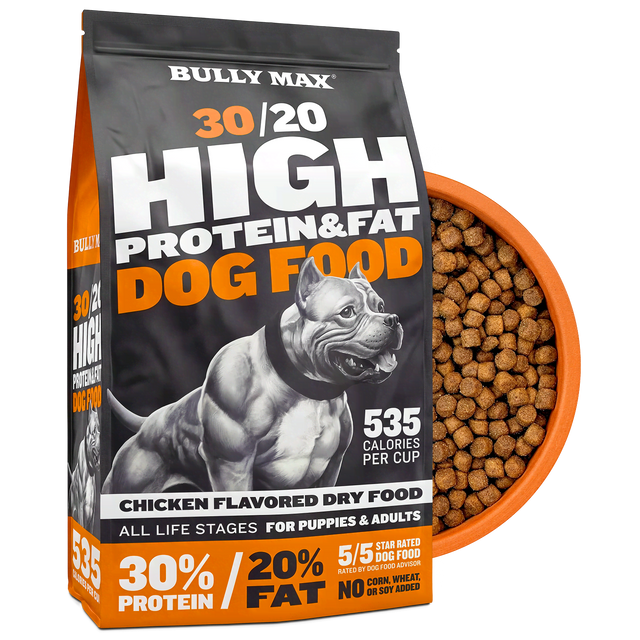
Fuel strength and energy with meat-based nutrition, 30% protein, 20% fat, and 535 calories per cup.
Pocket Bully Size: ABKC Size Classes Explained
The ABKC defines every American Bully variety by height at the withers, the top of the shoulder blades. Here is how the four varieties line up, taken from the ABKC American Bully breed standard:
| Variety | Males (at withers) | Females (at withers) | Build |
|---|---|---|---|
| Under 17 in, no less than 14 in | Under 16 in, no less than 13 in | Same heavy, muscular build as the Standard, in a shorter frame | |
| Standard | 17 to 20 in | 16 to 19 in | The reference type: compact, muscular, heavy bone |
| Classic | 17 to 20 in | 16 to 19 in | Same height as Standard, with a lighter frame and less body mass |
| XL | Over 20 in to 23 in | Over 19 in to 22 in | Same build as the Standard on a taller frame |
Source: ABKC American Bully breed standard (abkcdogs.net). Heights in inches at the withers.


Two things in the standard matter for owners. First, the ABKC states that “there is no particular weight for the breed.” Weight follows height, bone and muscle. Second, the standard says dogs “should be healthy and should NOT reach the point where it is considered obese.” A heavy pocket is fine. A fat pocket is not.
You will also see terms like micro, XXL and exotic in ads. These are not ABKC American Bully varieties. A “micro” is usually marketed as smaller than a pocket, which puts it below the height range in the standard.

How to Measure Your Bully at the Withers
Stand your dog square on a flat floor with the head in a natural, level position. Find the withers, the highest point of the shoulder blades just behind the neck. Lay a flat object such as a level or a book across the withers so it is parallel to the floor, and measure straight down from its underside to the floor. Measure two or three times and use the average. Don’t measure to the top of the head or the back of the neck, which adds inches.

Not sure if your bully is a pocket or a standard? We walk through all four ABKC classes, with real dogs, in this video:
Pocket Bully Weight: What’s Healthy?
Because the ABKC does not set a weight, two pockets of the same height can be 15 pounds apart and both be in great shape. One may simply carry more bone and muscle. As a rough guide only, here is where adult American Bullies commonly fall:
| Variety | Common adult weight (rough estimate) | Notes |
|---|---|---|
| About 30 to 60 lb | Short, wide and dense. Gains fat easily if overfed. | |
| Standard | About 50 to 80 lb | The middle of the range. |
| Classic | Usually lighter than a Standard of the same height | Leaner frame, less overall mass. |
| XL | About 80 to 130+ lb | Tallest variety, keeps filling out longest. |
Rough estimates of what owners commonly report, not part of the ABKC standard, which sets no weight for the breed. Ranges overlap, and your dog’s ideal weight depends on its frame.
Use body condition instead of a number. On a pocket bully in good shape you can feel the ribs with light pressure, you can see a waist when you look down from above, and the belly tucks up a little from the side. If you have to press to find the ribs, or the dog looks like a barrel from above, cut portions by about 10% and check again in two weeks. Our guide on how to determine your dog’s ideal weight walks through body condition scoring.
When Is a Pocket Bully Full Grown?
Most American Bullies are close to their adult height by about 10 to 12 months. Chest, head and muscle keep filling out after that, often until around 18 to 24 months. That is why a 12-month-old pocket can look leggy and narrow, then “thicken up” over the next year. Don’t try to speed that up with extra food. Fast growth adds fat and stress on growing joints, not better muscle.
Pocket Bully vs. Standard Bully (and XL, Classic and Pit Bull)
The pocket vs. standard question comes down to height. Under the ABKC standard, a male under 17 inches is a pocket, and a male from 17 to 20 inches is a standard. Temperament, coat and care are the same. What changes is the total amount of dog you are feeding, exercising and lifting into the car.
| Standard | XL | American Pit Bull Terrier | ||
|---|---|---|---|---|
| Height, males | 14 to under 17 in | 17 to 20 in | Over 20 to 23 in | Usually about 17 to 21 in |
| Build | Short, wide, very dense | Compact, heavy bone | Tall and heavy | Leaner, more athletic |
| Common weight (rough estimate) | About 30 to 60 lb | About 50 to 80 lb | About 80 to 130+ lb | About 30 to 60 lb |
| Estimated food per day* | About 1.3 to 2.8 cups | About 1.9 to 3.5 cups | About 2.7 to 5 cups | About 1.3 to 2.8 cups |
| Watch for | Weight gain, heat | Weight gain, heat | Slow, steady growth; joints | High energy needs |
*Estimate for a typical adult on Bully Max 30/20 (535 kcal per cup) at its ideal weight. Adjust for activity and body condition.
Is a pocket bully a good fit for you? If you want the bully look in a dog that fits an apartment, a small car or a smaller budget for food, a pocket makes sense. If you want a running partner, a leaner APBT or a Classic may suit you better. Before you buy, read our guide on how to vet a breeder and get references and our tips for picking the right puppy. Ask to see both parents and any health testing.
Pocket Bully Temperament
The American Bully was bred as a companion, and the ABKC standard puts it plainly:
“The American Bully is a companion breed exhibiting confidence, a zest for life, along with an exuberant willingness to please and bond with their family, thus making the American Bully an excellent family companion. Despite the American Bully’s fierce and powerful appearance their demeanor is gentle.”
ABKC American Bully breed standard
In everyday life, most pockets are people dogs. They want to be in the same room as you, they tend to be calmer indoors than a lean pit bull, and they are often clowns with their family. That said, a breed standard describes the goal, not every dog. Pockets are strong for their size and can be stubborn. Some are selective with other dogs, especially as they mature. Plan for:
- Early socialization: calm, positive exposure to people, dogs, sounds and places before about 16 weeks, and continued through adolescence.
- Reward-based training: bullies respond best to food, play and praise. Harsh corrections tend to backfire.
- Leash manners early: a 50-pound pocket that pulls is hard to walk. Start before it matters.
- Supervised dog play: watch body language, keep sessions short and step in before play gets too rough.
Our step-by-step guide on how to train an American Bully covers house training, crate training, socialization and obedience. Tug, a flirt pole and short training games are great outlets for a pocket’s energy.
Watch: The Incredibullz x Bully Max
The Incredibullz breed XL American Bullies with ABKC and UKC champions and grand champions on their roster. Different size class, same breed, same fuel. See their dogs in Building Champions:
Pocket Bully Care: Exercise, Grooming and Health
Exercise
A healthy adult pocket usually does well with 30 to 60 minutes of activity a day, split into a couple of walks plus play. They have short bursts of power rather than long-distance stamina. Good options:
- Brisk walks and sniff walks, with a well-fitted harness
- Tug, flirt pole and fetch on soft ground
- Short training sessions, which tire the brain as much as the body
- Low-impact strength work such as uphill walking and controlled swimming
Two cautions. First, bullies are dense and many have shorter muzzles, so they can overheat fast. Exercise in the cool part of the day, carry water, and stop at heavy panting. Second, go easy on repeated jumping and long runs on hard ground while your pocket is still growing.

Grooming
The coat is short and easy. Brush weekly with a rubber curry or bristle brush, bathe when dirty, trim nails every few weeks and wipe out any facial folds so they stay dry. A dull, flaky coat is often the first sign that the diet is short on fat or omega-3s. See what to do about a coarse, brittle coat.
Health
Like other heavily built breeds, American Bullies can be prone to hip and elbow dysplasia, skin problems and allergies, and breathing trouble or heat intolerance in dogs with shorter muzzles. A form of congenital ichthyosis, a scaling skin condition, is known in the breed. Extra body weight makes joint and breathing problems worse, which is the biggest reason to keep a pocket lean. Lifespan is commonly cited at around 10 to 14 years.
Ask breeders about health testing on both parents. And if you notice limping, noisy or labored breathing, persistent itching, or weight loss you can’t explain, see your vet.
Feeding a Pocket Bully for Muscle and Coat
American Bully owners are the largest group of Bully Max customers. In our post-purchase survey, about a third of owners named an American Bully, including XL, pocket and exotic types. Here is what some of them told us when we asked why they chose Bully Max:
“Made special for Bully’s”
Bully Max customer, post-purchase survey
“My friend has a Bully and his dog looks so healthy and muscular.”
Bully Max customer, post-purchase survey
“I began to notice the positive change in their coats, build, and digestion”
Bully Max customer, post-purchase survey
Reviews and visible results are the top reason people try us, and we have over 50,000 5/5 reviews and a Dog Food Advisor 5/5 rating. Here is how to put the same approach to work for a pocket.
1. Lead with protein, then control calories
Muscle is built from protein plus work. A meat-based adult food in the high 20s to 30% protein gives a pocket what it needs to build and hold muscle. The catch with pockets is calories: they are short, so they need less food than they look like they need. Feed by your dog’s ideal weight, measure every meal with a real measuring cup or a scale, and count treats. Bully Max 30/20 has 30% protein, 20% fat and 535 calories per cup, so portions stay small. For more on the muscle side, see how to build muscle on a dog with food.
| Ideal adult weight | Calories per day (estimate) | Cups of 30/20 per day (535 kcal/cup) | Cups of 25/11 Lamb per day (415 kcal/cup) |
|---|---|---|---|
| 30 lb | 690 to 890 | 1.3 to 1.7 | 1.7 to 2.2 |
| 40 lb | 860 to 1,110 | 1.6 to 2.1 | 2.1 to 2.7 |
| 50 lb | 1,020 to 1,310 | 1.9 to 2.4 | 2.5 to 3.2 |
| 60 lb | 1,170 to 1,500 | 2.2 to 2.8 | 2.8 to 3.6 |
Estimates for typical adult dogs (about 1.4 to 1.8 times resting energy needs). Start at the low end for a calm, neutered pocket and the high end for a very active one, then adjust by about 10% based on body condition. Try our dog food calculator for your dog’s numbers.
For most pockets, 30/20 is the place to start. It is high-performance, meat-based nutrition, and the chicken recipe includes TruMune to support digestion and immune health.
FUEL YOUR POCKET BULLY WITH 30/20
Fuel strength and energy with meat-based nutrition, 30% protein, 20% fat, and 535 calories per cup.
2. Use fat and omega-3s for the coat
A glossy coat comes from the bowl. Dietary fat carries the fatty acids skin needs, and omega-3s EPA and DHA from fish oil support skin and coat. That is why “shiny coat” is one of the most common things our customers mention. If your pocket’s coat is dull or flaky on a good diet, a daily pour of salmon oil is an easy add. If itching, redness or hair loss keep coming back, see your vet to rule out allergies or skin disease.
Our salmon oil is wild-caught Alaskan, with EPA and DHA, and it is an easy daily pour over kibble.

ADD BULLY MAX OMEGA-3 SALMON OIL
Wild-caught Alaskan salmon oil with omega-3, 6, and 9 plus EPA and DHA. An easy daily pour for skin, coat, and overall health.
3. Pick the right recipe for your pocket
- Most adult pockets: 30/20 High Protein Chicken in measured portions.
- Pockets that gain fat easily or need a chicken-free food: 25/11 Lamb, with 25% protein, 45% less fat and 415 calories per cup. More food in the bowl for the same calories.
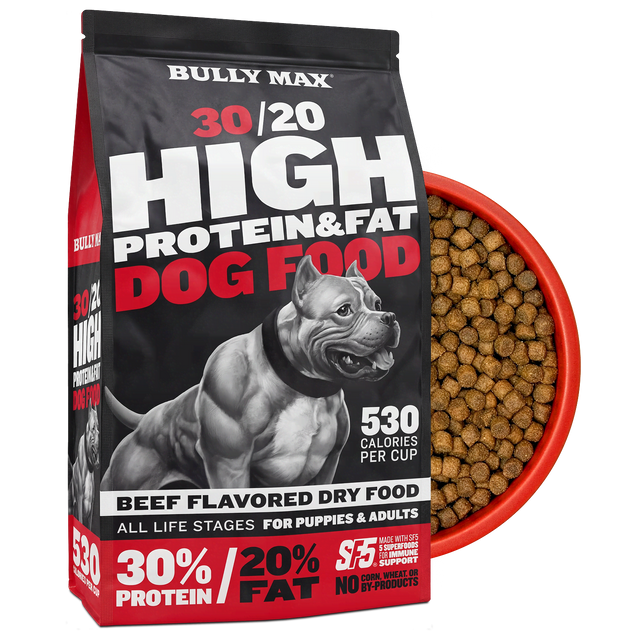
- Chicken-free and very active: 30/20 Beef, 530 calories per cup.
- Puppies: 24/14 Puppy until your pocket is close to adult size, usually around 12 months.
Picky eater? About one in seven of our survey respondents said their dog loves the taste or finally eats. Our guide on getting your dog to eat everything you give them covers schedules and toppers that help.
4. Feeding a pocket bully puppy
Pocket puppies grow fast for a few months, then slow down. Feed a complete puppy formula, three or four measured meals a day at first, and keep the puppy lean, not round. Switch to adult food at about 75 to 85% of adult size; see when to switch to adult dog food. For a month-by-month weight chart and puppy feeding amounts, see our American Bully puppy food and weight chart.
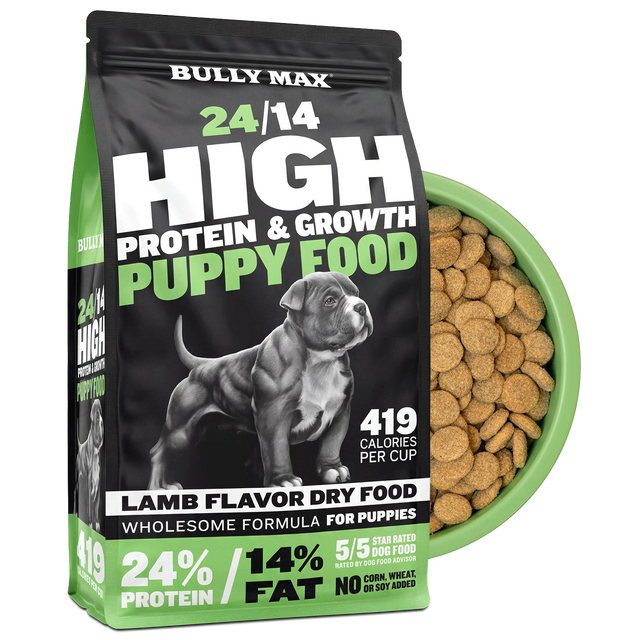
Our 24/14 Puppy formula has 24% protein, real lamb and TruMune. Every Bully Max dog food is suitable for large-breed dogs, including large-breed puppies, under AAFCO guidelines, so the same bag works for pocket, standard and XL puppies.

GIVE YOUR PUPPY BULLY MAX 24/14 PUPPY FOOD
Made for growing puppies with 24% protein, real lamb, and TruMune to support digestion and immune health.

Why owners trust Bully Max
Bully Max is a family-owned U.S. company founded in 2009. Our food is made in the USA, every batch is triple tested for safety, and we have zero recalls. We have served millions of dogs. Compare our recipes side by side in the Bully Max dog food comparison chart, or read our full guide to the best dog food for American Bullies.
Watch: ABKC Champions on Bully Max
FAQ
What is a pocket bully?
A pocket bully is the smallest of the four ABKC varieties of the American Bully. It has the same heavy, muscular build as a standard bully in a shorter frame: males 14 to under 17 inches and females 13 to under 16 inches at the withers.
How big does a pocket bully get?
By the ABKC standard, an adult male is at least 14 and under 17 inches tall at the withers, and a female at least 13 and under 16 inches. Most reach close to adult height by 10 to 12 months and keep filling out until about 18 to 24 months.
How much does a pocket bully weigh?
There is no official weight. As a rough, owner-reported estimate, most healthy adult pockets weigh about 30 to 60 pounds, depending on frame, bone and muscle. Judge by body condition: you should feel the ribs with light pressure and see a waist from above.
What is the difference between a pocket bully and a standard bully?
Height. A standard male is 17 to 20 inches and a standard female 16 to 19 inches. Pockets are under that. Temperament, coat and care are the same, but a pocket eats less and is easier to handle.
Is a pocket bully a pit bull?
No. The American Bully was developed from American Pit Bull Terrier and American Staffordshire Terrier lines, but it is a separate breed with its own standard. Many local laws still group bullies with pit bull type dogs; see our XL Bully ban update for the legal side.
What is the best food for a pocket bully?
A meat-based, high-protein food fed in measured portions. Most adult pockets do well on Bully Max 30/20, and pockets that gain weight easily often do better on 25/11 Lamb, which has 45% less fat.
Ready to feed your pocket like the champion it is? Start with Bully Max 30/20, measure every meal, and check body condition every couple of weeks. Set it up on autoship and save 10% on every order, so you never run out.
Ready to put this into practice? Start your Pocket Bully on a meat-based, high-protein food made in the USA by a family-owned company, with every batch triple tested for safety.
READY TO SWITCH? TRY BULLY MAX 30/20 HIGH-PROTEIN FOOD
Fuel strength and energy with meat-based nutrition, 30% protein, 20% fat, and 535 calories per cup.