American Pit Bull Terrier (APBT): Breed Guide and ADBA Standard
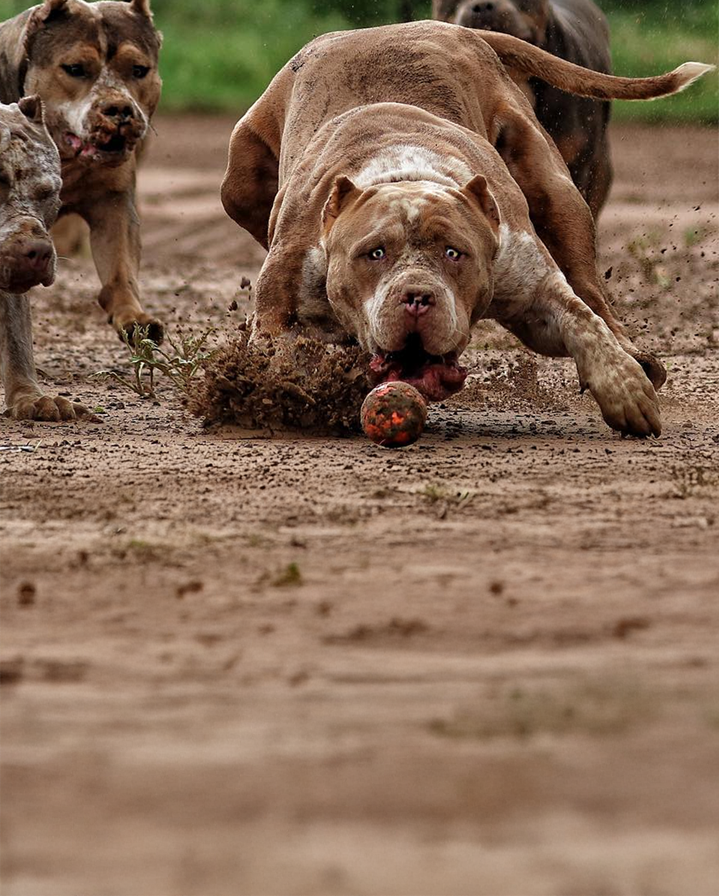
The American Pit Bull Terrier (APBT) is a medium-sized, muscular and athletic terrier, recognized by the United Kennel Club (UKC) since 1898 and by the American Dog Breeders Association (ADBA), but not by the American Kennel Club (AKC). Under the UKC standard, males stand 18 to 21 inches at the shoulder and usually weigh 35 to 60 pounds, and females stand 17 to 20 inches and weigh 30 to 50 pounds. A well-bred APBT is confident, eager to please and very people-friendly, with a lot of energy and drive. This guide covers APBT temperament, size, history, the ADBA and UKC breed standards, health basics and how to feed an active pit bull dog.
American Pit Bull Terrier at a glance
- Registries: UKC (first recognized in 1898) and ADBA (founded in 1909). Not recognized by the AKC.
- Height: males 18-21”, females 17-20” at the withers (UKC).
- Weight: males about 35-60 lb, females about 30-50 lb in fit condition (UKC preferred range). The ADBA judges proportion and condition, not a number on the scale.
- Build: lean, athletic and well-muscled, never bulky or sluggish.
- Coat: short, smooth and glossy. Almost any color is accepted; merle and albinism are major faults under the ADBA standard.
- Temperament: confident, eager and people-focused. Some dogs are selective with other dogs; aggression toward people is never part of the breed.
- Energy: high. Most APBTs need daily exercise, training and a job to do.
Before we go further, a quick note on fuel: if your American Pit Bull Terrier needs more strength and energy from the bowl, a meat-based, high-protein food is the simplest place to start.
Episode 3 of Bully Max Sports visits a champion American Pit Bull Terrier breeder:

FUEL YOUR DOG WITH BULLY MAX 30/20 HIGH-PROTEIN FOOD
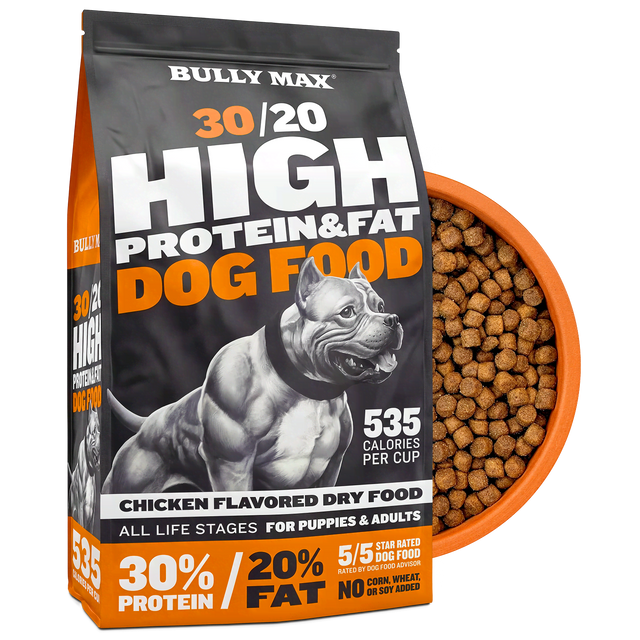
Fuel strength and energy with meat-based nutrition, 30% protein, 20% fat, and 535 calories per cup.
What Is an American Pit Bull Terrier?
The American Pit Bull Terrier is a specific, registered breed with written breed standards. It is the dog most people picture when they hear “pitbull dog,” but the two terms are not the same thing.
“Pit bull” has become a catchall label for almost any medium-sized, short-coated, blocky dog. Shelters, insurers and local laws often use it for APBTs, Staffordshire Bull Terriers, American Staffordshire Terriers, American Bullies and mixes of bulldogs, boxers and bull terriers. Dogs of other breeds, such as the Dogo Argentino or Cane Corso, are also mistaken for pit bulls. Many dogs called pit bulls are not registered APBTs at all.
The closest relatives are the American Staffordshire Terrier, which the AKC registers, and the American Bully, a newer companion breed developed from the APBT. If you are trying to work out which one you have, see our breakdown of American Bully vs Pit Bull differences and our list of which dogs are bully breeds.
American Pit Bull Terrier History
The APBT traces back to 19th-century England, Scotland and Ireland, where bulldogs and terriers were crossed to combine the strength of the bulldog with the drive and agility of the terrier. Those dogs were used in blood sports that are now illegal.
Immigrants brought them to the United States, where many became all-round farm dogs: catching livestock, guarding the homestead, hunting and living with the family. That history is why the breed is so people-oriented and so willing to work.
The United Kennel Club first recognized the American Pit Bull Terrier in 1898. The American Dog Breeders Association followed in 1909 and over time became a registry focused on the APBT. When the AKC began registering related dogs in 1936, it did so under a different name, and that line became today's American Staffordshire Terrier. Breed standards and responsible breeders then shaped the APBT into the athletic, stable companion owners know today.
What Is a Breed Standard?
A breed standard describes the ideal dog of a breed, from the tip of the nose to the end of the tail. It sets out the physical and behavioral traits that define the breed and keeps those traits from drifting over time.
Standards guide breeders, who use them to plan litters for sound structure and stable temperament. They also guide judges. In conformation shows, each dog is compared against the standard, and the dog that best matches it wins. For owners, the standard is a useful reference for what a well-bred, healthy APBT should look and act like.
What Is the ADBA?
The American Dog Breeders Association was founded in 1909 as a multi-breed registry. Over time it shifted its focus to the American Pit Bull Terrier. In 1976 it launched the American Pit Bull Terrier Gazette to share accurate information about the breed. Today the ADBA is one of the best-known APBT registries. It registers dogs, keeps pedigrees and sanctions conformation shows and weight pull events.
The ADBA is separate from the United Kennel Club (UKC), which first recognized the APBT in 1898. The American Kennel Club (AKC) does not recognize the American Pit Bull Terrier.
The ADBA Breed Standard, Section by Section
The ADBA American Pit Bull Terrier conformation standard reflects the breed's working roots. The main points:
Overall Appearance and Condition
An APBT should look athletic and capable, never bulky or sluggish. The standard favors a dog in lean, hard condition, with smooth, defined muscle and a firm, balanced shape. Movement should be free, smooth and powerful. A glossy coat is part of the picture of a healthy, well-kept dog.

Size and Weight
The ADBA puts more weight on proportion and condition than on a number on the scale. A smaller dog in great condition can beat a bigger dog carrying extra weight. For reference, the UKC APBT standard gives a preferred weight of 35 to 60 pounds for males and 30 to 50 pounds for females in good condition. See the size section below for heights.
Head, Eyes and Ears
The head should be large and broad but in proportion to the body, with strong jaws and a well-defined muzzle. Eyes are small and deep-set. Ears may be cropped or left natural, and neither is penalized.
Body, Chest and Hindquarters
The neck is muscular, the chest deep but not overly wide, and the ribs well sprung. The back is strong, and the hindquarters are muscular and well developed, giving the dog the drive it needs to run, jump and pull.
Coat and Accepted Colors
The coat is short, smooth and glossy. Almost any color or combination is accepted, including black, buckskin, black and tan, chocolate, fawn, red, white and seal. See the ADBA pit bull color chart for the full range. “Red nose” and “blue nose” describe colors, not separate breeds, and a rare color does not make a dog healthier or more valuable.
The standard is clear that color should never come at the expense of health. In its words: "Colors or color patterns known to be genetically linked to health problems will be considered a serious fault. Major faults: merle color pattern, albinism (white dog with blue or pink eyes, pink nose, lips, no pigment present on pads, rims of eyes etc.)"
Faults to Know About
- Health-linked colors. Merle and albinism are major faults.
- Poor condition. An overweight, soft or out-of-shape dog does not match the standard's working picture.
- Unsound structure or movement. The APBT should move freely and efficiently.
- Aggression toward people. A dog that shows aggression toward people should not be shown.
Temperament in the Standard
The standard expects a confident, eager and stable dog that is good with people. It also recognizes the breed's history. As the standard notes: "Although some degree of dog/animal aggressiveness is characteristic of the breed, unruly behavior will detract from the judge's ability to accurately judge an individual dog's conformation."

ADBA vs UKC American Pit Bull Terrier Standards
Both registries describe the same breed, and most of the picture is the same: a medium-sized, athletic, muscular dog with a confident temperament. The differences are mostly in emphasis.
| ADBA | UKC | |
|---|---|---|
| Founded | 1909 | 1898 |
| Focus | APBT-focused registry | All-breed registry |
| Size and weight | Proportion and condition over weight | Preferred weight: males 35-60 lb, females 30-50 lb |
| Emphasis | Working condition and function | The "total dog": conformation and performance |
| Events | Conformation and weight pull | Conformation and many performance sports |
Always check each registry's current standard and rules before showing or registering a dog.
The AKC does not register APBTs. Its closest breed is the American Staffordshire Terrier, which has its own standard and tends to be bred more for the show ring. Bully breeds registered with the ABKC, such as the American Bully, follow different standards again; see UKC vs ABKC standards for that side of the family.
American Pit Bull Terrier Temperament
A well-bred, well-raised APBT is one of the most people-loving dogs you can own. Most are affectionate, playful, clownish at home and eager to please, which makes them very trainable. They tend to bond closely with their family and want to be involved in everything.
Because of unethical breeding and irresponsible ownership, there are serious misconceptions about APBT temperament. Pit bulls are not naturally aggressive toward people, and aggression toward people is never part of the breed standard. Read our take on common myths about bully breeds.
What owners do need to plan for:
- Dog selectivity. Many APBTs are friendly with other dogs, but some adults become selective even when they were well socialized as puppies. Supervise introductions and skip crowded off-leash dog parks. See pit bulls and dog parks and our guide to preventing dog fights.
- Prey drive. Terrier drive means many APBTs will chase small animals. Keep them leashed or in a secure yard.
- Strength and enthusiasm. A happy 50-pound APBT can knock over a child or pull an adult off balance. Teach loose-leash walking and calm greetings early.
- Not a guard dog. Most APBTs love strangers more than they suspect them, so do not choose one as a protection dog.
Early, positive socialization and reward-based pitbull training make the biggest difference to how an adult APBT behaves.

American Pit Bull Terrier Size and Weight
The APBT is a medium-sized breed. Heights below come from the UKC standard; weights are the UKC preferred range for a dog in fit, working condition.
| Males | Females | |
|---|---|---|
| Height at the withers | 18-21” | 17-20” |
| Preferred weight | 35-60 lb | 30-50 lb |
| Body condition | Lean and muscular: ribs easy to feel, visible waist | |
Weight should stay in proportion to height. A heavier dog is not a better APBT if the extra weight is fat.
Plenty of dogs called pit bulls are much heavier than this. They are usually American Bullies, mixes or simply overweight. Most APBTs reach their adult height around their first birthday and keep filling out with muscle into their second year. For growth stages and charts, see our guide to average pitbull weight, height and size, and use our ideal weight guide to check body condition at home.

Exercise, Training and Dog Sports
APBTs were bred to work, and a bored APBT will find its own job, usually chewing, digging or pulling. Most adults do best with at least an hour of activity a day, split between physical exercise and mental work. See how much exercise a pitbull needs for a breakdown by age.
- Daily exercise: brisk walks, running on a long line, fetch and structured tug.
- Mental work: short training sessions, scent games and food puzzles.
- Dog sports: many APBTs thrive in weight pull, which the ADBA sanctions, as well as agility, dock diving and wall climb.
- Heat: short coats and high drive mean APBTs can overheat or get cold. Exercise in the cooler parts of the day and watch them closely.
Use positive, reward-based training. APBTs respond quickly to food and play rewards, and harsh corrections tend to backfire with a sensitive, people-focused dog. New owners can start with our guide to training a pitbull puppy.

See American Pit Bull Terriers compete in Episode 2 of Bully Max Sports, filmed at an ADBA Top Dog event:

TRY BULLY MAX PRO SERIES 31/25 DOG FOOD
High-calorie performance nutrition with 31% protein, 25% fat, and 600 calories per cup for working and sport dogs.
American Pit Bull Terrier Health Basics
The APBT is generally a sturdy, healthy breed, and many live into their early teens. Like every breed, it has some conditions owners should know about. This is a general overview, not a diagnosis: if you notice any symptoms, see your veterinarian.
- Skin and coat problems. Itching, redness, hair loss and skin bumps are among the most common reasons pit bulls see the vet. Causes vary, from environmental and food allergies to parasites and infections, so let your vet find the cause. Our dog skin and coat guide covers everyday coat care.
- Hip and elbow dysplasia. Abnormal joint development that can lead to stiffness and arthritis. Ask breeders for hip and elbow screening results on both parents, and keep your dog lean to reduce strain on the joints.
- Knee injuries. Active, powerful dogs can tear the cranial cruciate ligament. Sudden lameness in a back leg needs a vet visit.
- Thyroid and heart conditions. Unexplained weight gain, low energy or exercise intolerance are worth discussing with your vet.
- Weight problems. Extra weight takes the athletic shape away from an APBT and puts more strain on joints. So does being too thin; if your dog is hard to keep weight on, rule out medical causes with your vet first.
Regular checkups, vaccinations and parasite prevention set by your vet, plus a breeder who health tests, go a long way. Read more in our guide to common pitbull health issues.
Feeding an American Pit Bull Terrier
An active APBT does best on a complete, meat-based diet with enough protein to build and maintain muscle and enough calories for its workload. The breed standard's picture of a lean, hard, muscular dog is a good feeding target too.
Feeding an APBT to the standard means lean muscle, not bulk; our pitbull food guide covers 30/20 High Protein amounts by weight.
- Feed for activity, not just weight. A sport or working APBT may need noticeably more calories than a couch companion of the same size. Start with our dog food calculator, then adjust.
- Watch body condition every week or two. You should feel the ribs easily and see a waist. Add food if the ribs and hips start to show; cut back if you can no longer feel the ribs.
- Measure meals. Use a measuring cup or scale and split the day's food into two meals.
- Change foods slowly. Mix the new food in over about 7 to 10 days to avoid stomach upset.
- Need more weight or muscle? Check with your vet first, then see our guide to pitbull weight gain and muscle.
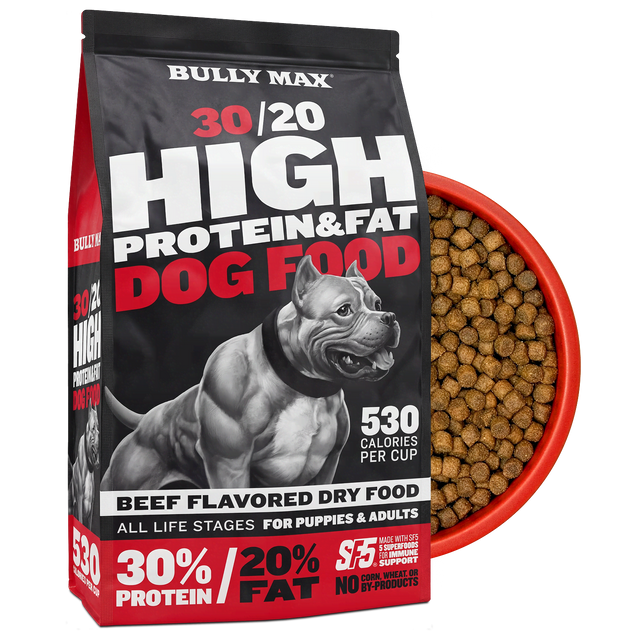
Bully Max is a family-owned U.S. company founded in 2009, and our foods are meat-based and made in the USA, with every batch triple tested for safety. For most active adult APBTs, 30/20 High Protein (30% protein, 20% fat, 535 kcal per cup) is the natural fit. If you want a chicken-free option, 30/20 High Protein Beef has the same 30/20 numbers, and for a less active or easy-gaining dog, 25/11 Lamb has 45% less fat. Browse our dog food for American Pit Bull Terriers or read more about the best dog food for pitbulls.

Feeding an APBT Puppy
APBT puppies need a growth formula in measured meals, not free-feeding. Most do well on three or four meals a day until about six months, then two. Aim for steady growth with a visible waist rather than the fastest possible weight gain. Our pitbull puppy food guide covers portions and when to switch to adult food.

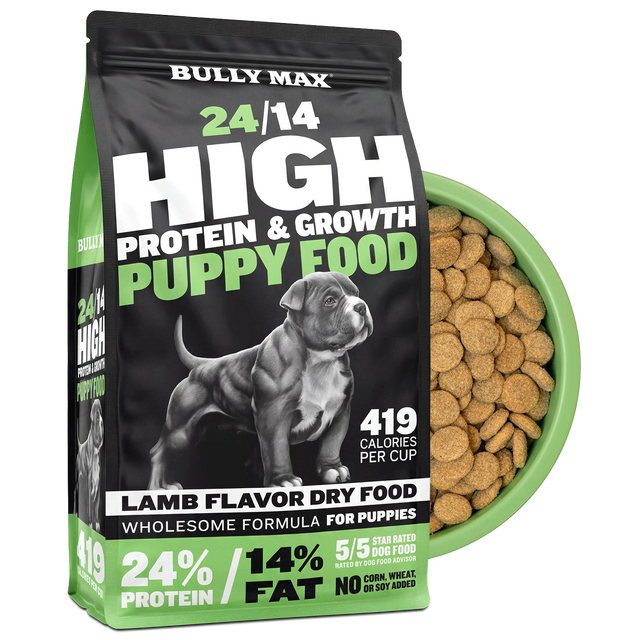
GIVE YOUR PUPPY BULLY MAX 24/14 PUPPY FOOD
Made for growing puppies with 24% protein, real lamb, and TruMune to support digestion and immune health.
Is an American Pit Bull Terrier Right for You?
An APBT can be a wonderful, loyal family dog for the right home. It is usually a great match if you:
- want an active, affectionate dog and have time for daily exercise and training;
- are ready to manage introductions with other dogs for the dog's whole life;
- can provide a secure yard or always walk on leash.
Also check the practical side before you commit. Some cities have breed-specific legislation, and many landlords, HOAs and insurers restrict pit bull-type dogs. In England and Wales, Pit Bull Terriers are banned unless the owner has an exemption certificate. Our pit bull safety guide covers responsible ownership.
If you decide an APBT is for you, choose a breeder who health tests and breeds to the standard, or adopt from a rescue that knows the dog well. Our tips for buying a pit bull puppy and our pitbull puppy guide: 27 things to know will help you get started.
Frequently Asked Questions
Is an American Pit Bull Terrier the same as a pit bull?
The APBT is one specific breed. “Pit bull” is a broader label that is also used for American Staffordshire Terriers, Staffordshire Bull Terriers, American Bullies and many mixed-breed dogs.
Is the APBT recognized by the AKC?
No. The American Pit Bull Terrier is recognized by the UKC and the ADBA. The AKC registers the related American Staffordshire Terrier instead.
Are American Pit Bull Terriers good family dogs?
A well-bred, well-socialized APBT is usually affectionate and very people-friendly. Like any strong, energetic dog, it needs training, exercise and supervision around children and other dogs.
What is the ADBA American Pit Bull Terrier standard?
It is the ADBA's written description of the ideal APBT: a medium-sized, athletic, confident dog with a muscular build, lean condition and a stable temperament with people.
How much should an APBT weigh?
The ADBA focuses on proportion and condition rather than a set weight. The UKC standard gives a preferred weight of 35 to 60 pounds for males and 30 to 50 pounds for females.
Which APBT coat colors are allowed?
Almost all colors are accepted. Merle and albinism are major faults because they are linked to health problems.
Is dog aggression a fault under the ADBA standard?
The standard accepts that some dog and animal aggressiveness is characteristic of the breed. Aggression toward people is not acceptable, and dogs should be socialized and under control in the ring.
What is the difference between an APBT and an American Bully?
The American Bully was developed from the APBT as a companion breed. It is usually shorter, wider and heavier-boned, with lower energy. See American Bully vs Pit Bull for a full comparison.
Conclusion
The future of the American Pit Bull Terrier rests with responsible breeders and engaged owners. The ADBA standard puts functional form, athleticism, balance, temperament and stamina first, and that focus helps protect the breed's health and reputation. Whether your APBT is a show prospect or a family companion, keeping them lean, fit, well fed and well trained is how you bring the standard to life at home.
Daily care matters for every APBT. A 9-in-1 chew adds gut, joint, immune, skin and coat support in one bite.

SUPPORT DAILY HEALTH WITH BULLY MAX 9 IN 1
Easy bacon-flavored soft chews with gut, joint, immune, skin, coat, heart, and brain support in one daily chew.
Watch the ADBA Top Dog Competition
For a look at American Pit Bull Terriers in action, see this episode of Bully Max Sports covering the 49th Parallel ADBA Top Dog Competition in Vancouver. It shows the athleticism and drive the ADBA standard is built to preserve.