Protection Dog Training: How to Start, What It Costs and How to Feed a Working Dog
Protection dog training teaches a dog to bite a decoy on command, hold on under pressure and let go the instant the handler says so. It is a control sport first and a bite sport second, and the right way to start is the same whether you want a sport title or a dog that protects the house: obedience and socialization from the first week home, grip and tug foundations with a bite pillow as a puppy, then sleeve and suit work with an experienced decoy once the dog is mature and under control. This guide covers what protection training actually is, which dogs are candidates, what age to start, how to find a club or trainer, what it costs, what not to do, and how to feed a dog that works this hard.
Family-owned since 2009 · Made in USA · Every batch triple tested · Zero recalls · 50,000+ 5-star reviews · Dog Food Advisor 5/5
Protection dog training at a glance
- What it is: a trained bite on command, a trained release on command, and a dog that is calm and social everywhere else. Aggression is not the goal; control is.
- Who it is for: dogs with stable nerves, confidence and drive (Belgian Malinois, German and Dutch Shepherds, Rottweilers, Dobermans, Presa Canarios, Cane Corsos, and plenty of American Pit Bull Terriers and American Bullies in the sport side), from lines bred for work.
- When to start: socialization, obedience and tug play from 8 weeks; bite development on a pillow or wedge with a trainer from a few months old; sleeve and suit work with a decoy from about 12 to 18 months, once the dog is mature and reliable on the out.
- Where to start: an IGP (Schutzhund), PSA or ring sport club, or a professional protection trainer, never a how-to video and a borrowed sleeve.
- What it costs: a club membership and training fees for the sport route; private programs are priced by session or package; a finished personal protection dog from a professional company is a five-figure purchase and the top of the market runs well into six.
- What to feed: a meat-based food with enough calories per cup that the dog holds weight and muscle through training: Bully Max PRO Series 31/25 (600 calories per cup) or 30/20 (535), fed around the training schedule, not right before it.
What Protection Dog Training Actually Is
Most people picture the bite. The bite is the easy part; a dog with the right drive will grab a sleeve the first time it sees one. The training is everything around it: the dog goes in only when sent, bites where it is taught to bite, holds a full, calm grip while the decoy moves, fights and yells, releases the instant the handler calls the out, and then guards or heels without re-biting. A dog that can do that in a trial, in a new place, with a stranger in the suit, is a trained protection dog. A dog that bites because it is scared or because nobody taught it where the line is, is a liability.
There are three overlapping worlds, and it helps to know which one you are asking about:
| Protection sport (IGP, PSA, French Ring, Mondioring, ADBA and UPF protection events) | Personal and family protection | Police, military and security dogs | |
|---|---|---|---|
| Goal | A title. Obedience, protection and often tracking phases judged against a written rule book. | A dog that lives in the house, is social in public and will engage a real threat on command. | Apprehension, detection and handler protection under a department's standards. |
| Who trains it | Club members with a trained decoy (helper); the handler does most of the work. | A professional trainer, usually with the owner trained alongside the dog. | Agency or vendor programs; not a hobby route. |
| Dog | Any dog with the drive and the nerves; the sport is open to many breeds. | A dog selected for stable temperament first, then drive. | Purpose-bred, mostly Malinois and shepherds. |
| Where to start | Find the nearest club and go to a training day. | Interview trainers; see their dogs in public, not just on the field. | Not a DIY path. |
The sport route is the cheapest, safest and most honest way to find out whether your dog has what it takes, and most good personal protection trainers came up through it.
In sport, the decoy wears a padded sleeve or a full bite suit and the dog is taught to target it. The handler learns to read the dog, time the commands and keep the dog clear-headed under pressure. That is the part that transfers to real life: a dog that outs cleanly on a trial field will out cleanly in your yard. A dog that has only ever been encouraged to “get him” in the back yard will not.

Is Your Dog a Candidate?
Temperament first
The dogs that do well in this work share three things: stable nerves (they recover fast from a surprise and do not startle into fear), confidence around strangers and new places, and drive: the wish to chase, grab, hold and win a tug, and the willingness to push into pressure instead of backing away. A dog that is nervous, reactive or fear-aggressive is not a protection prospect, and bite work makes those problems worse, not better. If your dog already growls at visitors or hides from them, the right next step is a behavior-focused trainer, not a sleeve.
A simple test any club decoy will run on a first visit: can the dog play a full-on game of tug with a stranger holding the other end, hold on while the person moves and makes noise, and then let go and re-engage happily? That is the whole sport in miniature.
Breed and lines
Belgian Malinois, German Shepherds and Dutch Shepherds dominate the sport fields and the police kennels because they were bred for it. Rottweilers, Dobermans, Boxers and Giant Schnauzers have long histories in it. Presa Canarios, Cane Corsos and Boerboels bring size and natural guarding instinct and do well with handlers who respect how much dog they are. American Pit Bull Terriers and American Bullies turn up more and more at PSA, ADBA and UPF events, and the ones from working lines have the grip and the heart for it. Within any breed, lines matter more than the breed name: a dog from parents that were titled or worked is a far better bet than a dog from a show or pet litter, however it looks.
Travis Torrez of PresaMania Kennels, whose Presa Canarios compete in weight pull, conformation and protection sport, grew up around the work. “My dad, he bred and trained personal protection dogs for a living for 18 years. So I started with that. And then I wanted to find my idea of a perfect personal protection dog.” He landed on the Presa, and on a rule that applies to any breed: “Form follows function. If you got a functional animal that can pull a lot of weight, you obviously have a good conformation dog... They have to be conformationally correct.” A dog with the structure to pull, run and recover is a dog that can hold up to protection training for years.
Age, health and sex
Start the foundations as a puppy and the serious work as a young adult. Hips, elbows and spine take a beating in this sport, so have them checked before the dog starts hitting a suit at full speed, and keep a growing dog off the suit until the growth plates have closed (your vet can tell you when; for large breeds it is usually around 14 to 18 months). Males and females both work; intact dogs are common in the sport, but it is not required.
What Age to Start Protection Dog Training
This is the question people ask trainers most, and the honest answer is “right now, but not the part you are thinking of.” Protection training is layered, and each layer has its own age:
| Age | What you train | What you do not train yet |
|---|---|---|
| 8 weeks to 6 months | Socialization everywhere (people, surfaces, noise, other dogs), marker training, basic obedience, crate and leash manners, and a lot of tug. Let the puppy win the tug and carry it off; that builds the full, confident grip you want later. A club will usually start bite development on a soft pillow or rag with a trainer at this stage. | Sleeve or suit work, any pressure, any “protect me” games with people. |
| 6 to 12 months | Obedience under distraction, the out on the tug (trade for a second tug or a treat, never a wrestling match), the send and the recall, harness and collar conditioning, and more pillow and wedge work with the decoy building grip and targeting. | Full-speed sends on a suit, defense work, anything that teaches the dog to meet a threat before it is mature enough to handle it. |
| 12 to 18 months | First sleeve and then suit work with an experienced decoy, the out and the guard, escorts and transports, scenario work in sport order, and the first trial preparation. Hips and elbows checked first. | Rushing. The dog that gets pushed too early learns to bite out of stress and never shows the calm, full grip that wins trials and protects families. |
| 18 months and up | Trialing (PSA PDC and PSA 1, IGP BH then IGP 1, ring brevet) and, for a personal protection dog, the scenario work that turns sport skills into real-world judgment under a professional. |
Ages are typical, not rules. A late-maturing dog from a mastiff breed may be 2 before suit work makes sense; a Malinois from sport lines may be ready earlier. The decoy and trainer who see the dog every week make the call.
One standard that applies at every stage, from Ron Smith, who built HDB Arena in Texas (a working-dog complex that hosts UPF weight pull, wall climb and bite work training) and trains dogs there: “Every dog is different. Some should have obedience first. Some should not have obedience first. Some dogs, if you give them too much obedience, it takes the drive out of them.” The trainer who knows your dog decides the order; the internet does not.
How to Start: Step by Step
Step 1. Find a club, or a trainer who came out of one
Protection dog training is a two-person sport. You need a decoy (in IGP the helper) who knows how to present the sleeve, build drive, read the grip and put pressure on a dog without breaking it, and who is wearing the right equipment. That person exists at your local IGP, PSA, French Ring or Mondioring club, and at most serious working-dog training facilities. Search the sport's organization for a club list, go to a training day with no dog, watch how the decoys and handlers treat the dogs, and ask whether they take new members and new breeds. The same advice from Ron Smith: “Find a reputable trainer. If it doesn't feel right, it's not right. You have to find somebody that trains the way you agree with, because there's a thousand ways to skin a cat. You just have to make sure that your personality fits with theirs.”
His other rule is the one most new owners get wrong: “Never, and I mean never, board and train your dog. You need to be there because you are the one who does it. We have people ask us all the time, can you keep my dog for a week and teach it to jump? Yes, I can, but they won't jump for you when you come back.” A protection dog has to work for its handler. If a program sends the dog away and hands it back “finished,” plan on weeks of handler training before the dog is yours.
Step 2. Build the obedience the bite work will sit on
Before the first sleeve, the dog should heel on and off leash, sit and down at a distance, hold a down while people and dogs move around it, and come when called off a toy. Most clubs will not put a dog on a decoy until it can out a tug and recall off it. Our recall training guide and leash training guide cover the basics, and the training treats guide explains how to pay a dog well in the obedience phase without filling it up.
Step 3. Grip and tug foundations
A protection dog's grip is built on a tug, then a bite pillow, then a wedge, then a sleeve, then a suit, each step only when the one before is full, calm and confident. The things a decoy watches for: the dog bites with the back of the mouth, not the front teeth; it holds still on the grip instead of chewing or re-gripping; it pushes in when the decoy pulls away; and it outs clean when asked and sits ready for the next bite. At home your job is simple: play tug every day, let the dog win, and never turn the tug into a fight you have to win by force.

Step 4. The out, the guard and the recall
The out (release on command) is the skill that decides whether a dog is safe, and it is trained from the first tug game, not added at the end. Good decoys teach it by going still and dead on the grip, then paying the release with another bite, so the dog learns that letting go is how the game continues. Once the out is reliable, the dog learns to guard (watch the decoy in a bark-and-hold or a down without re-biting) and to come off the decoy on a recall mid-send. That last one is the hardest thing in the sport and the thing that makes a personal protection dog something you can live with.
Step 5. Pressure, scenarios and the trial
Only now does the decoy start to fight back: stick hits in IGP (padded), the whip and the charge in ring sport, hidden sleeves and off-field scenarios in PSA. The dog learns that pressure is the signal to push in harder, and the handler learns to keep the dog thinking. The first trial is usually a temperament and obedience test (the BH in IGP, the PDC in PSA) before any protection phase is judged. For a dog that will also protect a family, this is where a professional builds the real-world judgment: a threat is defined by the handler's command and the decoy's behavior, never by how someone looks.
Working this hard takes conditioning, not just bite work. Travis keeps his dogs fresh the same way between protection and weight-pull seasons: “If I'm doing drag work, after drag work, after drag work, it gets boring for the dogs. So I mix it up, I put them in the water, I let them have a good time... It's all about building the dog slowly.” Our 30-day dog muscle building guide and weight pull training guide cover the conditioning side, and the full Texas episode is in Bully Max Sports Ep. 9: Lone Star Legends.
What Not to Do
- Do not try bite work alone. Without a trained decoy, equipment and a club, you will teach a dog the wrong target, the wrong grip and no out. Those are hard to fix and dangerous while they are being fixed.
- Do not teach a pet dog to be suspicious of strangers. “Protect me” games with a friend in a hoodie teach a dog that people are threats. Trained protection dogs are the most social dogs on the field because the threat is defined by a command, not by a stranger's presence.
- Do not use fear. A dog that bites because it is cornered or scared is not protecting anyone, and pressure will push a nervous dog over the edge. If your dog is reactive, fix that first with a behavior trainer.
- Do not skip obedience or the out. A dog that will not release is a lawsuit with a collar on.
- Do not rush a young dog onto a suit. Bite development is slow on purpose. Suit work before maturity makes stressy, chewy grips that never fully recover.
- Do not forget the law. You own every bite. Check your state and city rules on dangerous-dog designations and homeowner's insurance before you start, and keep a trained dog under control in public the same way you would a loaded tool.
How Much Does Protection Dog Training Cost?
The cheapest route is a club. A sport club typically charges a yearly membership plus training-day fees, and the equipment you need as a handler (a good tug, a bite pillow, a leather or biothane leash, a flat collar and a harness) is a few hundred dollars over the first year. Private protection training is priced by the session or the package and varies widely by region and trainer; ask for the written price list and what is included before you commit. A finished, trained personal protection dog from a professional company is a different purchase altogether: press coverage of the US market in recent years puts finished dogs from the well-known companies at $50,000 and up, with the top of the market reported well past $150,000. That price buys a dog selected as a puppy, trained for a year or more, titled, and then matched to a family with handler training included. Training the dog you already have is slower but costs a fraction of that, and you learn to handle the dog along the way.
What it mostly costs is time. Expect one to two club days a week plus daily obedience and tug at home, and plan on 12 to 24 months from first tug to a first protection title, depending on the dog and the sport.
How to Feed a Protection Dog
A dog that trains bite work, obedience and conditioning several days a week burns far more than a pet dog of the same weight, and the handlers who come to Bully Max usually come because their dog is losing condition on a maintenance food. The fix is calories from meat and fat, not a bigger bowl of a low-calorie kibble that the dog cannot finish. Our guide to calorie needs for dogs in competitive training has the math; the short version is that a 75 lb dog in hard training can need 2,500 to 3,000 calories a day, roughly 1.5 to 2 times what the same dog needs at rest. Estimates; let body condition decide.
Three rules that matter more in this sport than most:
- Feed after training, not before. A full stomach and a full-speed send is a bloat risk in deep-chested breeds and makes most dogs sluggish. Feed the main meal at least an hour after the session, with water available throughout.
- Feed by calories per cup. Two foods with the same protein number can differ by 150 calories a cup. The calorie line is what keeps weight on a working dog.
- Protect the joints. Suit work is hard on hips, elbows and the spine. Keep the dog lean, keep it conditioned between sessions, and ask your vet about joint support for a dog that works several days a week.
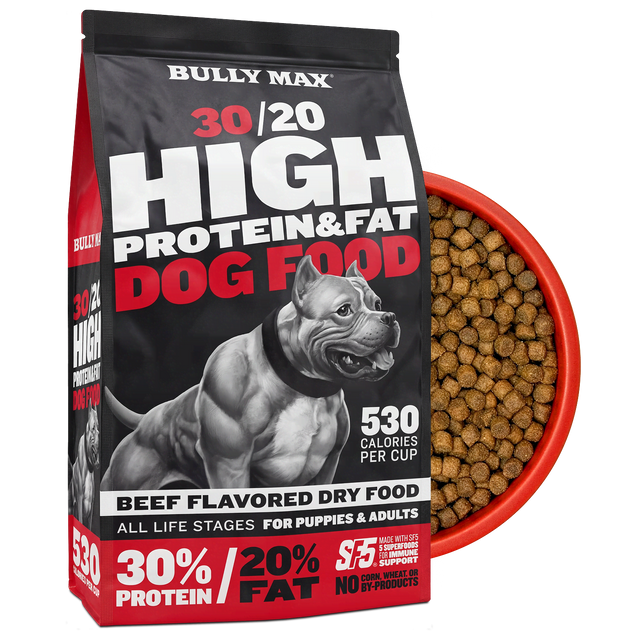
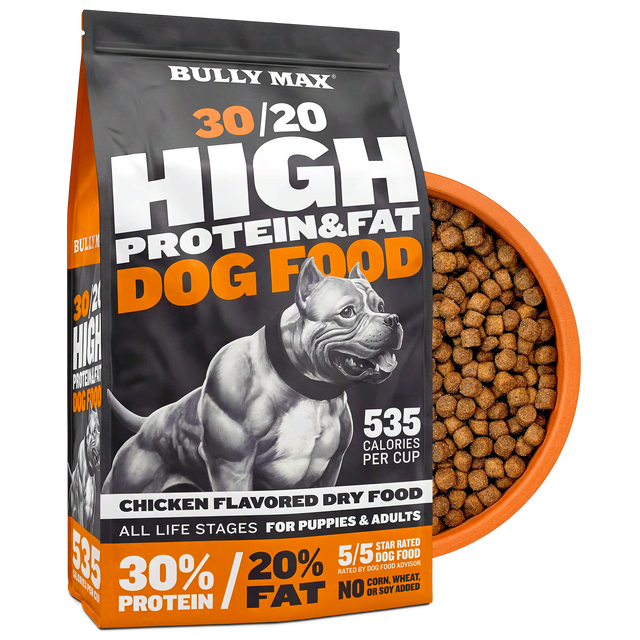
Bully Max PRO Series 31/25 is the food we built for this: 31% protein, 25% fat and 600 calories per cup from meat-based nutrition, so a hard-working dog eats fewer cups and holds muscle. Dogs that train hard but keep weight easily do well on 30/20 Chicken (535 calories per cup) or 30/20 Beef (530, chicken-free). All three are made in the USA with every batch triple tested. The working and sport dog food guide compares them in depth. Travis put it plainly after switching his Presas: “My dog's put on 10 pounds since I started feeding Bully Max, I'll tell you that. And it's not fat heaviness. It's solid strength.”

FEED A WORKING DOG WITH PRO SERIES 31/25
31% protein, 25% fat and 600 calories per cup. Built for protection, pull and sport dogs that train several days a week and need to hold weight and muscle.
Save 10% with autoship and get each bag delivered on a schedule, so the dog never trains on an empty bag.

OR START WITH BULLY MAX 30/20 HIGH-PROTEIN DOG FOOD
Meat-based nutrition with 30% protein, 20% fat and 535 calories per cup, for dogs that train hard but keep weight easily.

What Handlers Say
The working-dog owners who buy Bully Max tend to say the same things in our post-purchase survey:
In our customers' words
“The ability to provide a protein rich diet to my pup, who is naturally muscular and athletic”
Bully Max customer, post-purchase survey
“I have a big dog and I need a brand that’s made for big dogs”
Bully Max customer, post-purchase survey

WORKING DOG GUIDE
See the working dog feeding guide
PRO Series 31/25 for dogs that train and pull, calories per cup, and real handlers’ results.
50,000+ five-star reviews
FAQ
How do I train my dog to protect me?
Start with the parts you can do at home: socialization, obedience and daily tug. Then join a protection sport club or hire a trainer with a trained decoy for the bite work. A dog is taught to engage a threat on the handler's command and release on command; it is never taught to decide on its own who is a threat, and it is never trained with fear or by encouraging suspicion of strangers.
What age should a dog start protection training?
Foundations (socialization, obedience, tug) from 8 weeks; bite development on a pillow with a trainer from a few months old; sleeve and suit work from about 12 to 18 months once the dog is mature, has clean hips and elbows and a reliable out. Late-maturing breeds may be 2 before suit work.
How long does it take to train a protection dog?
Plan on 12 to 24 months from first tug to a first protection title, training one or two club days a week plus daily work at home. A professional program that selects a puppy and finishes the dog usually takes a year or more before the dog is placed.
How much does protection dog training cost?
A club route costs a membership plus training fees and a few hundred dollars of equipment. Private programs are priced by session or package and vary by region. A finished personal protection dog from a professional company is a five-figure purchase, with the top of the US market reported well past $150,000.
Can a pit bull or American Bully do protection training?
Yes, and many do, at PSA, ADBA and UPF events in particular. The individual dog's nerves, drive and health decide, not the breed name. Choose a dog from working lines and start it the same way as any other breed.
Will protection training make my dog aggressive?
Not when it is done right. A trained protection dog bites equipment on command and is social the rest of the time. A dog that is nervous or already reactive should not be put in bite work; that training makes fear-based aggression worse.
The Short Answer
Socialize and train obedience from the first week, build the grip on a tug and a pillow, find a club with a real decoy, and let the dog mature before it ever sees a suit. Train the out as hard as the bite. Feed a working dog like a working dog: start with Bully Max PRO Series 31/25, feed after training, and keep the dog lean so it can do this for years.
Sources
- Bully Max Sports Ep. 9, Lone Star Legends (YouTube wZubzCYIR58): Ron Smith of HDB Arena / Maxx Performance on finding a mentor, board-and-train and obedience versus drive; Travis Torrez of PresaMania Kennels on protection dogs, structure, conditioning and feeding (quotes transcribed from the episode).
- Travis Torrez Presa Canario Bite Work, PresaMania, Bully Max (YouTube Short Vh83M42ssNo).
- Protection Sports Association (PSA) and United Schutzhund Clubs of America / IGP rule books: trial levels (PDC, PSA 1; BH, IGP 1), decoy and equipment standards. psa-k9.org, germanshepherddog.com
- Money.com, “Meet the Security Dogs That Sell for $50,000 and Sometimes Much, Much More”, and NBC Los Angeles, “Meet the highly trained super security dogs that can cost as much as $230,000”: US price range of finished protection dogs (checked Nov 21, 2026).
- Merck Veterinary Manual, Nutritional Requirements of Small Animals: energy needs of working dogs (about 1.5 to 2 times maintenance, more for heavy work); Gastric Dilatation and Volvulus: deep-chested breeds and feeding around exercise. merckvetmanual.com
- Bully Max PRO Series 31/25, 30/20 Chicken and 30/20 Beef product pages: guaranteed analysis and calories per cup (checked Nov 21, 2026).
- Bully Max post-purchase survey, Dec 2024 to Jun 2025 (customer quotes).