Slat Mill Racing Explained: Why Dogs Love It & Common Misconceptions
If you've never seen a slat mill race before, it can look a little strange at first.

A powerful dog is secured in a harness. A handler is standing in front of the dog encouraging it. The dog is running hard on what looks like a treadmill.
It's easy for someone unfamiliar with the sport to assume that the machine is forcing the dog to run.
That's one of the biggest misconceptions about slat mills.
A competition slat mill isn't a motorized treadmill pulling the ground out from underneath the dog. The dog powers the belt. When the dog runs, the belt moves. When the dog slows down, the belt slows down. When the dog stops, the belt stops.
And once you've spent time around dogs that genuinely enjoy running a mill, the enthusiasm can be hard to miss.
At the Bully Max Sports Facility in Pittsburgh, Pennsylvania, we've hosted organized canine sporting events and watched dogs waiting for their turn become incredibly excited as soon as they realize what's happening.
For the right high-drive dog, running isn't something you have to make them do. Sometimes the challenge is convincing them to wait their turn.
What Is a Slat Mill?
A slat mill is a dog-powered treadmill built from individual slats that travel around rollers.
Unlike a conventional electric treadmill, there is no motor controlling the speed of the running surface. The dog's own movement drives the belt.

That distinction is important.
The dog isn't trying to keep up with a predetermined speed. It controls its own pace. If the dog accelerates, the mill accelerates. If the dog backs off, the mill backs off. If the dog stops, the belt stops.
In competition, the dog's harness and attachment system help keep the dog safely positioned on the mill. They aren't what makes the belt move.
Under Unified Pulling Federation (UPF) rules, walking is permitted during a mill race. The rules also require the mill to be secured when the dog gets on and off and prohibit animal abuse.
Why Do So Many Working Dogs Love It?
This is probably the biggest thing that's misunderstood by people who haven't spent much time around high-drive working and sporting dogs.
Some dogs simply love to work.
They want to chase. They want to pull. They want to run. They want to engage with their handler. Appropriate physical activities give these dogs a structured outlet for that drive and energy.
That doesn't mean every dog automatically loves running a mill, and it certainly doesn't mean a dog should be forced to use one.
Responsible treadmill training should be the opposite. Dogs should be introduced gradually, allowed to build confidence around the equipment, and conditioned appropriately before more demanding exercise.
For dogs that genuinely enjoy running, a slat mill can turn something they already want to do into a structured form of exercise and even an organized canine sport.
We've seen that firsthand at Bully Max events. Some dogs become visibly excited while another dog is running. They pull toward the mill, bark because they want their turn, and are ready to jump on as soon as they're allowed.
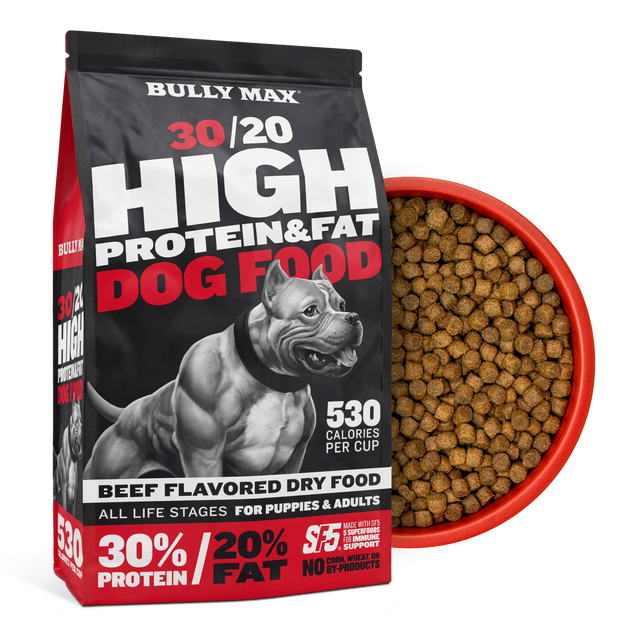
Dogs participating in demanding sports also need nutrition that supports an active lifestyle. Bully Max 30/20 High Protein Dog Food was built with working and performance dogs in mind, delivering 30% protein, 20% fat, and 535 calories per cup.

TRY BULLY MAX, 100% MEAT-BASED HIGH PERFORMANCE DOG FOOD
Over 50,000 5/5 Star reviews. 0 Recalls. Trusted by over 1 Million dog owners.
Misconception: "The Dog Is Being Forced to Run"
This is probably the most common misconception surrounding slat mills.
But watch the machine.
The dog is the engine.
There isn't a motor underneath a competition slat mill forcing the dog to maintain a certain speed. The running surface moves because the dog moves it.
In a UPF mill race, walking is explicitly permitted. A dog that backs up after being released isn't automatically penalized. The dog does have to move the belt enough to register distance to receive a score, but nothing requires the dog to maintain a particular running speed.

Handlers can encourage their dogs, but during the timed portion of a UPF race, the dog cannot touch the handler, the bait, or the handler's clothing.
What gets recorded is the performance the dog actually produces.
How Slat Mill Racing Works
Different organizations have their own competition rules, but one of the organizations we work with is the Unified Pulling Federation (UPF).
The basic concept behind a mill race is incredibly simple:
How much distance can the dog generate in two minutes?
The mill is equipped with an odometer that measures how far the belt travels. Once the dog, handler and officials are ready, the clock starts.
For the next two minutes, the dog runs or walks at its own pace while officials monitor the run.
At the end of two minutes, the distance is recorded.
UPF separates dogs into height classes and uses the dog's height as part of its competition scoring. This helps account for the obvious physical differences between dogs of dramatically different sizes.
That turns mill racing into an objectively measured canine athletic event. There is a defined time, measuring equipment, competition classes, officials and recorded results.
What Is Actually Being Measured?
People sometimes think of mill racing strictly as a speed competition, but distance is the central measurement.
An odometer measures the movement of the mill during the two-minute run.
Depending on the equipment being used, handlers can also monitor measurements such as speed, distance and time during training.
Under UPF competition rules, however, the official result is based on the distance generated during the two-minute run and the organization's scoring system.
That little sensor and digital display you may notice attached to a competition mill aren't there for decoration. They're measuring the dog's actual performance.

UPF vs. ADBA Slat Mill Racing
The American Dog Breeders Association (ADBA) also incorporates slat mill racing into its Top Dog Athletic Event.
There are some important differences between the two formats.
Under ADBA Top Dog rules, dogs run on a slat treadmill for two minutes, and an odometer records the distance traveled. Dogs are organized from lightest to heaviest and divided into balanced competition groups. Placements within each group are determined by the greatest distance traveled during the two-minute run.
UPF, by comparison, organizes mill racing around height classes and incorporates the dog's height into its scoring system.
ADBA's treadmill race is also part of a larger athletic competition rather than a standalone test.
The ADBA Top Dog Athletic Event consists of three competitions: a Treadmill Race, Wall Climb, and either Sprint Drag Weight or Lure Course. Dogs competing for Top Dog participate in all three advertised events, earning placement points that are combined into an overall score.
That makes Top Dog a broader test of canine athletic ability rather than simply determining which dog can travel the greatest distance on a mill.
Competition rules can change over time, so handlers planning to enter an event should always check the current official UPF or ADBA rules before competing.
The Equipment Matters
A competition-quality slat mill isn't simply a homemade treadmill with a dog placed on top.
Safe operation, stability and accurate measurement matter.
For example, ADBA's Top Dog equipment rules specify measuring the treadmill drum circumference and calibrating the odometer accordingly. A bicycle-style odometer or comparable device is then used to measure the distance traveled.
Competition equipment also needs to properly accommodate the dog and its attachment system while allowing the belt to move freely under the dog's own power.
Our Slat Mill Recommendation: Dog Trotter USA

If you're serious about getting into slat mill training or competition, Dog Trotter USA is one of the manufacturers we recommend.
You'll also notice Dog Trotter equipment being used in some of the photos from our events.
They're not inexpensive pieces of equipment. A quality slat mill is a serious investment. But you're also buying specialized equipment designed specifically for canine exercise and performance.

Dog Trotter offers dog-powered, free-spinning slat mills, including performance-oriented models with digital monitoring for measurements such as speed, distance and time. Some models also provide adjustable resistance for more advanced conditioning.
For someone serious about canine conditioning or competition, we'd rather use purpose-built equipment than improvise something where the belt movement, stability or measurement could be questionable.
Meet Ferni: CH Rebel Child
One dog that shows what canine athletic competition is all about is CH Rebel Child, better known as Ferni.
Ferni is an American Pit Bull Terrier owned by Stephanie Lamp (@kimber_lou_) and fueled by Bully Max dog food.
At just 22 months old, Ferni has already put together an impressive start.
She earned her ADBA conformation championship at only 10 months old, along with four Best Puppy awards and two Best of Opposite awards, while also competing in weight pull and Top Dog competitions.
Now Stephanie has her sights set on something even bigger: the prestigious Triple Crown.
What makes Ferni's story so interesting is her versatility. Conformation evaluates one set of characteristics. Weight pull tests another type of performance. Top Dog combines multiple athletic events.
Ferni is a young dog with plenty ahead of her, and we'll be following her journey as she continues competing.
CH Rebel Child "Ferni," owned by Stephanie Lamp, running the slat mill and fueled by Bully Max.
CH Rebel Child "Ferni," owned by Stephanie Lamp, running the slat mill and fueled by Bully Max.
Why Bully Max Supports Canine Sports
Bully Max was built around working dogs.
Long before our products were sold nationwide, our roots were in training, conditioning and feeding performance dogs.
That's why sports like weight pull and slat mill racing are still important to us today.
Bully Max sponsors dogs competing in canine sports around the country, and we've hosted competitions at the Bully Max Sports Facility in Pittsburgh, Pennsylvania.
For us, these events aren't about making a dog do something it doesn't want to do.
They're about giving dogs that want to work an organized place to do it.
When you see a dog pulling toward the mill while another dog is competing, barking because it wants its turn, or jumping onto the mill as soon as it's allowed, you begin to understand why owners become so passionate about these sports.
Slat Mills Should Still Be Used Responsibly
None of this means you should buy a slat mill, put an unconditioned dog on it and immediately start seeing how fast it can run.
Conditioning matters. Proper equipment matters. Supervision matters. And most importantly, the individual dog matters.
Dogs should be introduced to treadmill exercise gradually and allowed to become comfortable and confident with the equipment. Exercise should be appropriate for the dog's age, physical condition and experience.
One way to help create a positive introduction to canine sports and new training equipment is through reward-based training. Let the dog investigate the equipment at its own pace and reward the behaviors you want to reinforce.
For puppies and young dogs, small training treats can be especially convenient for this type of work. They're easy to deliver quickly when the dog offers the behavior you're looking for, helping make early training sessions feel positive and rewarding.
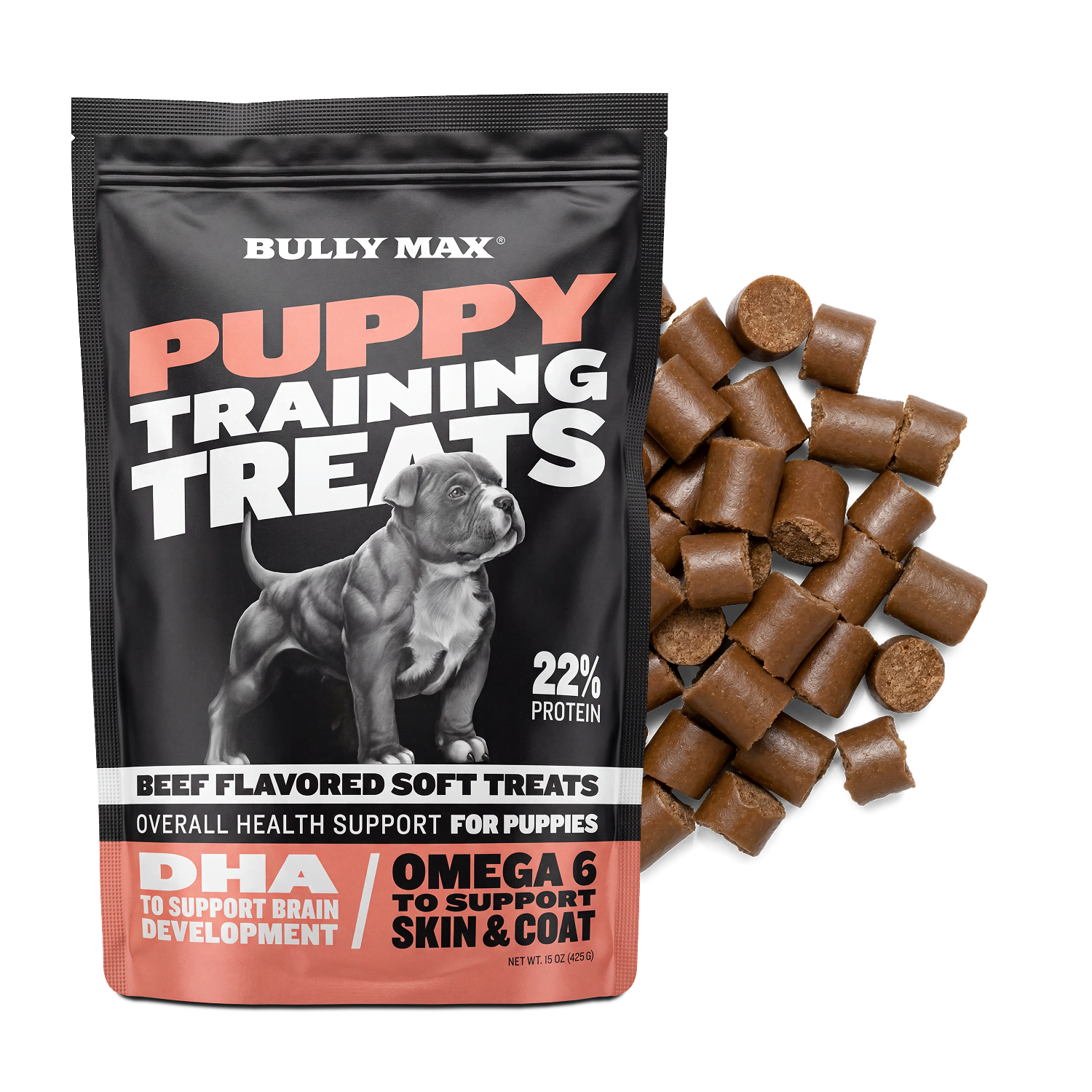
MAKE PUPPY TRAINING MORE REWARDING
Soft, bite-sized training treats made with real beef, 22% protein, and DHA to support growth and brain development while your puppy learns.
A slat mill also shouldn't be viewed as a replacement for walks, outdoor activity, play, training or the mental stimulation dogs receive from interacting with the world around them.
Organized competitions add additional safeguards. Officials monitor the runs, equipment is checked, and judges have authority to intervene when necessary for safety.
That's how canine sports should be approached.
A Different Way to Look at the Slat Mill

The next time you see a video of a dog flying on a slat mill, don't just look at how fast its legs are moving.
Look at the machine.
Look at the dog's body language.
Look at what happens when the dog slows down.
Look at what happens when the run is over.
A properly used slat mill is powered by the dog, not the other way around.
For high-drive dogs that genuinely enjoy running, it can turn something they already want to do into a measurable canine sport.
Two minutes. One dog. One dog-powered mill. And an odometer telling you exactly what that dog accomplished.