Dog Treadmill Training: How It Builds Mental Strength (Step by Step)
Dog treadmill training is more than exercise. Done gradually, with a secure setup and rewards for calm behavior, it teaches a dog to move from panic to confidence, a skill that carries over into everyday life. Start at a slow walk for a minute or two, reward the moment your dog relaxes, and build time and speed over many short sessions. Below is what happens in the dog’s mind at each stage, the science behind it, and a step-by-step plan to get started safely.
Most people look at treadmill training and see exercise. They see a dog walking or running and assume the value is purely physical. But if you’ve ever trained a dog on a treadmill yourself, you know something much deeper is happening. There’s a psychological shift that takes place—a change inside the dog’s mind that is every bit as important as the workout.
Through hands-on experience training dogs, you start to recognize patterns. You see instinct. You see fear. You see adaptation. And if you look closely, you see the exact moment where the dog becomes mentally stronger.
Modern psychology has names for every one of these steps: habituation, controlled exposure, inhibitory learning, and stress inoculation. But long before you know the technical terms, you see the changes happen right in front of you.
This article brings both sides together—the real training experience and the scientific explanation behind it.
Before we go further, a quick note on fuel: if your dog needs more strength and energy from the bowl, a meat-based, high-protein food is the simplest place to start.
Go behind the scenes of pit bull training at Bully Max:

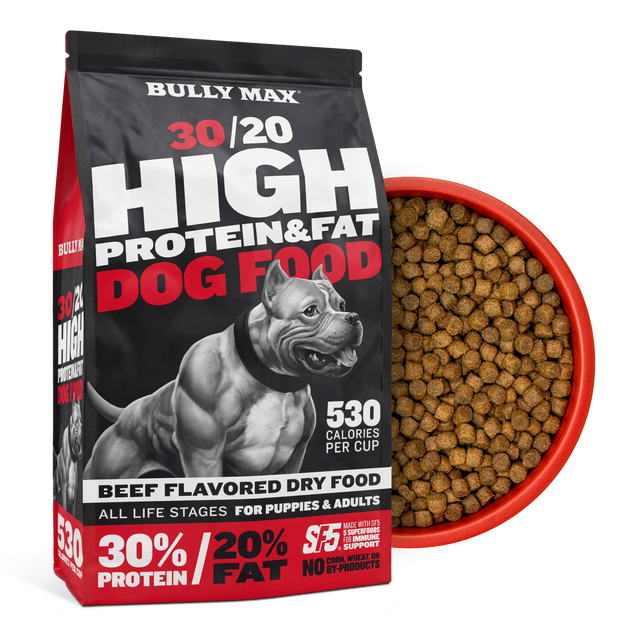
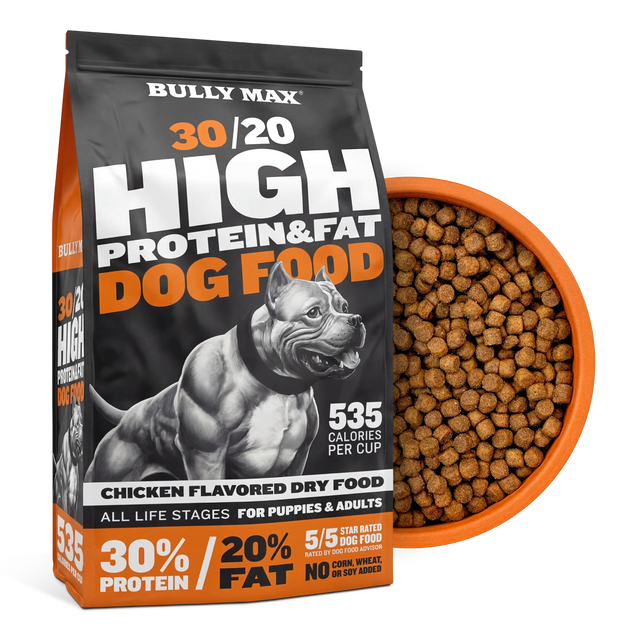
FUEL YOUR DOG WITH BULLY MAX 30/20 HIGH-PROTEIN FOOD
Fuel strength and energy with meat-based nutrition, 30% protein, 20% fat, and 535 calories per cup.
The First Response: Panic and Instinct
When a dog steps onto a moving treadmill for the first time, the reaction is almost always the same. The ground moves under their feet, their brain fires off an instinctive alarm, and they try to get off however they can.
“When you put a dog on a treadmill for the first time it isn’t natural for them. The ground is moving and their instinct is to panic and find any way they can to get off.”
— Matthew Kinneman
This isn’t disobedience.
It’s survival.
Psychologists call this the acute stress response, and the way dogs overcome it is through habituation—a process where repeated exposure to something unfamiliar slowly teaches the brain that the situation is not dangerous.
Citation:
Thompson, R. F., & Spencer, W. A. (1966). Habituation. Psychological Review.
https://doi.org/10.1037/h0022681
Structure Gives the Dog Confidence
The key to helping a dog get past that initial panic isn’t force—it’s structure.
A proper setup does more than hold the dog in place. It gives the dog a clear boundary, a sense of security, and a controlled environment where they can learn what’s actually happening.
“When I first started doing this, my treadmill setup was simple. I built side walls, added a top bar for the harness, and reinforced the base so everything stayed solid. It wasn’t a top of the line mill like dog trotter, but it was strong, and it did exactly what the dog needed.”
This kind of setup mirrors controlled exposure therapy, a method used in both animal behavior and human psychology. The goal is to introduce something stressful in a safe, structured way so the subject can learn to navigate it without shutting down.
Citation:
Craske, M. G., et al. (2014). Inhibitory learning and exposure therapy. Behaviour Research and Therapy.
https://doi.org/10.1016/j.brat.2014.04.006
The “Click” Moment Inside the Dog’s Brain
Every dog reaches a turning point on the treadmill. It’s visible. You can see the exact second the panic fades and clarity takes over.
The tail lifts to a neutral position.
The breathing slows.
The resistance stops.
The dog starts to move with the treadmill instead of fighting against it.
“The moment the dog realizes it’s safe something clicks in the brain. That’s when they stop fighting it and start walking. Then they jog. Then they run. And eventually they love it.”
— Matthew Kinneman
This is the moment psychologists call inhibitory learning—a process where the brain updates its understanding of the situation from “danger” to “safe.”
After that moment, the dog becomes capable of learning, focusing, and enjoying the exercise.
Rewarding Calm—Not Panic
One of the biggest mistakes owners make is comforting a dog while it’s panicking. That teaches the dog that panic is the right response.
“If your dog is panicking and you pet them or comfort them you just rewarded the fear. You have to stay calm and let them figure it out. The only time you reward them is when they’re calm, their tail is level with their body, not tucked, and they’re enjoying it.”
— Matthew Kinneman
A note on comfort: fear is an emotion, and calmly reassuring a frightened dog won’t make it more afraid. What you want to avoid is reinforcing the escape behavior, such as stopping the belt and letting the dog off every time it scrambles, or adding your own excitement to the moment. Stay calm, keep the speed low enough for the dog to succeed, and save the treats and praise for relaxed walking.
This is classic operant conditioning:
Behaviors that get rewarded get repeated.
Reward panic, you reinforce panic.
Reward calm, you reinforce confidence.
This timing is everything.
Keep a few small, high-value treats within reach during sessions so you can reward the calm moment the instant it happens.

REWARD CALM, NOT PANIC
Real beef is the first ingredient in these high-protein crunchy treats made for training, rewarding, and supporting strong dogs.
Stress Inoculation: How Dogs Become Mentally Stronger
Once the dog stays on the treadmill long enough to experience safety, something powerful happens inside the nervous system.
This process is known in psychology as Stress Inoculation Training (SIT).
SIT is used with athletes, military personnel, first responders, and anyone who needs to stay calm under pressure. The idea is simple:
Expose the subject to controlled stress…
Stay calm through it…
Learn that nothing bad happens…
Become more resilient for the next challenge.
“That moment when the dog gets over the fear is where they get stronger mentally. They build confidence right there. Once they get through that first hurdle it carries over into everything else.”
— Matthew Kinneman
Citation:
Meichenbaum, D. (2007). Stress inoculation training. Principles and Practice of Stress Management.
https://psycnet.apa.org/record/2007-13384-018
The Same Mental Effect Happens in Humans
The best example of this in people is stepping into a freezing ice bath.
“It’s the same thing when a person steps into a freezing cold ice bath. Your body wants to jump out but you stay in, calm down, and get through it. You’re sharpening the same tool in your brain that a dog sharpens when they learn the treadmill.”
— Matthew Kinneman
Humans and dogs share the same nervous system patterns.
The same stress response.
The same adaptation process.
The same shift from panic to control.
How to Start Dog Treadmill Training: Step by Step
- Get a vet check if your dog is young, older, overweight or has joint issues. Hard treadmill conditioning is for fully grown dogs.
- Introduce the machine turned off. Let your dog sniff it, step on and off, and earn treats for standing on the belt.
- Turn it on at the slowest speed with you standing at the front. Lure a few steps, reward, and stop after a minute or two.
- Reward calm, not scrambling. Mark and reward the moment your dog walks steadily with a relaxed tail and loose body.
- Build slowly. Add a minute or a little speed only when the last session was easy. Many dogs need several sessions before they walk confidently.
- Work up to a steady trot rather than a sprint for regular conditioning, and finish with a cool-down walk.
Treadmill safety rules
- Never leave a dog on a running treadmill unattended, even for a moment.
- Never tie a leash or collar to the treadmill frame. Use a fitted harness and stay in reach.
- Keep sessions short at first and offer water after.
- Stop if your dog limps, pants heavily, drools excessively or shows stress.
- Skip hard sessions in a hot room; dogs overheat faster than people.
Treadmill vs. Slat Mill
A motorized treadmill sets the pace for the dog, which makes it good for steady walking and trotting. A slat mill has no motor: the dog powers the belt, so it controls the speed and can sprint. Learn more in our guide to slat mill racing, or build an outdoor option with our cat mill (jenny mill) blueprints.
The End Result: A Stronger Dog in Every Way
Once a dog gets through that initial mental barrier, treadmill training becomes more than exercise. It becomes:
-
confidence building
-
emotional stabilization
-
resilience training
-
improved focus
-
deeper trust in the handler
A mentally strong dog learns faster, performs better, and handles real-world environments with more confidence.
Regular treadmill work also burns real energy. A high-protein, meat-based food helps fuel consistent conditioning sessions.
Hear from Bully Max sponsored handler Stephanie Lamp:
TRY BULLY MAX 30/20 HIGH-PROTEIN DOG FOOD
Fuel strength and energy with meat-based nutrition, 30% protein, 20% fat, and 535 calories per cup.
This is the true value of treadmill training.
Not only the workout—
the mindset.
Dog Treadmill Training FAQ
How long should a dog walk on a treadmill?
Start with one to two minutes. Healthy adult dogs can build up over weeks to longer steady sessions, but treadmill work should add to outdoor walks, not replace them. See how much exercise a pitbull needs.
Can I use a human treadmill for my dog?
Some owners do, but the belt is often short for a dog’s stride and there are no side rails. A dog-specific treadmill is safer. Whatever you use, supervise every second.
Is treadmill training good for anxious dogs?
Gradual, low-pressure exposure can build confidence, as described above. If your dog shows ongoing fear or anxiety, work with a qualified trainer or your vet rather than pushing through.
Treadmill work builds muscle only when the diet keeps up. Feed Bully Max 30/20 High Protein, high-performance, meat-based nutrition, and add Pro Series Power Chews for dogs in serious training. Explore more muscle building exercises for dogs.