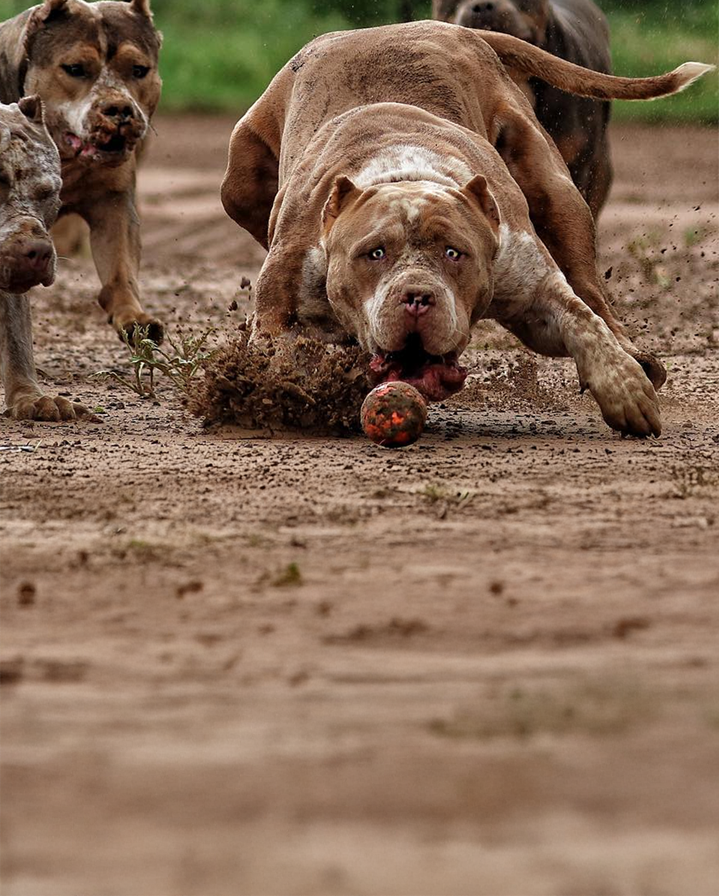
Your Dog Isn't Bad. They're Under-Stimulated.
The chewed couch corner. The holes in the backyard. The barking at every sound, the jumping on guests and the restless pacing that continues long after a walk that should have left them tired.
Before you label your dog difficult, ask a harder question: Are you actually meeting what they were built to do?
Most behavior problems are not stubbornness or defiance. They are unmet physical and mental drives seeking an outlet. Dogs' natural instincts don’t disappear because they live indoors. They redirect. And when they do, they tend to surface as the very behaviors that frustrate us most.
This guide covers what is actually driving those behaviors, what your dog needs instead, and how nutrition fits into the picture for dogs living an active, demanding life.

What Dogs Are Actually Built For
Dogs were bred for work. Not walks. Work.
Border Collies were developed to herd livestock for hours across rough terrain. Belgian Malinois were built to operate alongside handlers in high-stress protection environments. Bully breeds were selectively developed for strength, drive, and endurance. Labrador Retrievers were built to work in various water temperatures all day and do it again the next morning.
That drive does not disappear because a dog sleeps on a couch. It builds. When it has no healthy outlet, it finds one.
It’s not a training problem. It’s a needs problem. And most owners address the symptom instead of the cause.
A dog with adequate physical exercise, consistent mental stimulation, and structured training is a fundamentally different animal than one running on unspent energy. Many behavior problems that seem like personality flaws disappear once a dog is given meaningful work to do.
A quick note on food before we go further: if a high-energy dog does better without chicken, a chicken-free, meat-based recipe keeps protein high without it.

GO CHICKEN-FREE WITH BULLY MAX 30/20 BEEF
Chicken-free, meat-based nutrition with 30% protein, 20% fat, and 530 calories per cup for strength and energy.
Why Mental Stimulation Matters as Much as Exercise
This is where most owners get it wrong.
A one-hour walk doesn’t fulfill a working-bred dog. It burns some energy but it doesn’t touch their drive.
Mental stimulation can tire a dog out much like physical exercise. Problem-solving, scent tracking, and structured training engage the brain at a level that physical movement alone cannot reach. Both systems need to be taxed. Both require consistent, daily attention.
Active bodies need active minds. Every day.
Signs Your Dog Is Running on Unmet Drive
No single behavior confirms under-stimulation, but a pattern of several does.
Destructive chewing. Chewing is natural canine behavior. It relieves stress, occupies the brain, and satisfies an instinct that runs from puppyhood through adulthood. When dogs lack appropriate outlets, they create their own. The couch arm is not misbehavior. It is an unmet need pointed at the wrong target.
Restlessness and pacing. A dog that cannot settle after exercise is not necessarily hyperactive by nature. They may simply have a higher mental work requirement than their current routine provides. Adding scent work, obedience training, and structured problem-solving typically resolves this faster than simply adding more miles.
Digging. Many breeds were developed to dig. Terriers, hunting breeds, and numerous bully breeds carry that instinct genetically. Fighting it entirely means fighting the dog's breeding. Channeling it toward a designated area or structured activity is the practical approach.
Excessive barking. Alert barking is normal. Sustained, repetitive barking at passing cars, pedestrians, and wildlife is a dog broadcasting accumulated mental energy with nowhere productive to go. More structure, more physical engagement, and more active daily training consistently reduces this pattern.
Constant attention-seeking. A dog that follows you from room to room, pawing and nudging throughout the day, is not being affectionate. They are searching for something to do. Structured engagement satisfies that need. Passive petting does not.
Evening zoomies. Every evening. Predictable as a clock. This is an accumulated drive finding its exit point at the end of the day. It is a direct reflection of what the day failed to provide. More on dog zoomies.
Leash pulling. Training matters. But a dog that has spent the day indoors comes to the leash with a reservoir of stored energy that training alone struggles to overcome. Dogs whose needs are already partially met before the leash goes on are far more receptive to leash work.

Activities That Actually Move the Needle
A walk around the block is a starting point, not a program. Here’s what builds real fulfillment.
Nose Work and Scent Training
Every dog. Every breed. Every age. The nose is the dog's primary tool for processing the world. A dog has up to 300 million olfactory receptors compared to approximately 6 million in a human.¹ Engaging that system at a high level produces significant mental fatigue in a short window.
Start with food hidden in a small search area. Progress to box searches, outdoor tracks, or formal K9 Nose Work competition. This is the highest-return enrichment investment most owners can make.
Structured Fetch
Not repetitive throws until the dog drops. Add a sit command before each retrieve. Vary direction and distance. Require a down-stay or heel between reps. This turns a cardio session into a combined training and conditioning session. More value per minute than unstructured play.
Structured fetch works best with a toy that holds up to hard retrieves. A tough ball lets you run these sessions every day without worrying about it falling apart.

TRY THE BULLY MAX HEAVY-DUTY DOG BALL
Built for power chewers. Tough, non-toxic rubber keeps dogs active, engaged, and coming back for more.
Flirt Pole Work
High-energy and bully breed dogs respond extremely well to flirt pole training. Sessions of 10 to 15 minutes demand quick bursts of acceleration, sudden directional changes, and impulse control. It engages prey drive in a handler-controlled environment, which builds focus alongside the physical output. Here is how to build a flirt pole.
Hiking and Trail Work
Uneven terrain demands balance, coordination, and active attention. Novel environments provide constant sensory input. A two-hour trail hike produces significantly more combined mental and physical fatigue than the same time spent on pavement.
Weight Pull and Strength Sports
For physically mature dogs with natural drive to push and pull, weight pull is purpose-built training. Introduced progressively with appropriate equipment, it builds confidence, deepens handler focus, and channels drive productively. The goal is not the heaviest sled. It is a dog that works in partnership with its handler at the edge of its capacity.
Agility and Obstacle Work
Agility trains communication as much as athleticism. Reading directional cues, adjusting stride, and holding focus through a course requires full mental engagement alongside the physical demand. It builds a dog that listens while moving under pressure.
Canicross and Running
For endurance-driven dogs and active handlers, running together efficiently addresses both physical and mental needs. The shared pace, course variations, and consistent handler direction add engagement that solo exercise does not.
Structured Obedience and Skill Training
Learning is work. Ten to fifteen minutes of focused obedience produces genuine neurological fatigue. New commands, progressive shaping, and precision maintenance all demand concentration that carries over into calmer, more settled behavior at home.
|
If your dog loves to... |
Try... |
|
Chase |
Flirt pole, Fast CAT, structured fetch |
|
Sniff |
Nose work, tracking, scent games |
|
Pull |
Weight pull or canicross |
|
Swim |
Dock diving, open water swimming |
|
Climb and explore |
Hiking, obstacle courses |
|
Learn and problem-solve |
Agility, obedience, trick training |
Fueling a Dog That Works
Activity creates demand. Demand requires fuel.
Muscle repair after a training session requires dietary protein. Sustained energy through a long day of work requires adequate fat. Recovery between sessions requires a complete nutritional foundation, not just caloric volume.
Active dogs running harder programs need more than a standard maintenance diet. Performance and working dogs generally perform best on protein in the 26 to 32 percent range combined with fat levels that support calorie density without unnecessary weight gain.²
What To Look for in a Working Dog's Diet:
-
High-quality animal protein as the primary source, not filler-supplemented percentage
-
20% or higher crude fat for sustained energy output in working and performance dogs
-
Omega-3 and Omega-6 fatty acids for coat density and joint support
-
Live probiotics to maximize nutrient absorption from every meal
-
AAFCO-complete formulation for your dog's life stage
Bully Max 30/20 High Protein Beef Formula was built for dogs that work. 30% crude protein from beef meal. 20% crude fat for dense, sustained energy. Omega fatty acids and a complete vitamin and mineral package formulated to support dogs operating at the top end of their physical capacity.
Nutrition does not replace training. It supports the dog that shows up to train.
If your dog is training hard every day, a high-protein, high-fat food helps cover the extra demand. Here is the beef formula described above.
TRY BULLY MAX 30/20 HIGH-PROTEIN BEEF DOG FOOD
Chicken-free, meat-based nutrition with 30% protein, 20% fat, and 530 calories per cup for strength and energy.

Frequently Asked Questions
How much daily activity does a high-drive dog actually need? Working breeds, bully breeds, and high-drive dogs generally require 60 to 120 minutes of combined physical exercise and mental stimulation per day. That is not 60 minutes of leash walking. It is structured exercise, training, and enrichment work combined. Dogs in active sport programs often need more. Use your dog's post-activity behavior as the benchmark. A dog that settles within 20 to 30 minutes after activity is getting adequate stimulation. One that stays wound up is not.
Can mental stimulation replace physical exercise? Not entirely, but it is dramatically underused by most owners. Structured mental work adds meaningful daily load without adding joint stress. For dogs with orthopedic limitations or during recovery periods, mental stimulation becomes the primary tool. Both physical and mental systems require consistent engagement.
At what age can I start structured sport training? Foundation skills can begin at eight weeks. Nose work games, basic obedience, and problem-solving activities are appropriate during puppyhood. High-impact physical sports like weight pull and distance running should wait until growth plates close, typically 12 to 18 months depending on breed size. A qualified sport trainer can build pre-conditioning work in the meantime.
My dog gets a long walk every day but still acts out. Why? Walks meet part of the need. For working-bred and high-drive dogs, they rarely meet all of it. Add structured training, nose work, or high-engagement sessions alongside the walk and assess results over two to three weeks. Most owners see a measurable change in baseline behavior.
Can diet contribute to behavior problems? Indirectly, yes. A diet that does not meet a dog's energy requirements can leave them physically under-fueled but mentally restless. Poor ingredient quality affects how efficiently a dog processes and absorbs nutrients, which affects how they feel and how they function. Nutrition is part of the behavior picture, not separate from it.
Is it too late to start enrichment and sport training with an older dog? No. Adult dogs learn efficiently. Senior dogs benefit significantly from low-impact mental stimulation, scent work, and structured engagement. The methodology adapts to the dog's age and physical condition. The need does not disappear with age.
Ready to get started? A reduced-fat, chicken-free recipe gives a high-energy dog high protein with 415 calories per cup.

READY TO START? TRY BULLY MAX 25/11 REDUCED FAT FOOD
Chicken-free lamb recipe with 25% protein, 45% less fat, and 415 calories per cup for dogs that need a lighter bowl.
The Bottom Line
Your dog is not broken.
They are likely not getting enough of what they were built to do.
Behavior problems are symptoms. Unmet physical drive, unspent mental energy, and insufficient structured engagement are the causes. Address the cause and the symptoms typically follow.
Train your dog. Work your dog. Feed your dog for the life they are actually living.
That is the standard.
References
-
Horowitz, Alexandra. Inside of a Dog: What Dogs See, Smell, and Know. Scribner, 2009.
-
National Research Council. Nutrient Requirements of Dogs and Cats. National Academies Press, 2006.