How to Put Weight on a Malnourished Dog Safely: 8 Steps
To put weight on a malnourished dog safely, start with a vet visit, then feed small, frequent meals of a complete, easily digested dog food and increase the amount slowly over days and weeks. A starved dog's body can't handle a full-size meal right away, and feeding too much too fast can make them seriously ill. Go slow, weigh often, and add extra calories only once your dog is eating full meals comfortably.
Malnourishment can be a serious and potentially life-threatening condition for a dog. Your goal shouldn't be to increase weight at all costs. It should be to help your dog regain lean muscle, take in enough nutrients, and recover safely. Here's how.
Step 1: See a Vet Before You Change Anything
If your dog appears to be malnourished, the first thing you should always do is take them to the vet. This way you get a baseline weight and body condition score, and the vet can check for problems that stop a dog from gaining, such as intestinal worms, dental disease, skin infections or illness. Blood tests also show whether your dog's electrolytes and organs can handle more food.
Ask your vet three questions: what is my dog's target weight, how many calories should I start with, and how fast should I increase them? Not sure if your dog is malnourished? See our guide to the signs of malnutrition in dogs.
Get help right away if your dog…
- Is weak, collapsing or can't stand
- Is vomiting, has diarrhea or won't drink
- Has a swollen belly, swelling in the legs or labored breathing
- Becomes weaker or more lethargic after you start feeding
Step 2: Start Small and Build Up Slowly
It's natural to want to fill the bowl. Don't. When a starved dog suddenly eats a lot, the body's shift from "starvation mode" to digesting food can cause dangerous drops in minerals like phosphorus and potassium. Vets call this refeeding syndrome. It can cause weakness, heart and breathing problems, and it can be fatal.
To avoid it, vets usually start a very thin dog on a fraction of its full daily calories, then increase the amount over several days as the dog tolerates it. Follow your vet's numbers. If you can't reach a vet right away, offer small portions only and get advice as soon as possible.
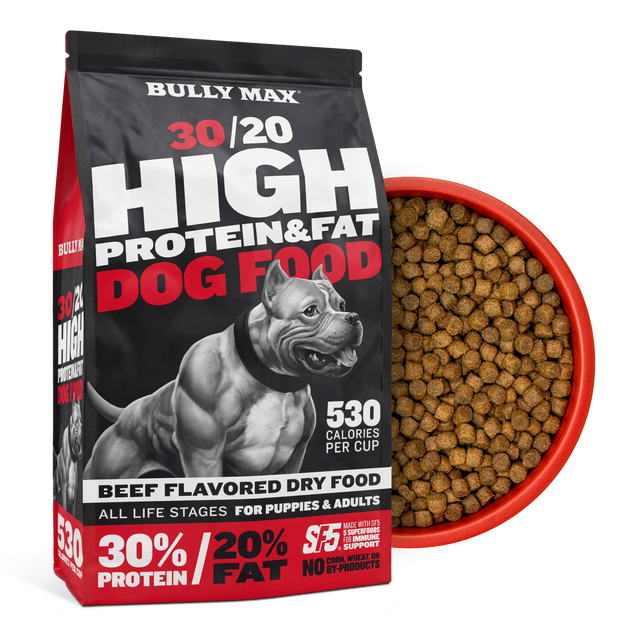
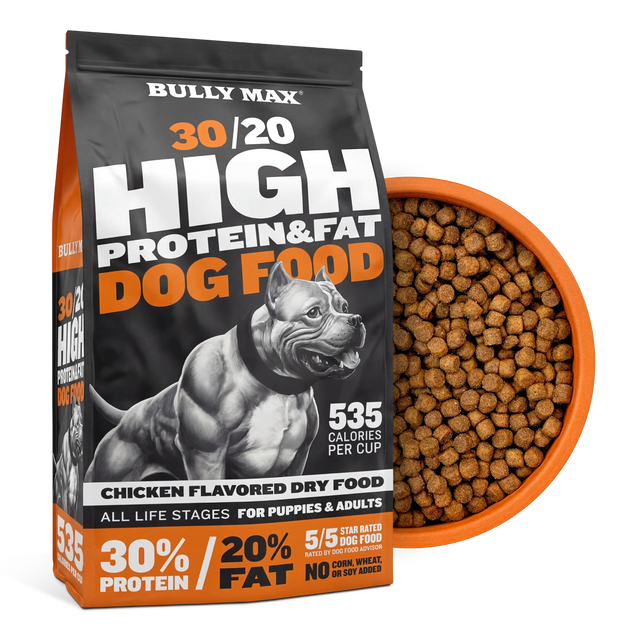
Before we go further, a quick note on fuel: if a malnourished dog needs more strength and energy from the bowl, a meat-based, high-protein food is the simplest place to start.

FUEL YOUR DOG WITH BULLY MAX 30/20 HIGH-PROTEIN FOOD
Fuel strength and energy with meat-based nutrition, 30% protein, 20% fat, and 535 calories per cup.
Step 3: Feed Small, Frequent Meals
Split the daily amount into small meals, often 3 to 4 a day or more early on. Small meals are easier for a shrunken stomach to handle, cause less vomiting and diarrhea, and keep your dog's energy steadier. As your dog improves and portion sizes grow, you can move back toward two or three meals a day.
Keep fresh water available at all times. If your dog gulps water and then vomits, offer smaller amounts more often.
Step 4: Choose the Right Food
What to feed a malnourished dog matters as much as how much. Look for:
- A complete and balanced dog food, not a homemade mix of meat and rice, which can leave gaps in vitamins and minerals.
- High-quality animal protein to rebuild muscle.
- Easy digestibility. Soaking kibble in warm water, or a wet food, can help a weak dog eat.
- Calorie density once your dog is past the first days of refeeding, so they get more fuel without a huge bowl.
Avoid rich, fatty table scraps, fast-food style "fattening" foods and sudden diet changes. They are more likely to cause diarrhea or vomiting, which sets recovery back. If you change foods, do it gradually.
Once your vet is happy with the refeeding phase, a calorie-dense food like Bully Max 30/20 High Protein Dog Food, with 535 calories per cup of meat-based nutrition, helps a recovering dog reach its full daily calories. Use our dog food calculator or the Ohio State basic calorie calculator to estimate the daily amount for your dog's target weight, then check it with your vet.
Step 5: Add Extra Calories Once Your Dog Is Eating Well
When your dog is finishing full meals without stomach upset, you can add calories without adding volume. This is where a weight gain supplement helps.
Bully Max Liquid Weight Gainer 2-in-1 is easy to add to your dog's meal: pour it over the food to add 150 calories per ounce from healthy fats and whey protein. Because it's a liquid, it doesn't make the bowl much bigger, so your dog can still finish each meal. Start with a small amount and follow the label.
Here is the liquid weight gainer we mentioned. A small pour over your dog's usual meal adds calories without adding much volume to the bowl.

HELP YOUR DOG GAIN HEALTHY WEIGHT
Add 150 calories per ounce with healthy fats and whey protein to support weight gain, muscle, skin, coat, and recovery.
Step 6: Track Your Dog's Progress
Weigh your dog at the same time of day every week, or more often early on if your vet asks, and keep a simple log. Use our dog weight chart to track body condition too.
- Gaining slowly and steadily? That's what you want. Keep going.
- No gain after a week or two of full meals? Talk to your vet about increasing calories or checking for worms or illness.
- Vomiting, diarrhea, swelling or weakness? Call your vet.
Step 7: Rest First, Then Gentle Exercise
A malnourished dog needs to save its energy for healing. Give them a warm, quiet place to rest, because very thin dogs lose body heat quickly. Once they're stronger, short, gentle walks help build appetite and muscle. Don't force a malnourished dog to run or play hard. Save real workouts for when your dog has reached a healthy weight, and our guide on helping a rescue pitbull gain weight and muscle shows how to build up from there.
Step 8: Keep Healthy Snacks on Hand
Once your dog is through the early refeeding stage, a healthy snack is an easy way to add calories between meals, and a good way to build trust with a nervous rescue.
Bully Max Power Chews for Weight Gain have 1,800 calories per bag from real chicken and 1 billion CFUs of probiotics. Count them in your dog's daily total.
For a snack you can keep on hand for walks and play sessions, these weight gain chews are an easy option.

KEEP HIGH-CALORIE CHEWS ON HAND
1,800 calories per bag from real chicken, plus 1 billion CFUs of probiotics to support digestion. Dogs love the chicken and bacon flavor.
FAQ
What do you feed a malnourished dog?
A complete, balanced, easily digested dog food in small, frequent meals, starting with less than the full daily amount and building up slowly as your vet directs. Avoid rich table scraps and sudden diet changes.
How do you feed an emaciated dog?
Very carefully, with a vet involved. Emaciated dogs are at risk of refeeding syndrome, so vets start with small portions several times a day and increase calories gradually over days. Keep water available and watch for vomiting, weakness or swelling.
How long does it take for a malnourished dog to gain weight?
It depends on how thin the dog is and why. Many dogs show progress within a few weeks of steady feeding, but getting back to an ideal weight often takes one to several months. Slow and steady is safer than fast.
Can I treat a malnourished dog at home?
Most of the day-to-day care happens at home, but it should start with a vet visit and follow a vet's feeding plan. Severely thin, weak or sick dogs may need hospital care at first.
Should I give a malnourished dog supplements right away?
No. Focus on a complete food first. Add a weight gain supplement or high-calorie chews once your dog is eating full meals without stomach upset.
Give Your Dog a Strong Second Start
Helping a malnourished dog recover takes patience: vet first, small meals, slow increases and steady weigh-ins. Once your dog is through the first stage, build meals on Bully Max 30/20 High Protein Dog Food and add Liquid Weight Gainer to keep the gains coming. For the next stage, read how to help your dog gain weight and bulk up, and if weight loss came on without a clear reason, see the causes of weight loss in dogs.


8 comments
I took in a puppy of 13 weeks. The Vet said she malnourished. She might have a German Shepherd as Dad. So she recommended Science diet large breed puppy food. She gave all shot took stool sample. and in 2weeks more shots. But no other advice. Do you have food & supplements for a puppy.
Hi, Mark!
1. answer: You must not encourage overeating in your Pitbull as this can cause problems such as GDV (bloat). You can safely increase his weight by giving him multiple high-calorie meals in a day instead. We suggest Bully Max 30/20 High Protein Dog Food and Liquid Weight Gain Supplement. In terms of corn, this ingredient is generally safe but Bully Max chose to include better whole grains in its formulations.
2. answer: Hi, Mark! Increased appetite, skin issues, a poor body condition and a pot-bellied appearance despite high energy levels are not normal in dogs and could be a sign of a metabolic disorder like Cushing’s disease or malnutrition. Please have your pet checked by a veterinarian.
I was given a starved pit bull and when I feed her she devours the food so fast without chewing. And is it not good to give them food with corn in it?
I 2s given a pit bull that her bones are showing her skin. She go. Lew food and her belly is way too big. All she wants to do is eat. She been ear cropped and hasqnners ut sh s beenqbusee. She responds very well toe
What do I do?
I need serious help. My dog is super malnourished and I have him on the purple bag of value pak high protein dog food. He want gain weight. I’m a worm him again to make sure he don’t have worms but he has never gained since I’ve had him the past 6 years.