Dog Losing Weight? Causes of Sudden Weight Loss in Dogs & What to Do
A dog loses weight when it takes in, absorbs or keeps fewer calories than its body uses. Sometimes the reason is simple, like more exercise or a new food. But unexplained weight loss, especially losing weight while eating normally, can be an early sign of parasites, diabetes, dental disease, kidney or liver problems or other illness. If your dog has lost weight without a clear reason, book a vet visit, and go sooner if you see other symptoms.
Just like your own body weight, your dog's weight can shift a little through the year. The key is telling normal changes apart from weight loss that needs attention. This guide covers the common causes, the warning signs, what your vet will check, and how to help your dog regain healthy weight once the cause is known.

When Is Weight Loss in Dogs Normal?
Some weight loss has an everyday explanation:
- More activity than usual, like a new running routine, a busy hunting season or a summer of swimming.
- A change in food to a lower-calorie recipe, or smaller portions than you think. Measure with a cup or scale rather than eyeballing it.
- Another pet eating their food. In multi-dog homes, a fast eater can quietly take a slow eater's meal.
- Nursing a litter. Mothers burn a lot of calories producing milk and often look leaner after whelping.
- A planned diet. If your dog was overweight and you cut calories, steady loss is the point.
Even with an obvious reason, keep an eye on the scale. Use our dog weight chart to score your dog's body condition and see if they are drifting below ideal.
Before we go further, a quick note on fuel: if your dog needs more strength and energy from the bowl, a meat-based, high-protein food is the simplest place to start.

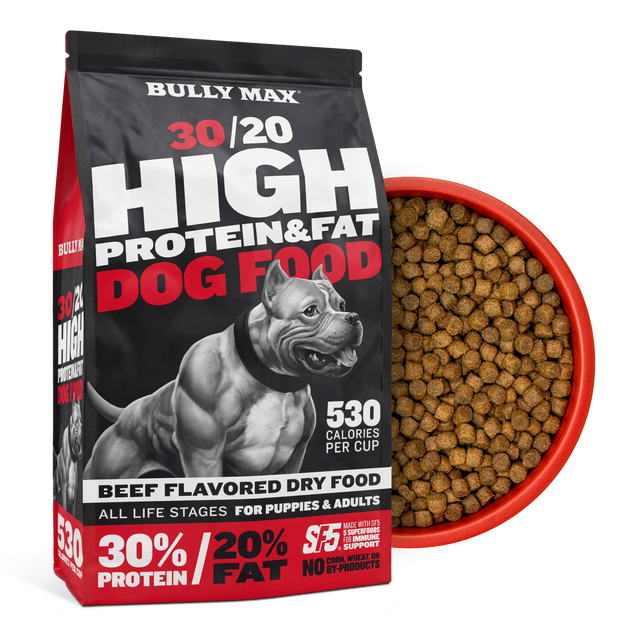
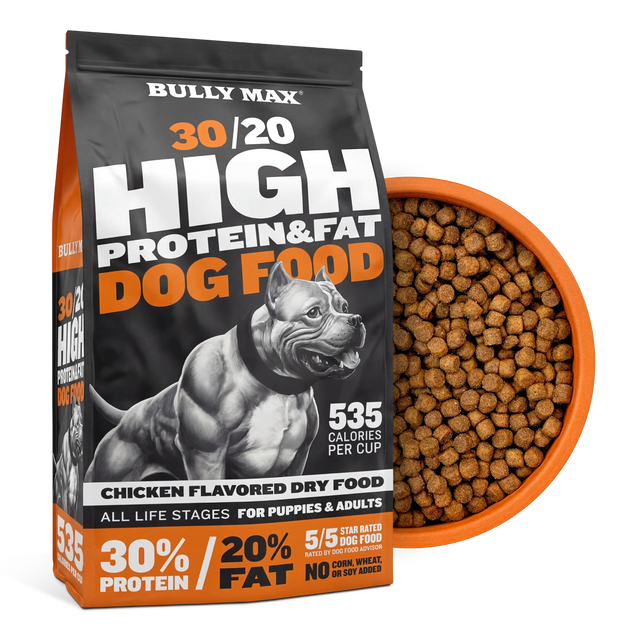
FUEL YOUR DOG WITH BULLY MAX 30/20 HIGH-PROTEIN FOOD
Fuel strength and energy with meat-based nutrition, 30% protein, 20% fat, and 535 calories per cup.
When to See a Vet
As a rule of thumb, unplanned loss of about 10% of body weight or more is worth a vet visit even if your dog seems fine. That is 5 pounds on a 50-pound dog. Call your vet promptly if weight loss comes with any of these signs:
Call your vet if your dog is losing weight and…
- Is eating normally or eating more, but still losing
- Has stopped eating or eats much less for more than a day or two
- Is drinking or urinating much more than usual
- Has vomiting, diarrhea, or worms in the stool
- Has bad breath, drooling, pawing at the mouth or trouble chewing
- Is lethargic, weak, coughing or breathing harder than normal
- Has yellow gums or eyes, a swollen belly or any lumps
- Is a puppy or a senior dog
Go to an emergency vet right away if your dog is collapsing, can't keep water down, has a hard swollen belly, or has blood in vomit or stool.
Dog Losing Weight but Eating Normally?
This is one of the most common worries, and it usually means the body is not getting or using the calories it eats. Common causes include:
- Not enough calories for the workload. Active dogs, working dogs and dogs in cold weather need more food than the bag's minimum.
- Intestinal parasites like roundworms, hookworms, tapeworms or giardia.
- Diabetes, where the body can't use sugar for energy and burns fat and muscle instead. Dogs are often hungry and thirsty.
- Malabsorption, such as inflammatory bowel disease or exocrine pancreatic insufficiency (EPI), where food passes through without being fully digested. EPI is seen more often in German Shepherds.
- Cancer, which can use up energy and change metabolism even when appetite is normal.
- Hyperthyroidism, which is rare in dogs and is usually linked to a thyroid tumor.
All of these need a vet to diagnose. Don't simply add more food and wait.
Common Causes of Weight Loss in Dogs
Not Enough Food or a Poor Diet
Before we get too far, let's be clear that poor nutrition and malnourishment are different. Poor nutrition comes from an unbalanced or low-quality diet and can show up as a dull coat, poor stools or low energy. Malnutrition means the dog is not getting enough food or nutrients overall, which leads to visible weight and muscle loss.

Malnutrition can come from a lack of food, but it is often simply a lack of knowledge about how much a dog really needs. Signs include visible ribs, shoulders and hip bones, gas and inconsistent stools, low energy and getting sick more easily. Learn more in our guide to malnutrition in dogs.
Intestinal Parasites
One of the more common, and harder to spot, causes of weight loss is an intestinal parasite. Worms and giardia steal nutrients and irritate the gut, so a dog can eat well and still lose weight. You may see diarrhea, a pot belly in puppies, a dull coat, or rice-like tapeworm segments near the tail. A fecal test at the vet confirms it, and your vet will recommend the right dewormer.
Dental Problems and Mouth Lesions
One of the simplest reasons your dog may be losing weight is pain in the mouth. A broken tooth, abscess, gum disease or sore in the mouth can make eating too painful, so your dog eats less. Watch for bad breath, drooling, dropping food or chewing on one side. A trip to the vet is the easiest way to find a dental problem.
Diabetes
In diabetes, the body either doesn't make enough insulin or can't use it well, so it can't use sugar from the blood for energy. Dogs often eat more, drink more and urinate more while still losing weight. Middle-aged and senior dogs and overweight dogs are at higher risk.
Kidney Disease
Chronic kidney disease is common in older dogs. Early signs are often increased thirst and urination, followed by a reduced appetite, weight loss, vomiting and bad breath. Bloodwork and a urine test can pick it up early.
Liver Disease
The liver helps process nutrients and store energy. When it isn't working well, a dog may lose weight and muscle. Signs of liver disease can include:
- Loss of appetite
- Weight loss
- Diarrhea or vomiting
- Increased thirst
- Increased need to urinate
- Confusion
- Yellowish eyes, tongue, and/or gums
- Blood in urine or stool
- Seizures
Gastrointestinal Disease and Malabsorption
Inflammatory bowel disease, food sensitivities, chronic infections and exocrine pancreatic insufficiency can all stop a dog from digesting and absorbing food properly. Ongoing loose stools, large greasy stools, vomiting or gurgling and gas alongside weight loss are reasons to see a vet.
Addison's Disease
Addison's disease is an adrenal gland problem that leaves the body short of key hormones. Signs can include vomiting, diarrhea, fatigue, poor appetite, shaking, and increased thirst and urination, and they often come and go. It is relatively uncommon and is seen most often in young to middle-aged dogs. Breeds reported to be at higher risk include Standard Poodles, Portuguese Water Dogs, Bearded Collies, West Highland White Terriers and Rottweilers.
Thyroid Problems
A dog's metabolism is controlled by hormones, including thyroid hormone. Most thyroid problems in dogs are actually hypothyroidism, which tends to cause weight gain, low energy and coat changes. Hyperthyroidism, a fast metabolism that causes weight loss, is rare in dogs and is usually linked to a thyroid tumor. A vet's blood test is needed to detect either one, and both can be managed with veterinary care.
Cancer
Many cancers cause weight and muscle loss, sometimes before other signs appear. This is one reason vets take unexplained weight loss in older dogs seriously. Check your dog regularly for lumps and mention any you find.
Stress and Anxiety
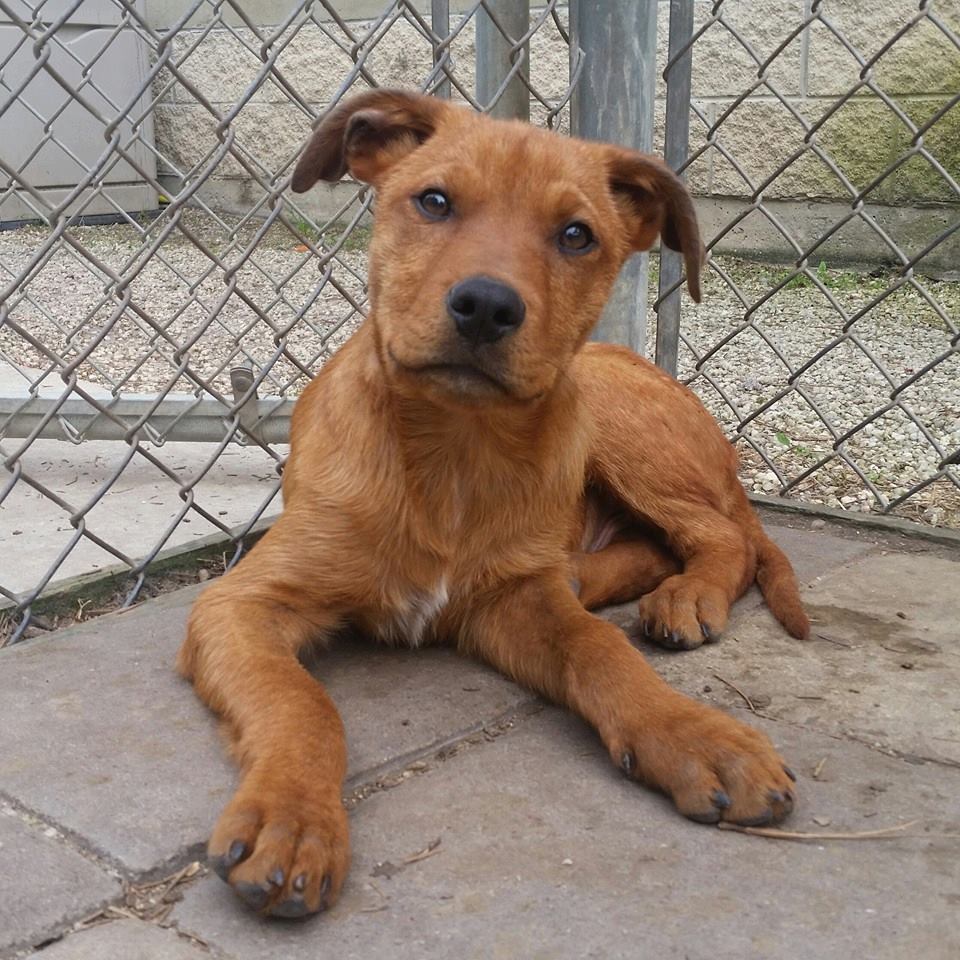
Stress or anxiety can rob a dog of its appetite. Dogs need to feel safe to eat well, so a move, a new pet, a new schedule or separation anxiety can all lead to eating less. Signs of separation-related anxiety include accidents in the house, constant barking or howling, chewing and digging, and trying to escape.
Pregnancy and Nursing
Some pregnant dogs eat less for a short period early in pregnancy. Nursing mothers need much more food than usual and may look thinner after having puppies. Your vet can advise on feeding a pregnant or nursing dog. If a pregnant dog shows vomiting, diarrhea, weakness or a dull coat, call your vet.
Aging and Muscle Loss
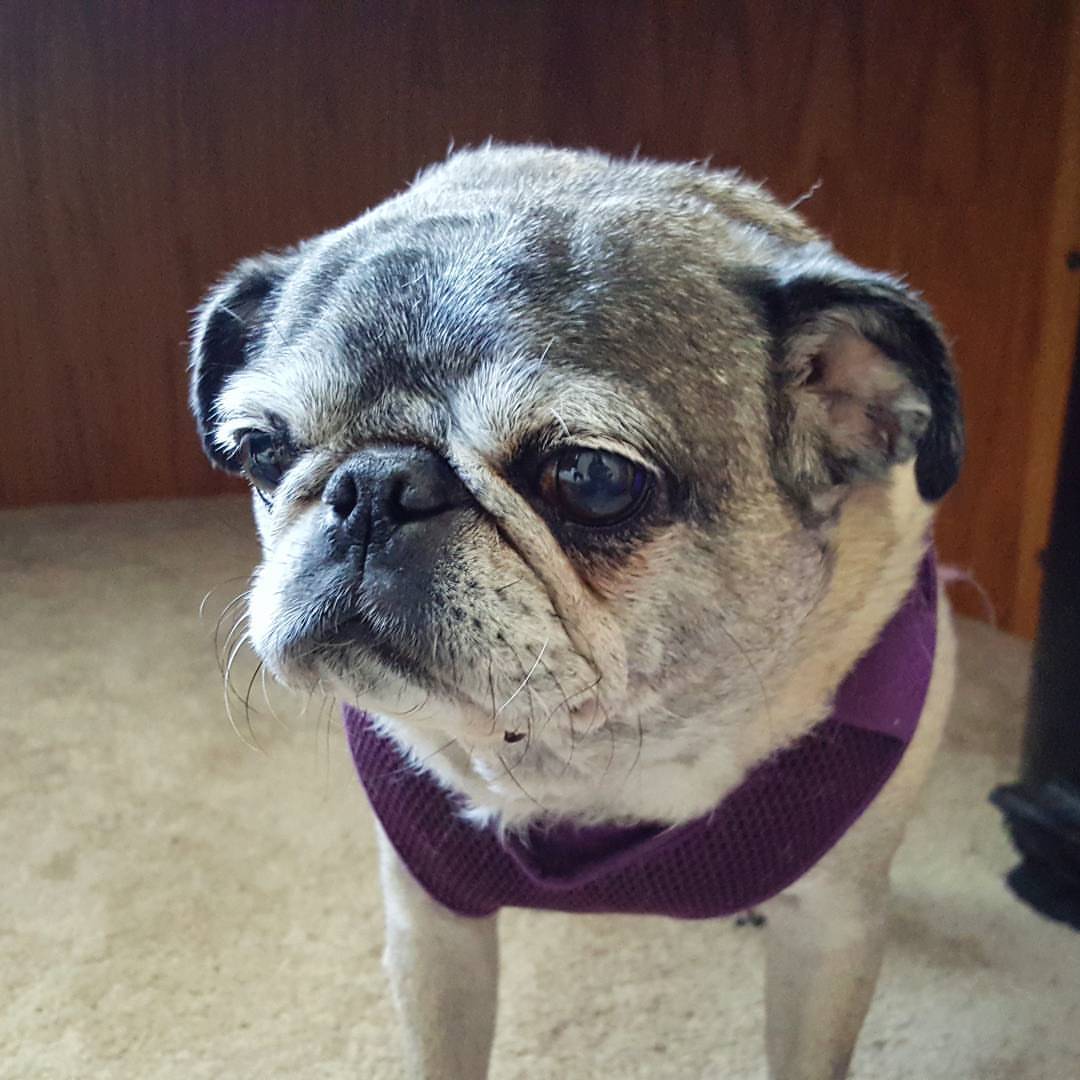
Older dogs often lose muscle, especially over the hips, back legs and spine, even if their weight changes little. Some senior weight loss is part of aging, but it can also hide dental disease, kidney disease, arthritis pain or cancer. A senior dog that is losing weight should always get a vet check. Our guide to the best senior dog food covers feeding older dogs.
Pain, Illness, Injury and Medications
Any illness that makes a dog feel unwell, such as an infection or nausea, can reduce appetite. Pain from arthritis or an injury can make a dog less willing to get up and eat. Some medications reduce appetite as a side effect. If your dog's appetite drops after starting a new medication, tell your vet rather than stopping it yourself.
What Your Vet Will Check
Your vet will usually start by weighing your dog and comparing it with past visits, then ask about diet, appetite, thirst, stools and energy. Common next steps include a full physical and mouth exam, a fecal test for parasites, and blood and urine tests to check organ function and blood sugar. Bring a note of exactly what and how much your dog eats each day, including treats. It helps your vet a lot.
How to Help Your Dog Regain Healthy Weight
Once your vet has found or ruled out a medical cause, the solution is steady, quality calories:
- Work out how much your dog needs. Use our dog food calculator based on your dog's target weight and activity level. Needs rise with exercise, cold weather and work.
- Feed a calorie-dense, complete food. More calories per cup means your dog gets more fuel without a bigger bowl.
- Split food into 3 or 4 meals if your dog struggles to finish larger meals.
- Add a healthy calorie boost like a weight gain supplement or topper.
- Weigh every week or two and adjust portions in small steps.
For a full step-by-step plan, see how to help your dog gain weight. If your dog is very thin, follow our guide to putting weight on a malnourished dog instead, because they need a slower, vet-guided plan.
Once your vet has ruled out illness, a calorie-dense food makes it easier for a thin dog to regain weight without huge meals.
TRY BULLY MAX 30/20 HIGH-PROTEIN DOG FOOD
Fuel strength and energy with meat-based nutrition, 30% protein, 20% fat, and 535 calories per cup.

Bully Max Liquid Weight Gainer 2-in-1 adds 150 calories per ounce from healthy fats and whey protein and can be poured over your dog's regular food. If you prefer a chew, Bully Max Power Chews for Weight Gain have 1,800 calories per bag, real chicken, and 1 billion CFUs of probiotics. Neither replaces a vet visit for unexplained weight loss.
FAQ
Why is my dog losing weight but eating normally?
Usually because the body isn't absorbing or using the calories. Common causes are worms, diabetes, digestive problems like IBD or EPI, and sometimes cancer. It can also be as simple as not feeding enough for your dog's activity. A vet visit with a fecal test and bloodwork is the right first step.
Why is my dog losing weight so fast?
Rapid weight loss over days or a few weeks is more likely to be medical, such as diabetes, a serious infection, kidney or liver disease, or not eating because of pain or nausea. Call your vet promptly, and go to an emergency vet if your dog is also vomiting, weak or not drinking.
Should I worry if my senior dog is losing weight?
Some muscle loss is normal with age, but weight loss in a senior dog should always be checked. Dental disease, kidney disease, arthritis pain and cancer are all more common in older dogs and are easier to manage when found early.
Can worms make a dog lose weight?
Yes. Intestinal parasites take nutrients from your dog and can cause weight loss even with a normal appetite. Ask your vet for a fecal test and the right dewormer.
How much weight loss is too much for a dog?
Unplanned loss of around 10% of body weight is a common threshold for a vet visit. Any sudden or unexplained drop, or weight loss with other symptoms, is worth a call sooner.
Get to the Cause, Then Rebuild
Weight loss is a signal, not a diagnosis. Start with your vet, then rebuild with steady, quality calories. When your dog is ready, Bully Max 30/20 High Protein Dog Food gives them 535 calories per cup of meat-based nutrition, and Liquid Weight Gainer adds more to every bowl.
For an easy way to add calories to the meals your dog already eats, a liquid weight gainer can be poured right over their food.

HELP YOUR DOG GAIN HEALTHY WEIGHT
Add 150 calories per ounce with healthy fats and whey protein to support weight gain, muscle, skin, coat, and recovery.


11 comments
https://uploads.disquscdn.com/images/3bdbaba0b89f0ea476677a9068633993a0f0895101a5d5751bc8a122579a7c77.jpg https://uploads.disquscdn.com/images/12d0ac32228b9ed99960f7d6eff80b27d2f05d6ea4c53c9823b94228acd9d757.jpg The dog you have featured for anxiety is my dog! Is this real life? I adopted her in Washington, D.C. from a southern kill shelter. We now live in California & I’ve recently switched her to a home diet. Reading up on dog nutrition I just random stumbled upon her pre-rescued baby picture- I’d recognize that face anywhere! Any chance Bully Max has information on who submitted this picture or where it was taken? She’s a rescue & we would love to hear more about her life before finding us.
My little Chihuahua is losing weight real fast t I’m getting worried
My is losing weight too but she eats and I have actually started giving more food. And actually now that I think about it it has been since I switched from frozen raw to dehydrated raw (SoJo’s). My problem is not that she is not eating it is that she is eating more but looking skinnier. Did you ever find out why yours is losing weight?
I checked the calories per cup on the brand mentioned (SoJo’s), and it’s considerably low (332 calories per cup). This may be the cause of the weight loss. I would recommend a food higher in calories. Your dog will require less food to meet their daily requirements. A meat based dry food would be a good start. Check dogfoodadvisor.com for some 5/5 star recommendations.
Sudden weight loss can be caused by a number of issues. Always contact your veterinarian for an examination if this occurs.