Dog Food for Gassy Dogs: Causes, What to Feed and When to See a Vet
The best dog food for a gassy dog is one your dog digests well: a meat-first recipe, a fat level that suits your dog, no table scraps on the side, and a slow switch instead of a sudden one. Most gas comes from swallowed air or from food that ferments in the gut, so the fix usually starts with what is in the bowl and how fast it goes down. If the gas is new, constant, or comes with diarrhea, vomiting, weight loss or a swollen belly, see your vet first.
Gassy dog: the short version
- Most common causes: eating too fast, a sudden food change, table scraps and dairy, high-fat extras, and ingredients your dog does not digest well.
- What to feed: one consistent, meat-first food with a clear protein source, fed in measured meals. Leaner recipes help some dogs.
- What to change first: slow the eating, stop the scraps, measure portions and switch foods over 7 to 10 days.
- When to call the vet: gas with diarrhea, vomiting, weight loss, low energy, or a hard, swollen belly. A swollen belly with retching is an emergency.
- Our picks: 25/11 Lamb for a leaner, chicken-free option and 30/20 High Protein Chicken for active dogs that need more calories per cup.
Why Is My Dog So Gassy?
Every dog passes gas. It becomes a problem when it is frequent, smells unusually bad, or shows up with other stomach trouble. Gas in dogs has two main sources.
1. Swallowed air
Dogs that gulp their food, eat right after hard exercise, or compete with another dog at mealtime swallow a lot of air. That air has to come out one end or the other. Flat-faced breeds such as French Bulldogs, English Bulldogs, Boston Terriers and Pugs swallow more air than most because of the shape of their face and airway, which is why so many Frenchie owners ask about gas.

2. Food that ferments in the gut
Whatever is not digested in the small intestine moves on to the large intestine, where gut bacteria break it down. That fermentation releases gas. Some carbohydrates and fibers ferment more than others, and sulfur-containing compounds are behind the worst smells. A food your dog digests well leaves less behind for bacteria to work on.
Other common triggers
- A sudden food change. Switching foods overnight is one of the most common causes of gas and loose stool.
- Table scraps and dairy. Many adult dogs do not handle lactose well, and rich human food is a frequent trigger.
- High-fat extras. Fatty scraps, skin and grease can upset some stomachs.
- Beans, peas and soy. These are well known for fermenting in the gut, in people and dogs alike.
- Garbage and spoiled food. Scavenging is a classic cause of sudden, foul gas.
- Too many treats and chews. Treats add up, and a pile of different ones every day makes it hard to know what is causing the problem.
- Too much food. Overfeeding gives the gut more to process than it needs.
If you want to dig into stomach trouble more broadly, our guide to your dog's upset stomach covers vomiting, diarrhea and when to fast or call the vet.
When Gas Means a Trip to the Vet
Most gas is a diet or eating-habit problem. Some of it is not. Call your vet if your dog has gas along with any of these:
- diarrhea, soft stool or blood or mucus in the stool
- vomiting
- weight loss or a poor appetite
- low energy
- gas that started suddenly and does not settle within a few days of a simple diet fix
Bloat is an emergency. A hard, swollen belly, retching without bringing anything up, drooling, pacing and restlessness can be signs of gastric dilatation-volvulus (GDV), which is life-threatening. Deep-chested large breeds such as Cane Corsos, Great Danes, Rottweilers, German Shepherds and Dobermans are at higher risk. Do not wait it out. Go to the nearest emergency vet.
Do not give your dog human gas medicine or any other medication unless your vet tells you to. Your vet can look for parasites, food intolerance and other gut conditions, and tell you what is safe for your dog.
What to Look For in Dog Food for Gassy Dogs
There is no single "anti-gas" ingredient. What helps most dogs is a food that is easy to digest and that you can feed the same way every day. Here is what to check on the bag.
A named meat or meat meal first
Look for a specific animal protein at the top of the ingredient list, such as chicken meal, beef meal or lamb meal. A clear protein source makes it easier to tell which protein your dog does well on, and it keeps the recipe built around meat rather than fillers. Our guide to dog food ingredients to look for explains how to read the first five ingredients.
One main protein you can identify
If you suspect a protein is part of the problem, a food with one clear main protein is easier to test. Many owners try a chicken-free option for a few weeks. If you go that way, read our chicken-free dog food guide, and ask your vet about a proper elimination trial if you suspect a food allergy.
A fat level that suits your dog
Fat is the most concentrated source of calories, and hard-working dogs need it. Some dogs, though, do better on a leaner recipe. If your dog is not very active or seems sensitive to rich food, a reduced-fat formula is worth trying.
Calories per cup
A food with more calories per cup means a smaller scoop for the same energy. Less food going in can mean less left to ferment. It also makes portions easier to get right. The dog food calculator turns your dog's weight and activity into cups per day.
| Example dog needing about 1,600 kcal a day | Calories per cup | Cups per day (estimate) |
|---|---|---|
| A food at 350 kcal/cup | 350 | about 4.6 |
| Bully Max 25/11 Lamb | 415 | about 3.9 |
| Bully Max 30/20 High Protein Chicken | 535 | about 3.0 |
Estimates only: daily calories divided by calories per cup. Your dog's needs depend on weight, age and activity. Adjust to body condition.
A recipe that does not change
Rotating foods, flavors and toppers every week keeps the gut guessing. Pick one food that works and stick with it. If you want a topper, add one at a time so you can tell what it does.
Our Picks for Gassy Dogs
Bully Max is a family-owned U.S. company founded in 2009. Our high-performance, meat-based foods are made in the USA, every batch is triple tested for safety, and we have zero recalls. Dog owners have left over 50,000 5/5 reviews, and Dog Food Advisor rates Bully Max 5/5. Digestion comes up often when customers tell us why they stay: in our post-purchase survey, about 1 in 10 buyers named coat, skin or digestion, and "no gas" and "poops less" are among the phrases owners use most.
| Formula | Protein | Fat | kcal/cup | Main protein | Good fit for |
|---|---|---|---|---|---|
| 25/11 Lamb | 25% | 11% | 415 | Lamb meal (chicken-free) | Dogs that do better on a leaner food, and owners who want to avoid chicken |
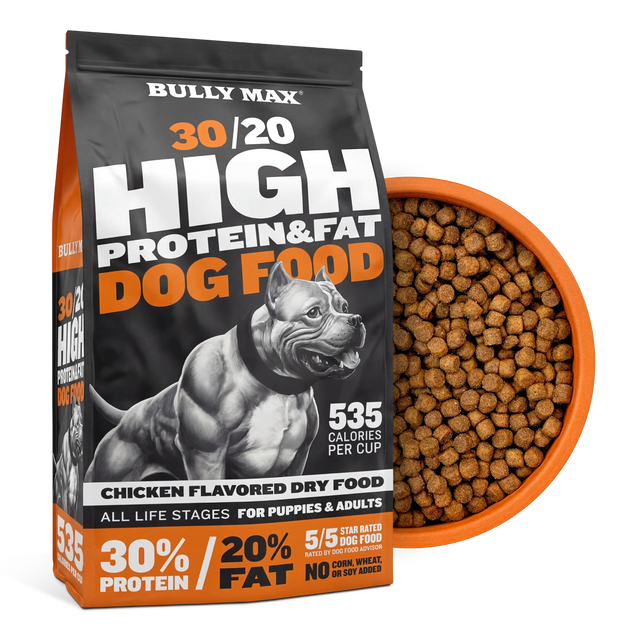
| 30/20 High Protein Chicken | 30% | 20% | 535 | Chicken | Active adult dogs that need more calories in a smaller scoop |
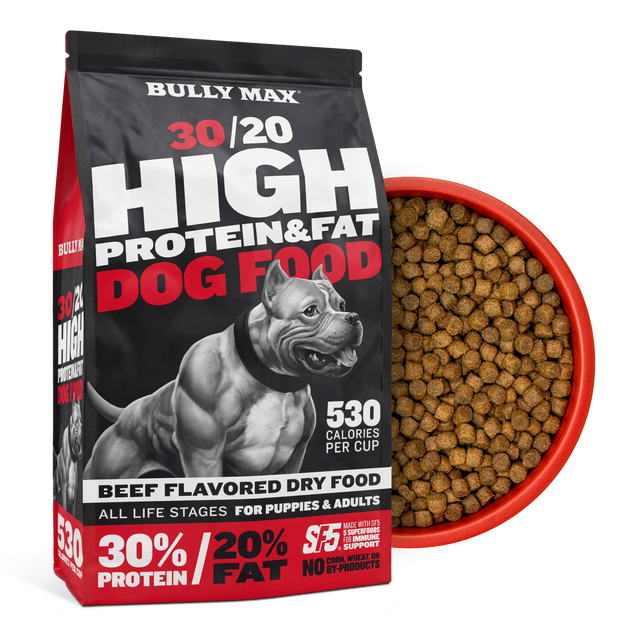
| 30/20 Beef | 30% | 20% | 530 | Beef meal (chicken-free) | Active dogs that need a chicken-free food |
Figures from the Bully Max product pages.
For a leaner, chicken-free option: 25/11 Lamb
25/11 has 45% less fat than our 30/20 formulas. Lamb meal is the first ingredient, followed by pork, with brown rice, pearled barley, sorghum and oats, and there is no chicken in the recipe. It is our first suggestion for gassy dogs that are not working hard, for dogs that seem sensitive to rich food, and for small and flat-faced breeds like Frenchies, where keeping weight in check matters.

TRY BULLY MAX 25/11 LAMB, 45% LESS FAT
A leaner, chicken-free recipe with lamb meal first: 25% protein, 11% fat and 415 calories per cup.
For active dogs: 30/20 High Protein Chicken
Working and sport dogs need calories, and a lean food can mean very large meals for them. 30/20 packs 535 calories into each cup, so a busy dog gets what it needs from a smaller scoop. It also contains TruMune, which we include to support digestion and immune health. If chicken is not a problem for your dog, this is the one to try for an active pit bull or bully.

How to Switch Foods Without Making the Gas Worse
A sudden change is one of the most common reasons for gas, so the way you switch matters as much as the food you switch to. Mix the new food into the old one over 7 to 10 days:
| Days | Old food | New food |
|---|---|---|
| 1 to 2 | 75% | 25% |
| 3 to 5 | 50% | 50% |
| 6 to 8 | 25% | 75% |
| 9 to 10 | 0% | 100% |
If stool gets loose or the gas gets worse, stay at the current step for a few more days before moving on.
Our onboarding guide walks through the switch step by step. Watch it here, then read the full guide to switching your dog to Bully Max.

START WITH BULLY MAX 30/20 HIGH PROTEIN CHICKEN
The food in the video: 30% protein, 20% fat and 535 calories per cup, with TruMune to support digestion and immune health.
7 Ways to Reduce Gas in Dogs at Home

- Slow down fast eaters. A slow-feeder bowl, a snuffle mat or scattering kibble on a clean floor cuts down on swallowed air. Feed dogs apart if they race each other.
- Split the daily amount into two or three meals. Smaller meals are easier to digest than one big one.
- Measure every meal. Use a real measuring cup, not a guess. Overfeeding is common, and the extra food has to go somewhere.
- Stop the table scraps and dairy. Keep it to dog food and a small number of known treats for at least two weeks so you can see what changes.
- Wait after hard exercise. Let your dog settle and breathe normally before a meal, and avoid heavy exercise right after eating. This matters most for deep-chested large breeds.
- Keep your dog out of the trash. Secure bins and watch for scavenging on walks.
- Change one thing at a time. Change the food, the treats or the routine, then give it about two weeks. If you change everything at once you will not know what worked.
If stool quality is part of the picture, our guide on how to firm up your dog's stool goes deeper on portions, fiber and probiotics, and the most common causes of dog diarrhea explains when loose stool needs a vet.
Probiotics and daily supplements
Probiotics are a common add-on for dogs with digestive ups and downs. Ask your vet whether one makes sense for your dog, especially if there are other symptoms. If you want an easy daily chew, our 9-in-1 Vitality Chews include probiotics and a prebiotic to help support digestive and immune health, along with joint, skin and coat support.

ADD DAILY GUT SUPPORT WITH BULLY MAX 9 IN 1
Bacon-flavored soft chews with probiotics and a prebiotic to help support digestive and immune health, plus joint, skin and coat support.
Gassy Dogs by Breed
French Bulldogs, English Bulldogs and Boston Terriers. Flat faces mean more swallowed air, so slow feeding helps a lot. Keep these breeds lean, since extra weight makes breathing harder. Our French Bulldog food guide covers portions and why we point Frenchie owners to 25/11 Lamb.
Pit bulls, Staffies and American Bullies. Sensitive stomachs and itchy skin come up often with bully-breed owners, and many try a chicken-free food. See our guides to the best dog food for sensitive stomachs and dog food for allergies.

Cane Corsos, Mastiffs, Great Danes and other deep-chested dogs. Gas itself is not bloat, but these breeds have a higher risk of GDV, so learn the warning signs, feed measured meals and avoid hard exercise right after eating. Our Cane Corso feeding guide covers meal size and timing for big dogs.
FAQ
Why does my dog fart so much?
The most common reasons are eating too fast, a recent food change, table scraps or dairy, and a food your dog does not digest well. Flat-faced breeds also swallow more air. If the gas is new, constant, or comes with diarrhea, vomiting or weight loss, see your vet.
What can I give my dog for gas?
Start with the basics: slow down meals, stop table scraps, measure portions and keep one consistent food. Do not give human gas medicine or other medication unless your vet says it is safe for your dog. Your vet can recommend what fits, such as a probiotic.
Can dog food cause gas?
Yes. A sudden switch between foods, ingredients that ferment in the gut such as beans, peas and soy, rich or fatty extras, and a protein your dog does not tolerate can all lead to gas. Switching slowly over 7 to 10 days helps a lot.
How do I reduce gas in my dog quickly?
There is rarely an instant fix. Cut out scraps and treats, feed smaller measured meals, use a slow feeder and go for an easy walk after your dog has digested. Most dogs improve within a week or two of a steady routine. A hard, swollen belly with retching is not ordinary gas: go to an emergency vet.
Is high-protein dog food bad for gas?
Not by itself. Many dogs do well on high-protein, meat-based food. What matters more is that the protein is a clear, named source your dog tolerates, that the switch is gradual, and that portions are right. If your dog seems sensitive to rich food, try a leaner high-protein formula such as 25/11 Lamb.
What causes gas in dogs that smells really bad?
Strong-smelling gas usually comes from sulfur compounds released when food ferments in the gut. Garbage, spoiled food and rich scraps are frequent causes. Persistent, very foul gas with loose stool is a reason to see your vet.
Start With the Bowl
For most gassy dogs, the fix is simple: one consistent, meat-first food, measured meals, no scraps and a slow switch. Start with 25/11 Lamb if your dog does better on a leaner, chicken-free food, or 30/20 High Protein Chicken if your dog is active and needs more calories per cup. Once you find the food that works, put it on autoship and save 10% on every order so you never have to switch suddenly because you ran out. And if the gas does not settle, or comes with other symptoms, see your vet.