Chicken-Free Dog Food: A Complete Guide
Chicken-free dog food is a complete diet made without chicken meat, chicken meal, chicken fat or chicken broth. Beef, lamb, fish and pork are the most common replacements. To choose one, read the full ingredient list instead of the front of the bag, and if you think your dog is reacting to chicken, work through it with your vet before you change everything at once.
Chicken-free dog food at a glance
- What it means: no chicken in any form. Check for chicken meal, chicken fat, chicken broth and vague terms like “poultry” or “animal fat”.
- Who it’s for: dogs whose owners or vets want to avoid chicken, picky eaters who are tired of it, and owners who like to rotate proteins.
- Allergy reality check: beef, dairy, chicken, wheat and lamb are the most commonly reported food allergens in dogs. Only an elimination diet run with your vet can tell you what your dog reacts to.
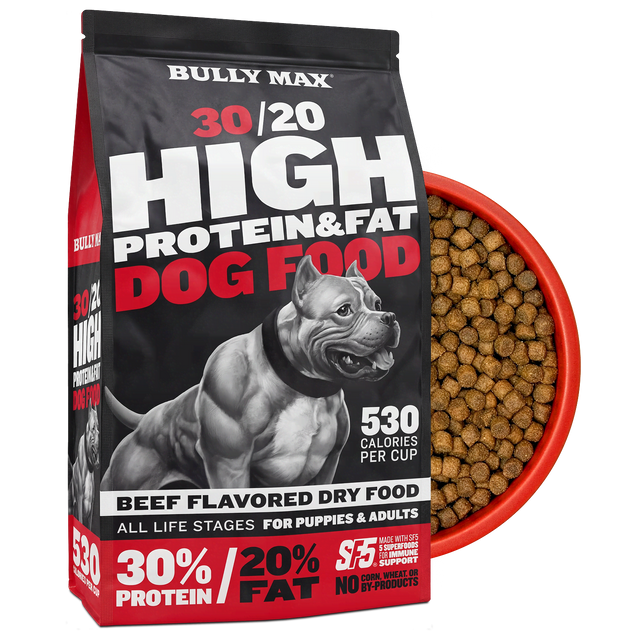
- Bully Max options: 30/20 High Protein Beef (530 kcal/cup) and 25/11 Lamb, 45% less fat (415 kcal/cup). Neither lists chicken.
- Switching: transition over 7 to 10 days and make sure treats and toppers are chicken-free too.
Who Needs Chicken-Free Dog Food?
Chicken is the most common protein in dry dog food. It’s affordable, digestible and dogs like it. So why do so many owners search for dog food without chicken? Usually for one of four reasons:
- Your vet asked you to avoid chicken. This is the most important one. If your vet suspects a food reaction, follow their plan first. They may want a specific diet for a set number of weeks.
- You suspect chicken doesn’t agree with your dog. Itchy paws, ear trouble or loose stools can have many causes, but chicken is one of the foods owners and vets look at.
- Your dog is bored of it. Picky eaters often perk up with a new protein. In our post-purchase survey of about 2,400 customers, around 14% said they chose Bully Max because their dog loves the taste or a picky eater finally ate.
- You like to rotate proteins. Some owners switch between beef, lamb and fish to add variety.
One of our customers put it simply when we asked why they bought:
“Seen something other then chicken food for adult dogs”
Bully Max customer, post-purchase survey
Whatever your reason, the goal is the same: a complete and balanced food your dog eats well, with no chicken hiding on the label.
A quick note on food before we go further: if a dog that needs to avoid chicken does better without chicken, a chicken-free, meat-based recipe keeps protein high without it.
A quick look at our chicken-free beef recipe:

GO CHICKEN-FREE WITH BULLY MAX 30/20 BEEF
Chicken-free, meat-based nutrition with 30% protein, 20% fat, and 530 calories per cup for strength and energy.
Chicken Allergy in Dogs: What Owners Should Know
A lot of chicken-free shopping starts with a worry about allergies. Here is what the veterinary references actually say, in plain terms.
How common are food allergies in dogs?
Less common than most owners think. The Merck Veterinary Manual reports that 1-2% of dogs seen by vets have some form of food allergy. The share is higher among dogs with skin disease or itching. Fleas, pollen, dust mites and other environmental allergies are more common causes of an itchy dog.
When a food is the problem, the same reference lists the most common food allergens in dogs as beef, dairy products, chicken, wheat and lamb. That matters. Chicken is on the list, but so are beef and lamb. A chicken-free food is not automatically an “allergy food”. It is only the right choice if chicken is the ingredient your dog needs to avoid.
Signs of a chicken allergy in dogs
Food allergies in dogs most often show up in the skin and ears, not the stomach. Signs vets watch for include:
- Itching, especially paws, face, ears, armpits and rear end
- Ear infections that keep coming back
- Red skin, hair loss from scratching or licking, or repeated skin infections
- Vomiting, diarrhea or more frequent bowel movements in some dogs
Every one of these signs has other possible causes. See your vet if your dog is itchy, has ear or skin problems, or has ongoing digestive upset. Don’t try to diagnose it from a list.
How vets confirm a food allergy
The standard tool is an elimination diet trial. Your dog eats one carefully chosen diet, often a prescription hydrolyzed diet or a protein the dog has never eaten, and nothing else for several weeks. No other treats, chews, table scraps or flavored products. Merck notes that a minimum of 10 weeks might be needed to identify 95% of food-allergic dogs. If the signs improve, the vet reintroduces the old food to see whether they come back.
What about blood, saliva or hair tests sold online? According to Merck, none of these methods reliably give consistently accurate results. Save your money and ask your vet about a proper trial.
Allergy, intolerance or just a bad match?
A true allergy is an immune reaction. An intolerance is a digestive one, like gas or soft stool after a certain ingredient or a sudden switch. Many “chicken problems” turn out to be a fast food change, too many treats or a food that simply doesn’t suit the dog. Our guides on firming up your dog’s stool and helping an upset stomach cover those cases.
A note on what food can and can’t do
- A chicken-free food doesn’t treat allergies. It simply leaves chicken out. For what to look for in a food for an itchy dog, see our guide to the best dog food for allergies.
- If your vet has your dog on a strict elimination trial, use the diet your vet chose. Ask before adding anything else.
- Bully Max beef and lamb formulas are for dogs whose owners or vets want to avoid chicken in an everyday diet.
Hidden Chicken: How to Read a Dog Food Label
The name on the front of the bag tells you the headline protein, not the whole story. A “beef recipe” can still contain chicken fat or chicken meal further down the list. Ingredients are listed in order by weight, so read every line, not just the first few.

Here is what to look for:
| On the label | Is it chicken? | What to do |
|---|---|---|
| Chicken, chicken meal, deboned chicken | Yes | Avoid |
| Chicken fat, chicken broth, chicken liver | Yes | Avoid. Chicken fat is common in “red meat” recipes. |
| Poultry meal, poultry fat, poultry by-product meal | May be chicken | Avoid. “Poultry” doesn’t name the bird. |
| Hydrolyzed chicken or poultry protein | Yes, broken down | Only if your vet says so |
| Animal fat, animal digest | Source unnamed | Ask the manufacturer |
| Natural flavor | Source not stated on the label | For a strict trial, ask the manufacturer |
| Egg, dried egg product | Not chicken meat, but it comes from chickens | Ask your vet if eggs are allowed |
| Turkey, duck | Not chicken, but poultry | Some vets avoid all poultry during a trial |
General label guidance. Your vet’s instructions come first.
Two more tips. First, check the treats, dental chews, pill pockets and toppers too. Many are chicken-based even when the food isn’t. Second, if your dog needs strict avoidance, ask the brand directly how it handles ingredients in its plant. A good company will answer.
For a deeper look at labels, read our guides to dog food ingredients to look for and avoid, what chicken meal is and the truth about “meat meal”.
The Best Chicken-Free Proteins for Dogs
Dogs need amino acids, not chicken specifically. Plenty of animal proteins cover those needs well. Here’s how the main options compare.
| Protein | Strengths | Keep in mind |
|---|---|---|
| Beef | Rich, palatable, calorie dense. Popular for active and working dogs. | One of the most commonly reported food allergens in dogs. |
| Lamb | Palatable and often chosen as a change from chicken. Works well in leaner formulas. | Also on the common allergen list. Many lamb foods add other proteins, so read the label. |
| Fish (salmon, whitefish, menhaden) | Natural source of omega-3s EPA and DHA for skin and coat. | Some dogs find fish-heavy foods too rich or strong smelling. |
| Pork | Highly palatable, good amino acid profile. | Less common as a main protein, often used with others. |
| Venison, rabbit, kangaroo | Unusual proteins vets sometimes use for elimination trials. | Pricier. Best used with your vet’s guidance. |
Allergen notes from the Merck Veterinary Manual list of common food allergens in dogs.
Beef dog food
Beef is the go-to for owners who want a chicken-free food without giving up calories. Beef meal is a concentrated protein: the water is cooked off, so it delivers far more protein by weight than fresh beef. That’s why beef formulas are popular with bully breeds, working dogs and dogs that need to gain healthy weight.
Lamb dog food
Lamb is the classic “not chicken” protein. It suits dogs that do better on a lighter bowl, like less active dogs, small breeds, seniors or dogs that gain weight easily. Lamb recipes vary a lot, though. Some use lamb as the headline but still add chicken fat, so the label check above still applies.
Fish
Fish is a strong choice for skin and coat because it brings EPA and DHA, the omega-3s dogs use best. Even if your main food is beef or lamb, a fish oil topper can add those omega-3s without adding chicken.
For more on proteins in general, see our guide to the best sources of protein for dogs.
What to Look for in a Chicken-Free Dog Food
Once chicken is off the label, judge the food the same way you would any other.
Chicken-free buying checklist
- No chicken anywhere on the full ingredient list, including fat and broth.
- Complete and balanced. Look for an AAFCO nutritional adequacy statement for your dog’s life stage.
- A named meat first. “Beef meal” or “lamb meal”, not “meat meal”.
- Protein, fat and calories that fit your dog. A working pit bull and a couch-loving Frenchie need different bowls.
- Calories per cup on the bag. You need it to feed the right amount.
- Large-breed puppy coverage if you’re feeding a big puppy.
- A brand you can trust. Recall history, testing and where it’s made all matter.
Bully Max Chicken-Free Dog Food Options
Bully Max makes two dry foods that are made without chicken: 30/20 High Protein Beef and 25/11 Lamb. Neither lists chicken, chicken meal, chicken fat or poultry on its ingredient list.
Proof first. Bully Max has over 50,000 5/5 reviews, a 5/5 rating from Dog Food Advisor and has served millions of dogs. Serious working kennels feed our beef formula. Kassidy Torrez of PresaMania Kennels lists 30/20 Beef among her top three Bully Max products, and it went along for the ride when Amarillo won Most Weight Pulled at the ADBA Nationals. Read the full PresaMania story.

Here’s how the two chicken-free formulas compare:
| 30/20 High Protein Beef | 25/11 Lamb, 45% less fat | |
|---|---|---|
| Protein (min) | 30% | 25% |
| Fat (min) | 20% | 11% |
| Calories per cup | 530 | 415 |
| First ingredients | Beef meal, soybean meal, beef tallow | Lamb meal, pork, brown rice |
| Other animal ingredients listed | Beef tallow | Menhaden fish meal, salmon oil |
| Probiotics | 10 million CFU/lb | 10 million CFU/lb |
| TruMune | No | No |
| Best for | Active, working and underweight dogs that need calories and muscle support | Less active dogs, small breeds, Frenchies and dogs that gain weight easily |
From the current Bully Max product pages and guaranteed analyses.
30/20 High Protein Beef: chicken-free fuel for active dogs
30/20 Beef is built for dogs that burn a lot. Beef meal is the first ingredient and beef tallow is the third. With 530 calories per cup, most dogs need fewer cups than they would of a typical lower-calorie kibble. That’s useful for dogs that struggle to put on weight or keep it on through hard training.
It also brings omega-3 and omega-6 fatty acids from flaxseed and canola oil, plus probiotics and inulin for digestion. One thing to know: it contains soybean meal and field peas. If your vet has also told you to avoid soy, the lamb formula is the better fit.
If your dog needs a chicken-free food with real calorie density, start here.
TRY BULLY MAX 30/20 HIGH-PROTEIN BEEF DOG FOOD
Chicken-free, meat-based nutrition with beef meal as the first ingredient: 30% protein, 20% fat and 530 calories per cup.
25/11 Lamb: a lighter chicken-free bowl
Not every dog needs 530 calories per cup. 25/11 Lamb has 45% less fat than our 30/20 formulas and 415 calories per cup, with lamb meal as the first ingredient and pork second.
It’s our pick for small breeds and Frenchies, for dogs that are less active, and for owners who want a chicken-free food that still builds lean muscle. It also includes menhaden fish meal and salmon oil, so check with your vet if your dog needs to avoid pork or fish.
One customer told us why lamb worked for their shepherds:
“I needed to build muscle in my two german Shepards..they're allergic to chicken so the lamb was great for them plus they're actually losing weight and they're more active”
Bully Max customer, post-purchase survey
That’s one owner’s experience, not a promise for every dog. But it shows who the lamb formula is for: dogs that need to avoid chicken and benefit from a leaner bowl.

TRY BULLY MAX 25/11 LAMB DOG FOOD
Chicken-free lamb recipe with 25% protein, 45% less fat and 415 calories per cup.
Puppies and large breeds
Both formulas are suitable for large-breed dogs, including large-breed puppies, under AAFCO guidelines. That matters for the breeds our customers feed most. In our survey, about a third own American Bullies, about 31% own pit bulls, APBTs or Staffies, and about 10% each own French Bulldogs and Cane Corsos. If you’re raising a big puppy, ask your vet how much and how often to feed as they grow.
Quality you can check
Bully Max is a family-owned U.S. company founded in 2009. Our high-performance, meat-based nutrition is made in the USA, every batch is triple tested for safety, and we have zero recalls. Compare all our formulas side by side in the Bully Max dog food comparison chart.
How to Switch to a Chicken-Free Dog Food
Even the right food can upset a stomach if you switch overnight. Go slow.

| Days | Old food | New chicken-free food |
|---|---|---|
| 1-2 | 75% | 25% |
| 3-5 | 50% | 50% |
| 6-8 | 25% | 75% |
| 9-10 | 0% | 100% |
A common 7-10 day schedule. Slow down if stools get soft.
- Swap the extras too. Treats, chews and toppers count. If they contain chicken, you haven’t gone chicken-free.
- Keep notes. Write down itching, ear issues, stool quality and appetite each week. It helps you and your vet see real changes.
- Give it time. Skin and coat change slowly. Judge a new food over weeks, not days.
- Call your vet if symptoms get worse, or if vomiting or diarrhea lasts more than a day or two.
How much to feed
Calories per cup change how many cups your dog needs. As an estimate, a dog that needs about 1,600 calories a day would eat roughly 3 cups of 30/20 Beef (530 kcal/cup) or just under 4 cups of 25/11 Lamb (415 kcal/cup). Your dog’s real needs depend on size, age and activity, so treat these numbers as a starting point and adjust to body condition. Our dog food calculator gives you a personal estimate.
Don’t Forget Treats, Toppers and Supplements
This is where most chicken-free plans fall apart. Plenty of treats and chews are made with chicken or chicken flavor. Check every label, and when you add a topper, choose one with a short ingredient list.

If you want to support skin and coat while you avoid chicken, salmon oil is an easy add. Bully Max Omega-3 Salmon Oil has three ingredients: salmon oil, pollock oil and mixed tocopherols as a preservative. It brings EPA and DHA, and coat is one of the things our customers notice most. About 10% of survey respondents named coat, skin, digestion or overall health as a reason they buy.

ADD BULLY MAX OMEGA-3 SALMON OIL
Salmon oil, pollock oil and mixed tocopherols. That is the whole ingredient list: no chicken, with EPA and DHA for skin and coat.
Find the Right Chicken-Free Food for Your Dog
If your dog needs to avoid chicken, start with your vet’s advice, read every label and switch slowly. Then pick the food that fits the dog in front of you.
- Active, working or underweight dog? Go with 30/20 High Protein Beef.
- Small breed, Frenchie, less active or easy keeper? Go with 25/11 Lamb.
- Want a shinier coat too? Add Omega-3 Salmon Oil.
Feeding chicken-free for the long run? Set it up on Autoship and save 10% on every order, so you never run out mid-bag and have to grab a chicken food in a pinch.
FAQ
What can I feed my dog if he is allergic to chicken?
A complete and balanced food made with a different protein, such as beef, lamb, fish or pork, with no chicken meal, chicken fat or chicken broth on the label. If your vet diagnosed the allergy, follow their diet plan. They may want a prescription or hydrolyzed diet first.
Is chicken-free dog food better for dogs?
Not for every dog. Chicken is a good protein for most dogs. Chicken-free food is better only for dogs that need or prefer to avoid chicken. Judge any food on its full ingredient list, nutrition and how your dog does on it.
Is beef or lamb better for dogs with allergies?
Neither is automatically better. Beef and lamb both appear on the Merck Veterinary Manual list of common food allergens in dogs. The right protein is one your dog doesn’t react to, and an elimination trial with your vet is the reliable way to find out.
Can dogs with a chicken allergy eat turkey or eggs?
Sometimes, but ask your vet. Turkey and duck are poultry, and eggs come from chickens. Many vets avoid them during an elimination trial, then test them later.
How long does it take to see if chicken-free food helps?
Weeks, not days. Vets usually run elimination trials for 8 weeks or more, and Merck notes that a minimum of 10 weeks might be needed to identify 95% of food-allergic dogs. Keep notes and check in with your vet along the way.
Is Bully Max chicken-free?
Two Bully Max dry foods are made without chicken: 30/20 High Protein Beef and 25/11 Lamb. Other formulas, like 30/20 High Protein Chicken, are made with chicken. Always check the ingredient list on the product page before you buy.
Questions about which formula fits your dog? Tell us about your dog in the comments below.
Prefer to skip chicken? A chicken-free, meat-based recipe gives a dog that needs to avoid chicken 30% protein and 20% fat with 530 calories per cup.
PREFER CHICKEN-FREE? TRY BULLY MAX 30/20 BEEF
Chicken-free, meat-based nutrition with 30% protein, 20% fat, and 530 calories per cup for strength and energy.