Rottweiler Breed Profile: Temperament, Size, Lifespan & Care
The Rottweiler is a large, powerful working dog with a calm, confident temperament. Well-bred and well-trained Rottweilers are loyal, affectionate with their family and naturally watchful with strangers. They are a great fit for experienced, active owners who will commit to training and socialization, and a poor fit for anyone who wants a low-effort dog.
This guide covers Rottweiler temperament, history, size, lifespan, health, exercise and feeding, so you can decide if a Rottie is right for you, or take better care of the one on your couch.
| Rottweiler quick facts | |
|---|---|
| Origin | Rottweil, Germany |
| AKC group | Working (recognized 1931) |
| Height | Males 24 to 27 in; females 22 to 25 in |
| Weight | Males about 95 to 135 lb; females about 80 to 100 lb |
| Life expectancy | About 9 to 10 years |
| Coat | Short, straight double coat; black with rust to mahogany markings |
| Energy | Moderate to high; needs daily exercise and a job |
| Temperament | Calm, confident, loyal, protective, aloof with strangers |
Height, weight and life expectancy per the AKC breed standard and profile.

Rottweiler Temperament and Personality
A good Rottweiler is steady. It watches a new situation before it reacts, and it does not waste energy on drama. With its own family, a Rottie is often a goofy, physical, people-loving dog that wants to lean on you, follow you around the house and be part of everything.
The American Rottweiler Club describes the breed's temperament as ranging from natural clowns to very reserved one-person dogs, and it reminds owners that a Rottweiler comes with real moral and legal responsibility. Both points are worth taking seriously.
- Loyal and family-focused. Rotties bond closely with their people and do not like being left alone for long stretches.
- Protective and watchful. They were bred to guard, so they tend to be reserved with strangers. Early socialization teaches them that new people and places are normal.
- Smart and willing, with opinions. Rottweilers learn quickly but were bred to think for themselves. Fair, consistent training works far better than harsh handling.
- Physical. They play rough, bump into things and may "herd" people with their body. Teach manners early, before your puppy weighs 90 pounds.
Are Rottweilers good family dogs?
They can be excellent family dogs in the right home. A well-socialized Rottweiler is usually gentle and patient with its own children. Because of their size and strength, they can knock over small kids by accident, so always supervise dogs and young children together. Rotties raised with other pets often do well with them, but some can be selective with unfamiliar dogs, especially of the same sex.
Are Rottweilers aggressive?
No breed is aggressive by default. Temperament comes from genetics, socialization, training and management. A Rottweiler that is poorly bred, isolated or never trained can become a serious problem simply because of its size and strength. That is why buying from a careful breeder, or adopting through a rescue that knows the dog, matters so much with this breed.
Rottweiler History
The Rottweiler is believed to descend from the mastiff-type drover dogs that traveled with Roman armies, driving cattle that fed the troops. Some of those dogs stayed in the area around Rottweil, a market town in southern Germany, where they became the town's working cattle dogs.
Butchers and cattle dealers in Rottweil used them to drive cattle to market and to guard money on the trip home, which earned them the name Rottweiler Metzgerhund, or "Rottweil butcher's dog." When railroads replaced cattle drives in the 1800s, the breed nearly disappeared. It was revived in the early 1900s as a police and guard dog, and the German Rottweiler club, the ADRK, was founded in 1921.
Rottweilers reached the United States in the late 1920s, and the AKC recognized the breed in 1931. The breed's popularity in the U.S. took off in the 1980s and 1990s, and today it is consistently among the AKC's most popular breeds. Rotties still work as police, search and rescue, therapy and service dogs, and they do well in obedience, tracking, herding and protection sports.
Rottweilers are a Molosser breed, and they are sometimes grouped with the bully breeds because they share that broad-headed, muscular mastiff ancestry.
Rottweiler Size, Weight and Growth
How big do Rottweilers get? Per the AKC standard, males stand 24 to 27 inches at the shoulder and females 22 to 25 inches. Most adult males weigh about 95 to 135 pounds and females about 80 to 100 pounds. Some lines run larger, but a Rottweiler should look athletic, not heavy.
Rotties grow fast in their first year, then keep filling out in chest and muscle until around 2 to 3 years old. Large, fast-growing puppies are prone to joint problems if they grow too quickly, so the goal is steady, lean growth, not the biggest puppy on the block. Feed a puppy food in measured meals, keep your puppy slim, and ask your vet about the right time to switch to adult food.
Not sure if your dog is at a healthy weight? See our guide to your dog's ideal weight.
Raising a Rottweiler puppy? Start with a high-protein puppy food built for growth, fed in measured meals to keep your pup lean.

GIVE YOUR PUPPY BULLY MAX 24/14 PUPPY FOOD
Made for growing puppies with 24% protein, real lamb, and TruMune to support digestion and immune health.
Rottweiler Lifespan and Health
The AKC lists a Rottweiler life expectancy of about 9 to 10 years, which is typical for a large breed. Keeping your dog lean, active and up to date on vet care is the best thing you can do for a long, healthy life. Health conditions seen in the breed include:
- Hip and elbow dysplasia. Abnormal development of the joints that can lead to arthritis. Reputable breeders screen both parents.
- Cruciate ligament injuries. Knee ligament tears are common in large, heavy, active dogs. Sudden lameness on a back leg needs a vet visit.
- Heart conditions. Subaortic stenosis, a narrowing near the heart's main valve, occurs in the breed. Good breeders have parents checked by a veterinary cardiologist.
- Bone cancer (osteosarcoma). Large breeds like the Rottweiler are at higher risk. See your vet promptly for any lameness or bone swelling that does not resolve.
- Bloat (GDV). A life-threatening emergency in deep-chested dogs. Signs include a swollen belly, pacing and trying to vomit with nothing coming up. Go to an emergency vet right away.
- Eye problems. Entropion and other inherited eye conditions can occur.
- Weight gain. Rotties love food. Extra weight adds strain to joints that are already a weak point in the breed.
When choosing a puppy, ask the breeder for health results on both parents, such as OFA hip, elbow, heart and eye evaluations. If your Rottweiler shows any sign of illness or pain, see your veterinarian.
Exercise and Training
The Rottweiler is a working breed and is happiest with a job. Plan on at least an hour of activity most days, such as brisk walks, hiking, fetch, tug, scent games and training sessions. A bored Rottie will find its own job, and you may not like what it picks.
Some Rottweilers adapt to apartment life with enough daily exercise, but most do best with a securely fenced yard. Keep hard running, jumping and long-distance jogging light for puppies while their joints are still growing, and ask your vet when it is safe to increase intensity.
Training is not optional with a dog this size. A few essentials:
- Start early. Begin basic manners and puppy socialization as soon as you bring your puppy home.
- Be fair and consistent. Rottweilers respond best to clear rules and positive reinforcement. Harsh corrections can backfire with a confident, protective breed.
- Teach a reliable recall, "leave it" and loose-leash walking. These matter more with a 100-pound dog than a 20-pound one.
- Give them work. Obedience, tracking, nose work, herding and carting are all great outlets.
Grooming and Care
The Rottweiler's short double coat is easy to care for. Brush once or twice a week with a rubber curry or bristle brush, and more often during seasonal sheds, usually in spring and fall. Bathe as needed, trim nails every few weeks, check ears weekly and brush teeth regularly. A healthy diet with enough protein and fat shows up in a shiny coat.
What to Feed a Rottweiler
Rottweilers are big, muscular dogs, and what you feed them shows in their body condition, coat and energy. Focus on a few basics:
- Meat-based protein first. A named meat as the first ingredient helps support lean muscle.
- Calories matched to activity. A working or sport Rottie needs more fuel than a laid-back house dog. Use our dog food calculator for a starting amount, then adjust.
- Keep them lean. You should be able to feel the ribs easily and see a waist from above. Extra pounds are hard on Rottweiler joints.
- Two or more meals a day. Splitting the daily amount into smaller meals and avoiding hard exercise right after eating are common-sense habits for deep-chested breeds. Ask your vet about bloat risk for your dog.
For portion help, read how much should I feed my dog. If you want a more defined, muscular Rottie, our guide on how to build muscle on your Rottweiler covers exercise and nutrition together.
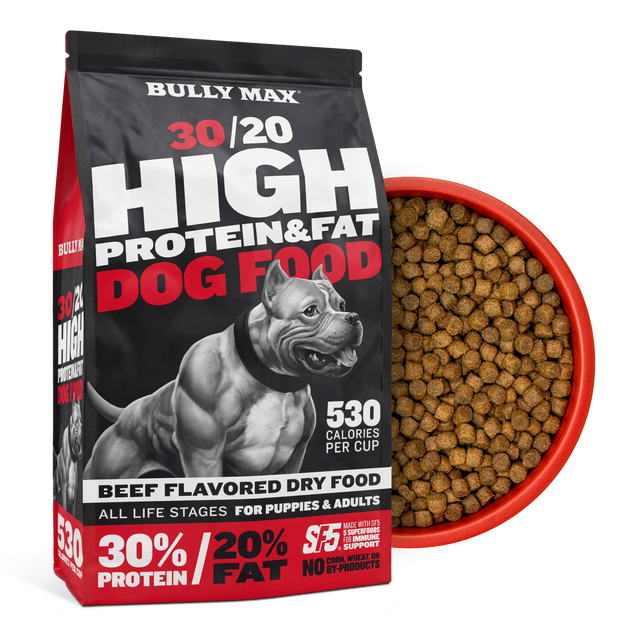
For adult Rottweilers, a high-protein, meat-based food helps support strength and energy for big, active dogs.

FUEL YOUR ROTTWEILER WITH BULLY MAX 30/20
Fuel strength and energy with meat-based nutrition, 30% protein, 20% fat, and 535 calories per cup.
Is a Rottweiler Right for You?
A Rottweiler may be a great match if you:
- Have owned a dog before, or are ready to invest in a trainer and classes
- Can give at least an hour of exercise and some training every day
- Want a loyal, close companion that likes to be near you
- Have the space, and the budget, for a 100-pound dog's food, gear and vet care
Also check your lease, HOA and homeowners or renters insurance before you bring one home. Rottweilers are on many landlord and insurer restricted-breed lists. Our guide to breed bans and restrictions explains how these rules work.
FAQ
How long do Rottweilers live?
The AKC lists a life expectancy of about 9 to 10 years. A lean body weight, regular exercise and routine vet care give your dog the best chance at a long life.
How big do Rottweilers get?
Males stand 24 to 27 inches and usually weigh 95 to 135 pounds. Females stand 22 to 25 inches and usually weigh 80 to 100 pounds.
Are Rottweilers good with kids?
A well-bred, well-socialized Rottweiler is often gentle with its own family, including children. Their size means they can knock over small kids, so always supervise.
Do Rottweilers shed?
Yes. They have a short double coat that sheds moderately year-round and more heavily in spring and fall. Weekly brushing keeps it under control.
Are Rottweilers good for first-time owners?
They can be, if the owner is committed to training, socialization and daily exercise. Many first-time owners do better with help from a professional trainer.
Fuel Your Rottie for a Strong, Healthy Life
Bully Max is a family-owned U.S. company making high-performance, meat-based nutrition for strong dogs, made in the USA with every batch triple tested for safety. Start your puppy on Bully Max 24/14 Puppy Food, fuel your adult Rottweiler with Bully Max 30/20 High Protein Dog Food, and save 10% on every order with Autoship.