High-Calorie Dog Food: Which Dogs Need It and How to Choose
High-calorie dog food packs more energy into every cup, usually 450 calories or more, so a dog can take in the calories it needs without eating a huge volume of food. It is the right tool for underweight dogs, rescues that came in thin, hard keepers that struggle to keep weight on, growing large-breed puppies and working or sport dogs. It is the wrong tool for a dog that is already at a healthy weight and mostly lies on the couch.
This guide covers which dogs actually need a calorie-dense food, what “high calorie” means in real numbers, how to read a label, how Bully Max foods compare, and exactly how to switch foods and how much to add without upsetting your dog’s stomach.
High-calorie dog food at a glance
- What it is: food with more calories per cup, usually from higher fat and protein. Many standard adult kibbles land somewhere around 350 to 450 calories per cup.
- Who needs it: underweight and rescue dogs, hard keepers, very active working and sport dogs, and dogs that get full before they eat enough.
- Who doesn’t: dogs at a healthy weight with normal activity, and overweight dogs.
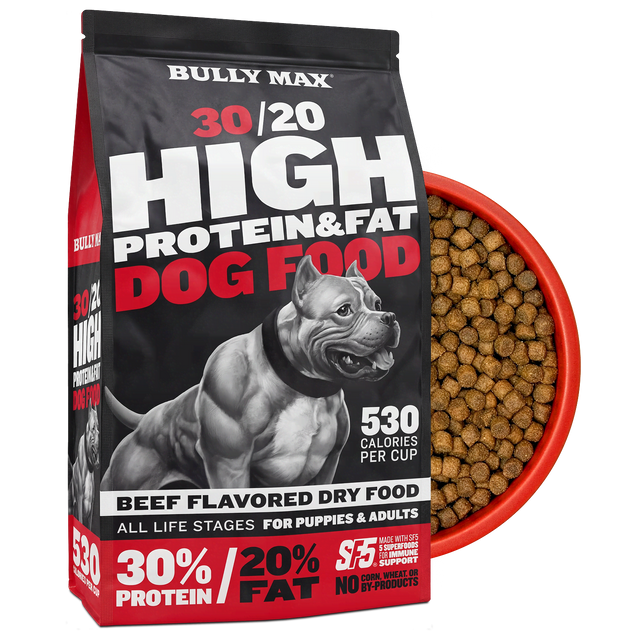
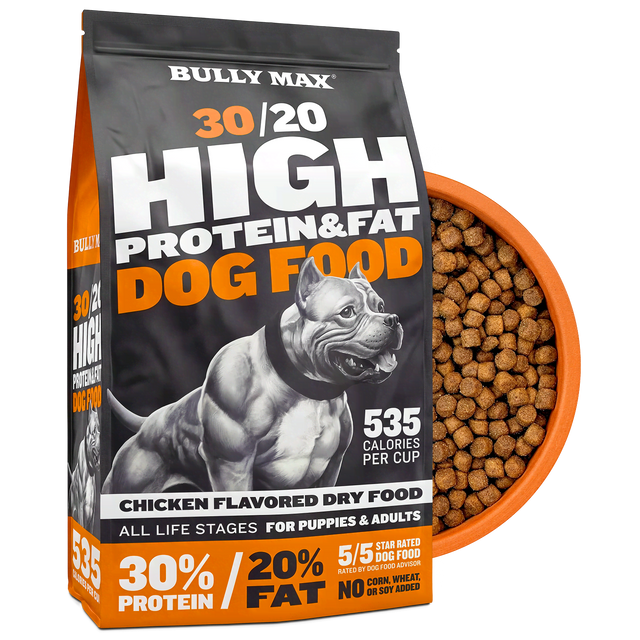
- Bully Max options: PRO Series 31/25 (600 kcal/cup), 30/20 High Protein Chicken (535 kcal/cup), 30/20 Beef (530 kcal/cup) and High Calorie Raw Base Mix (512 kcal/cup).
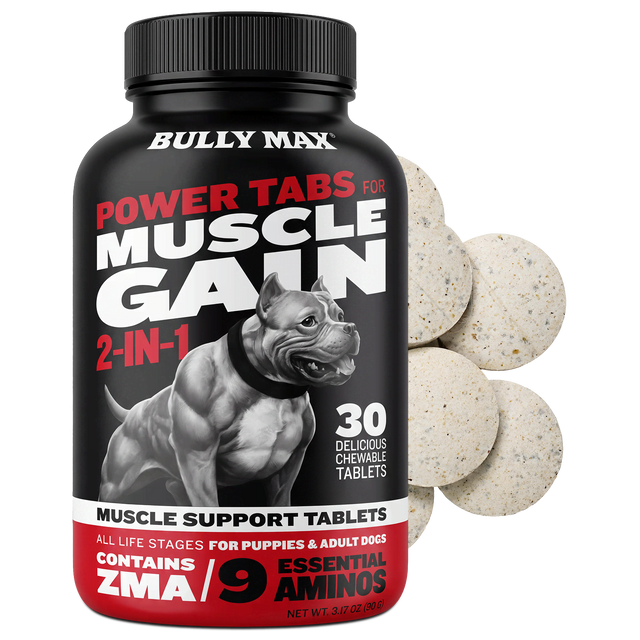
- Calorie boosters: Power Chews for Weight Gain (1,800 kcal per bag) and Liquid Weight Gainer (150 kcal per ounce).
- Golden rule: switch over 7 to 10 days, weigh every 1 to 2 weeks, and see your vet if a dog is losing weight for no clear reason.
What Is High-Calorie Dog Food?
Every dog food lists its calorie content as kilocalories (kcal) per cup and per kilogram. That number is the calorie density. A high-calorie dog food simply has a higher number, so each cup delivers more energy.

WEIGHT GAIN GUIDE
See the healthy weight-gain plan
PRO Series 31/25 at 600 calories per cup, how much to feed an underweight dog, and real owners’ results.
50,000+ five-star reviews
Most of that extra energy comes from fat. Fat carries about twice the calories of protein or carbohydrate per gram, so a food with 20 to 25% fat will almost always be more calorie dense than one with 10 to 15% fat. The best high-calorie foods pair that fat with high protein from meat, so the extra calories support muscle and not just padding.
There is no official cutoff for “high calorie.” As a working rule, foods above roughly 450 kcal per cup are calorie dense, and foods at 500 to 600 kcal per cup are built for dogs with serious energy needs.

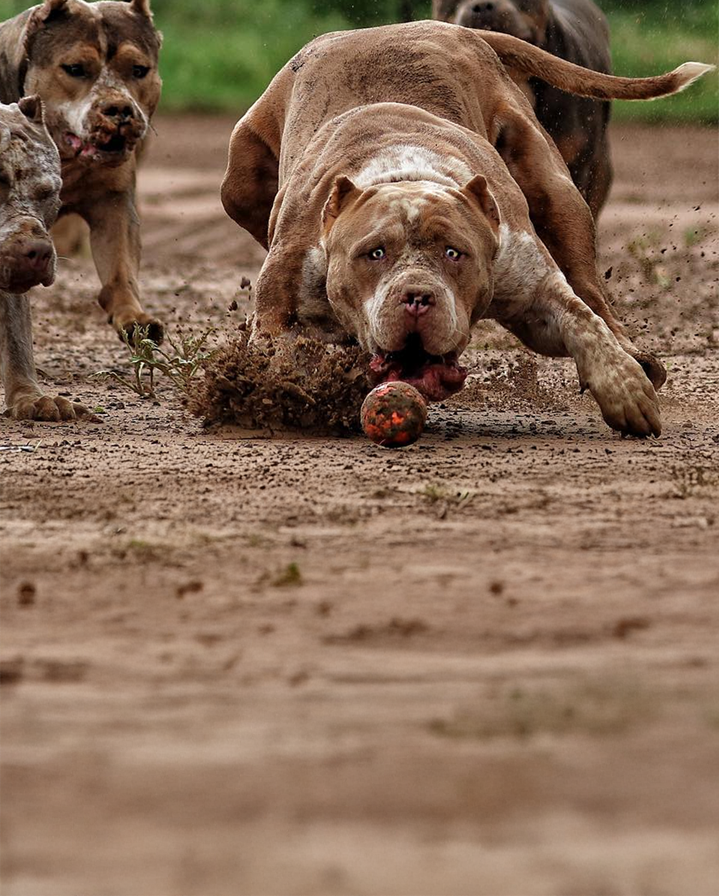
Hard-working dogs burn through calories fast. A high-calorie performance food helps a hard keeper hold weight and energy through training.

FUEL HARD WORK WITH BULLY MAX PRO SERIES 31/25
High-calorie performance nutrition with 31% protein, 25% fat, and 600 calories per cup for working and sport dogs.
Which Dogs Need High-Calorie Dog Food?
A high-calorie food makes sense when a dog needs more calories than it can comfortably eat from a standard food. These are the dogs that benefit most.
Underweight dogs and rescues
Rescues often arrive with visible ribs, hip bones and spine. A calorie-dense food lets them rebuild without forcing down oversized meals. If your dog is underweight, start with our guides on how to fatten up a dog and how to put weight on a malnourished dog. A badly malnourished dog should be refed slowly under a vet’s care.

Hard keepers
Some dogs eat well and still look lean. High-energy bully breeds, young adult males and dogs with a fast metabolism often fall into this group. Our survey customers describe the same struggle in plain words: they want their dog to “put on weight” and “keep weight on.”
“Better results for her and keeping weight on her”
Bully Max customer, post-purchase survey
Working and sport dogs
Weight pull, protection sports, hunting, herding and long training days burn far more calories than a walk around the block. Many working dogs need well above normal maintenance calories during heavy training blocks. See calorie needs for dogs in competitive training, and our guide to the best dog food for working and sport dogs.
Picky eaters and small appetites
A dog that walks away from the bowl after a few bites needs more calories in those few bites. Calorie density matters more than meal size for these dogs, and taste matters too. In our post-purchase survey, about 14% of customers said their dog loves the taste or their picky eater finally eats.
Growing large-breed puppies
Puppies need more calories per pound than adults, and big puppies grow fast. That is why “high calorie puppy food” is a common search. Puppies need a food made for growth, though, not just the highest-calorie bag on the shelf. More on that below.
Dogs recovering from illness or surgery
Dogs that lost weight while sick often need extra calories to recover. Always follow your vet’s plan here, because some conditions call for specific diets.
When high-calorie food is not the answer
Weight loss with a normal appetite, vomiting, diarrhea, increased thirst or low energy can all point to a medical problem. More food will not fix that. Read causes of sudden weight loss in dogs and see your vet first. Dogs with a history of pancreatitis or other conditions should only move to a higher-fat food with their vet’s approval.
Is Your Dog Actually Underweight?
The scale tells part of the story. Body condition tells the rest. Check these three things:
Quick body condition check
- Ribs: you should feel them easily under a thin layer of fat. If you can see every rib from across the room, your dog is likely too thin.
- Waist: looking down from above, you should see a waist behind the ribs. A sharp hourglass with visible hip bones means too thin.
- Spine and hips: bones should not stick out. Visible vertebrae or hip points are a sign to add calories and talk to your vet.
For breed ranges and a full body condition guide, see our dog weight chart. A lean, athletic bully is not the same as an underweight one, so judge the dog in front of you, not just the number.
How to Choose a High-Calorie Dog Food
Not all calorie-dense foods are equal. Use this checklist when you compare bags.
1. Look at kcal per cup first
It is printed on every bag as “calorie content.” Compare foods by kcal per cup, not by how full the bowl looks. A 600 kcal/cup food gives a dog 50% more calories per scoop than a 400 kcal/cup food.
2. Check where the calories come from
The guaranteed analysis shows minimum protein and fat. For weight gain you want both to be high. A food that is high in fat but low in protein can add weight without adding muscle. Our customers buy for both: in our post-purchase survey of about 2,400 buyers, 14% chose Bully Max for its protein, calories and ingredients, and 9% bought specifically for weight gain.
3. Meat first on the ingredient list
Look for a named animal protein or meat meal at the top of the list. Meat meals are concentrated protein because most of the water has been removed. Our guide to dog food ingredients to look for covers the rest.
4. Digestion support
A dog that is eating more food needs a gut that can handle it. Probiotics, prebiotic fiber and highly digestible ingredients help. 30/20 Beef, for example, includes probiotics and inulin prebiotics, and 30/20 High Protein Chicken includes TruMune, a postbiotic that supports digestion and immune health.
5. Taste
The best food on paper does nothing if your dog will not eat it. Buy a smaller bag first if you are unsure.
6. Quality and safety
You will feed this food every day, so trust matters. Bully Max is a family-owned U.S. company founded in 2009. Our high-performance, meat-based foods are made in the USA, every batch is triple tested for safety, and we have zero recalls. We have served millions of dogs, earned over 50,000 5/5 reviews and hold a Dog Food Advisor 5/5 rating.
Bully Max Calorie Density Comparison
Here is how the Bully Max lineup compares on calories per cup. Pick the density that fits your dog’s goal.
| Food | Protein / fat | Calories per cup | Best for |
|---|---|---|---|
| PRO Series 31/25 High Calorie | 31% / 25% | 600 kcal | Hard keepers, very underweight adults, working and sport dogs |
| 26/12 Instant Wet Dog Food | 26% / 12% | 592 kcal (as listed) | Picky eaters, mixing a wet meal or topper |
| 30/20 High Protein Chicken | 30% / 20% | 535 kcal | Steady weight gain, active adults, everyday high-protein feeding |
| 30/20 High Protein Beef | 30% / 20% | 530 kcal | Weight gain for dogs that need a chicken-free food |
| High Calorie Raw Base Mix | You add the meat | 512 kcal | Owners who want a fresh, high-calorie meal with their own protein |
| 25/11 Lamb, 45% less fat | 25% / 11% | 415 kcal | Maintaining weight once the goal is reached, or dogs that need less fat |
Calories per cup as listed for each product. Compare: many standard adult kibbles sit around 350 to 450 kcal per cup.
The difference adds up. To give a dog 1,500 calories a day, you would feed about 2.5 cups of PRO Series 31/25, about 2.8 cups of 30/20 or about 3.75 cups of a 400 kcal/cup food (estimates). Fewer cups means smaller meals, which is easier on dogs that fill up fast.
The Best Bully Max Foods for Weight Gain
PRO Series 31/25: the highest-calorie option
At 600 calories per cup with 31% protein and 25% fat, PRO Series 31/25 is our most calorie-dense dry food. It is built for working and sport dogs and for hard keepers that need the most calories in the least food. It is the first choice for an adult dog that eats little but needs a lot.
If your dog needs the most calories per cup, start here.
What 30% protein and 20% fat actually mean, and which dogs need a high-calorie food:
GET THE MOST CALORIES PER CUP WITH PRO SERIES 31/25
High-calorie performance nutrition with 31% protein, 25% fat, and 600 calories per cup for working and sport dogs.
30/20 High Protein Chicken and Beef: steady, everyday gain
For many dogs, 30/20 is the sweet spot: 30% protein, 20% fat and 535 (chicken) or 530 (beef) calories per cup. It suits dogs that need to gain a moderate amount and then stay on the same food for the long haul. Choose 30/20 Beef for a chicken-free option, or 30/20 High Protein Chicken if you also want TruMune for digestion and immune support.
“I've bought bullymax before when my stud needed to fill out and gain weight”
Bully Max customer, post-purchase survey
High Calorie Raw Base Mix: build your own fresh meal
Raw Base Mix lets you add raw or cooked meat, water and oil to make a complete, high-calorie meal. One 5 lb bag makes up to 15 lbs of food at 512 calories per cup. It is popular with performance kennels. Travis and Kassidy Torrez of PresaMania Kennels both list it among their top three Bully Max picks. Read their story.

High-Calorie Puppy Food: What to Know
Puppies need more calories per pound than adult dogs, but they also need the right balance of protein, fat and minerals for growth. Choose a food made for puppies and do not chase the highest calorie number. Growing too fast is not the goal, especially for big breeds.
“Bully max was just the first to come to my attention when I searched for high calorie puppy food on Google.”
Bully Max customer, post-purchase survey
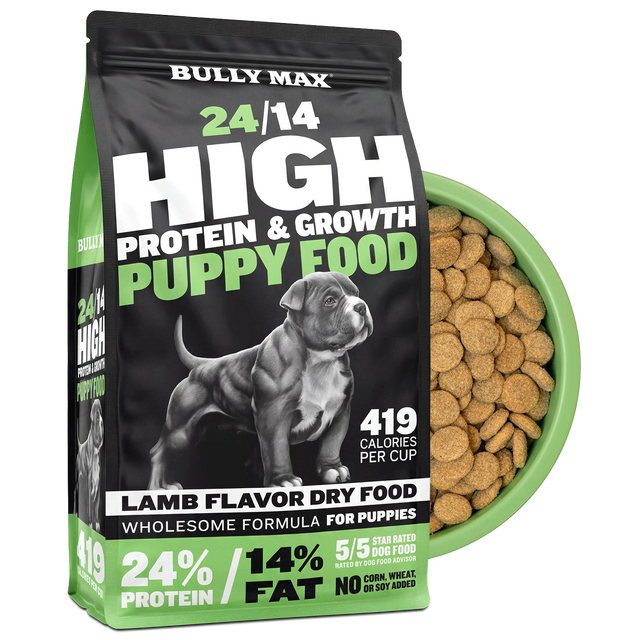
Bully Max 24/14 High Protein & Growth Puppy Food is made for this job. It has 24% protein from real lamb plus TruMune to support digestion and immune health. Like every Bully Max dog food, it is suitable for large-breed dogs, including large-breed puppies, under AAFCO guidelines.
Tips for a thin puppy:
- Feed 3 to 4 meals a day for young puppies, then move to 2 to 3 as they grow. See our puppy food guide.
- Weigh your puppy weekly. Steady gain is what you want.
- A puppy that is thin, has diarrhea or seems lethargic needs a vet visit, not just more food. Parasites are a common cause of poor weight gain in puppies.
For growing puppies, start with a food made for growth.

GIVE YOUR PUPPY BULLY MAX 24/14 PUPPY FOOD
Made for growing puppies with 24% protein, real lamb, and TruMune to support digestion and immune health.
How to Transition to a High-Calorie Dog Food
Richer food needs a slower switch. A sudden jump in fat can cause loose stools. Use this schedule as a starting point:
| Days | Old food | New food |
|---|---|---|
| 1 to 3 | 75% | 25% |
| 4 to 6 | 50% | 50% |
| 7 to 9 | 25% | 75% |
| 10 and on | 0% | 100% |
A common 10-day schedule. Go slower (2 to 3 weeks) for dogs with sensitive stomachs.
Because a high-calorie food has more calories per cup, do not keep the same number of cups during the switch. Adjust the total so the calories match your target. Watch the stool. If it loosens, hold at the current step for a few extra days before moving on. Our guide to firming up your dog’s stool can help.
How Much to Feed for Weight Gain
Start with the feeding chart on the bag, then adjust based on what the scale and your hands tell you. If you want a number to start from, many vets use the resting energy requirement (RER): 70 × body weight in kg to the 0.75 power. An active adult dog often needs about 2 × RER at its goal weight.
| Goal weight | Calories per day (estimate) | PRO 31/25 (600 kcal) | 30/20 Chicken (535 kcal) | Typical 400 kcal/cup food |
|---|---|---|---|---|
| 20 lb | about 730 | about 1¼ cups | about 1⅓ cups | about 1¾ cups |
| 40 lb | about 1,230 | about 2 cups | about 2⅓ cups | about 3 cups |
| 60 lb | about 1,670 | about 2¾ cups | about 3⅛ cups | about 4¼ cups |
| 80 lb | about 2,070 | about 3½ cups | about 3⅞ cups | about 5¼ cups |
| 100 lb | about 2,450 | about 4 cups | about 4⅝ cups | about 6 cups |
Estimates only, based on 2 × RER at goal weight for an active adult. Neutered, older or less active dogs may need less. Very hard-working dogs may need much more. Use the bag chart and adjust to body condition.
For a personal estimate, use our dog food calculator.
How to adjust
- Weigh every 1 to 2 weeks, at the same time of day.
- Not gaining after 2 weeks? Increase daily food by about 10%.
- Gaining fast or getting soft? Cut back about 10%.
- Split the day into 3 meals for dogs that fill up quickly.
- Once your dog reaches its goal, drop back to maintenance or switch to a lower-calorie food such as 25/11 Lamb.
Aim for slow, steady gain. Rapid gain usually means fat, not muscle, and a sudden jump in rich food is hard on the stomach. Pair the extra calories with exercise so the gain becomes muscle. Our guide to helping your dog bulk up covers workouts.
How Much to Add: Weight Gainers and Toppers
Sometimes you don’t want to change foods. Maybe your dog is doing well on its current food and just needs more. Adding calories on top of the meal is the simplest fix.
| Add-on | Calories | Example (estimate) |
|---|---|---|
| Liquid Weight Gainer 2-in-1 | 150 kcal per ounce | 1 ounce (2 tablespoons) adds about 150 calories, roughly the same as a quarter cup of PRO 31/25. |
| Power Chews for Weight Gain | 1,800 kcal per bag | An easy daily add-on with 1 billion CFU probiotics. Follow the bag directions. |
| Swap part of the meal to PRO 31/25 | 600 kcal per cup | Replacing 1 cup of a 400 kcal/cup food with 1 cup of PRO adds about 200 calories with no extra volume. |
Calories as listed by product. Examples are estimates.
Count added calories as part of the daily total, and add them gradually over a week. Liquid Weight Gainer is mostly healthy fats and whey protein, so introduce it in small amounts and work up to the label serving.

Need more calories without bigger meals? Add a weight gain chew, or browse all of our weight gain foods and supplements.

HELP YOUR DOG GAIN HEALTHY WEIGHT
1,800 calories per bag from real chicken, plus 1 billion CFUs of probiotics to support digestion. Dogs love the chicken and bacon flavor.
Real Results From Bully Max Customers
Weight gain is one of the top reasons people try Bully Max, and visible results are the biggest reason they choose us. About 20% of survey buyers pointed to reviews and visible results. Rescues that came in thin are a common story.
“Well I just adopted an American bully from a family that couldn’t take care of him anymore. When I got him he was skinny but I used your food and he’s getting muscles”
Bully Max customer, post-purchase survey
Want a step-by-step plan for a rescue? Read how to help a rescue pitbull gain weight and muscle safely.
FAQ
What is the highest-calorie Bully Max dog food?
PRO Series 31/25 High Calorie, at 600 calories per cup with 31% protein and 25% fat. 26/12 Instant Wet Dog Food is listed at 592 calories per cup, and 30/20 High Protein Chicken and Beef are 535 and 530 calories per cup.
How many calories does a dog need to gain weight?
It depends on size, age and activity. A common starting point is to feed the calories for your dog’s goal weight, not its current weight, then adjust by about 10% every 1 to 2 weeks based on weigh-ins. The estimate table above and our dog food calculator give you a starting number.
Is high-calorie dog food good for puppies?
Puppies need a food made for growth. Calorie density matters, but so do the right protein, fat and mineral levels. For most puppies, a puppy food like Bully Max 24/14 is the right base. See your vet if a puppy is thin or not growing well.
Can high-calorie dog food cause diarrhea?
It can if you switch too fast, because richer food has more fat. Transition over 7 to 10 days, or longer for sensitive dogs, and adjust portions for the higher calories per cup. If diarrhea lasts more than a day or two, see your vet.
What can I add to my dog’s food to help it gain weight?
Calorie-dense toppers such as Liquid Weight Gainer (150 calories per ounce) or Power Chews for Weight Gain (1,800 calories per bag) are easy options. You can also replace part of the meal with a more calorie-dense food. Our satin balls recipe is another homemade option.
How fast should an underweight dog gain weight?
Slow and steady is safest. Track weight every 1 to 2 weeks and aim for consistent progress, not sudden jumps. Severely underweight or malnourished dogs should be refed under a vet’s guidance.
Help Your Dog Gain the Right Way
Pick the calorie density that fits your dog, switch slowly, weigh often and pair the extra food with exercise. For most underweight adults, PRO Series 31/25 or 30/20 is the place to start, with Power Chews or Liquid Weight Gainer to close the gap. Put your dog’s food on autoship and save 10% so you never run out mid-plan.
Ready to fuel the work? A high-calorie performance food gives a hard keeper 600 calories per cup for training and competition.
READY TO FUEL THE WORK? TRY BULLY MAX PRO SERIES 31/25
High-calorie performance nutrition with 31% protein, 25% fat, and 600 calories per cup for working and sport dogs.